(NewsNation) — Pope Francis, the 266th head of the Catholic Church, died Monday, one day after Easter and nearly a month since his release from the hospital, the Vatican confirmed.
The Vatican also announced the cause of death was a cerebral stroke that led to a coma and irreversible heart failure.
“At 7:35 this morning, the Bishop of Rome, Francis, returned to the home of the Father,” Cardinal Kevin Farrell, the Vatican camerlengo, announced Monday. “His entire life was dedicated to the service of the Lord and of his Church.”
Francis was hospitalized in February, staying five weeks with double pneumonia that required high flows of oxygen and blood transfusions.
President Donald Trump said on Truth Social that he and first lady Melania Trump would be attending the funeral in Rome.
Pope Francis death: Leaders share condolences
On Easter Sunday, the pope blessed thousands at St. Peter’s Square in Rome after meeting with Vice President JD Vance to exchange Easter greetings.
“I just learned of the passing of Pope Francis. My heart goes out to the millions of Christians all over the world who loved him,” Vance wrote on social media Monday. “I was happy to see him yesterday, though he was obviously very ill. But I’ll always remember him for the below homily he gave in the very early days of COVID. It was really quite beautiful. May God rest his soul.”
The White House also posted an undated photo on X of President Donald Trump and first lady Melania Trump with Francis, as well as a recent photo of Vance and Francis shaking hands, captioned: “Rest in Peace, Pope Francis.”
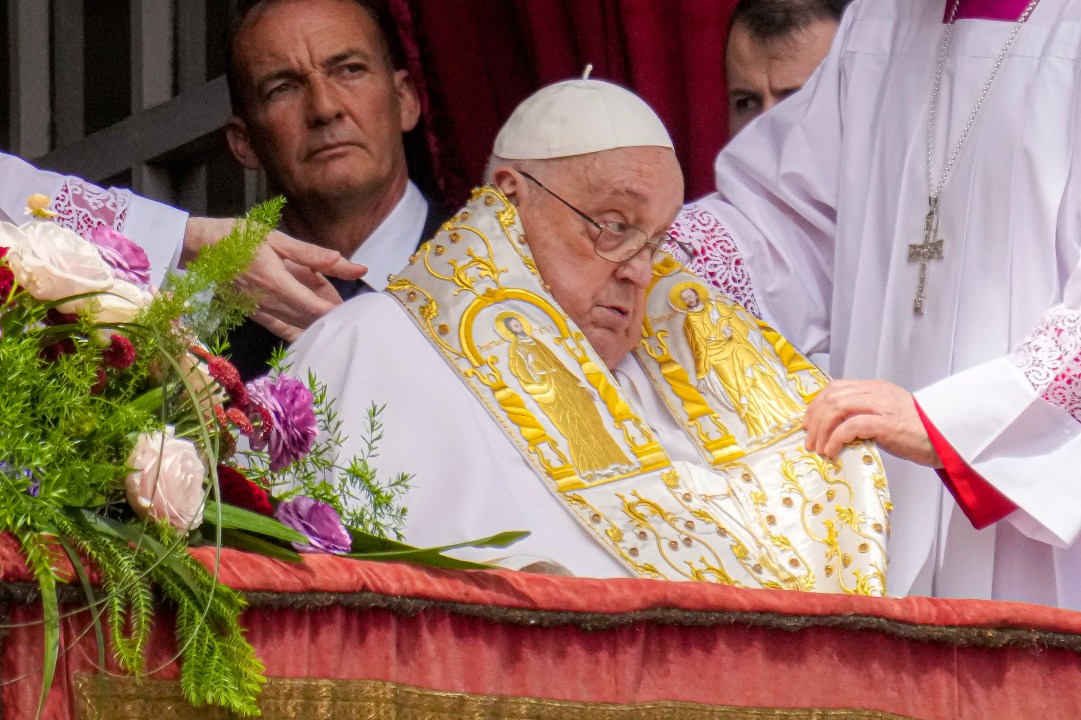
Pope Francis appears on the central lodge of St. Peter’s Basilica to bestow the Urbi et Orbi (Latin for “to the city and to the world”) blessing at the end of the Easter Mass presided over by Cardinal Angelo Comastri in St. Peter’s Square at the Vatican on Sunday.(AP Photo/Gregorio Borgia) 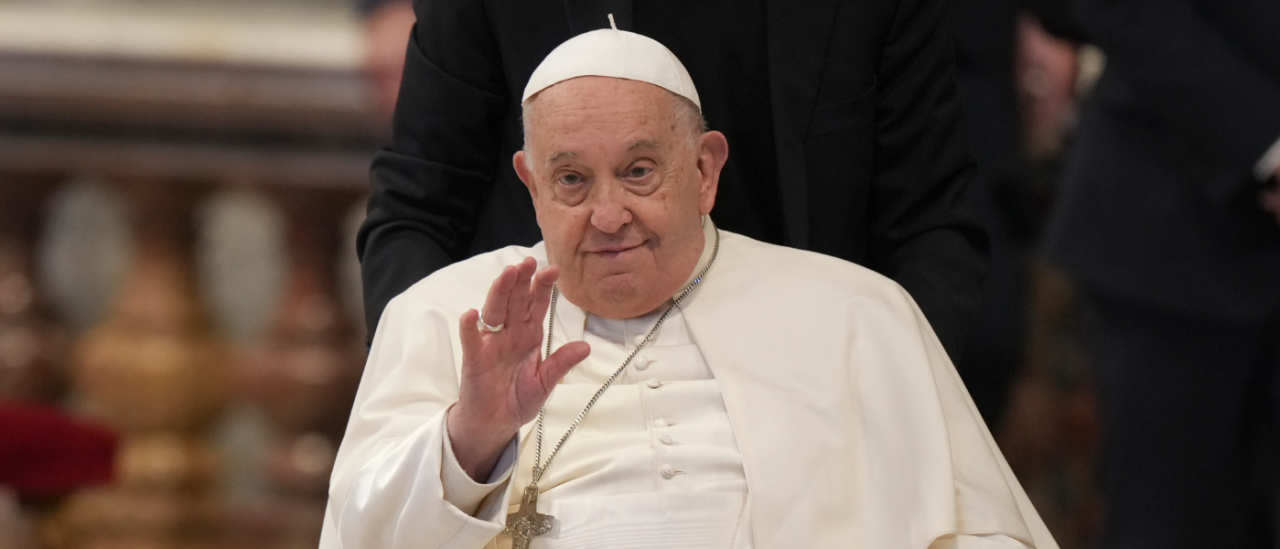
Pope Francis waves as he arrives for his weekly general audience in the Paul VI Hall at the Vatican on Feb. 12. (AP Photo/Alessandra Tarantino, File) 
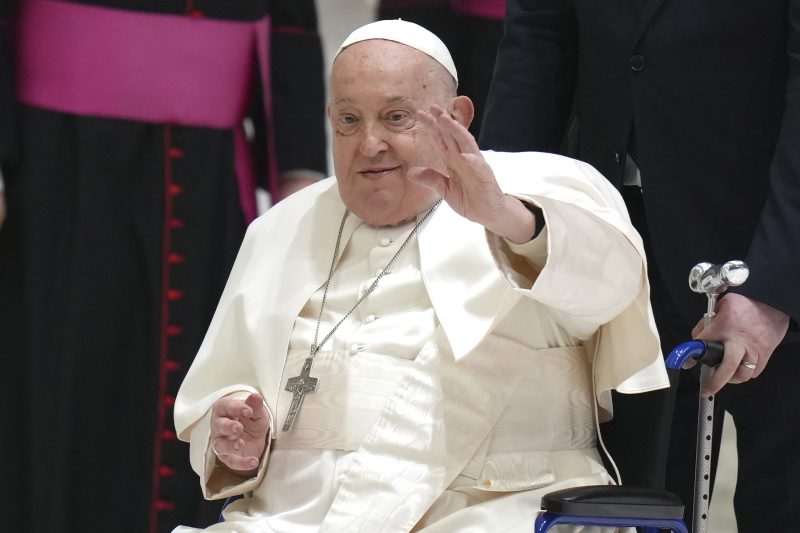
FILE – Pope Francis shares a light moment with “Telefono Amico” support hotline president Dario Briccola during an audience at the Vatican Saturday, March 11, 2017. (L’Osservatore Romano/Pool Photo via AP, File) 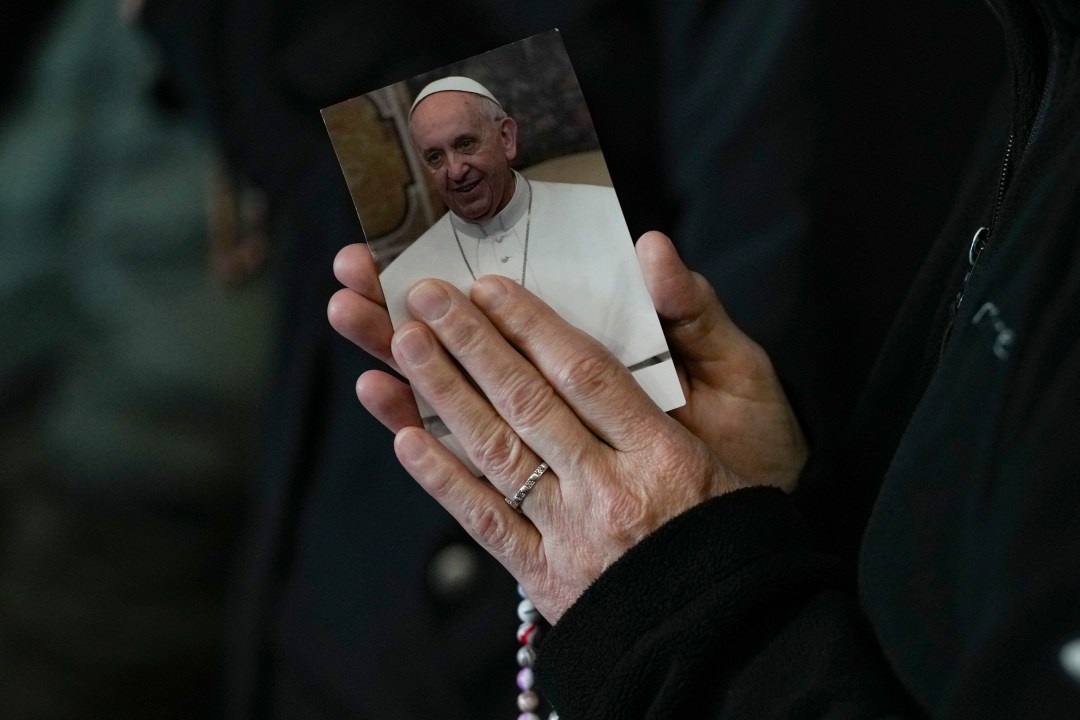
A nun attends a rosary prayer for Pope Francis in St. Peter’s Square at the Vatican on March 10. (AP Photo/Andrew Medichini) 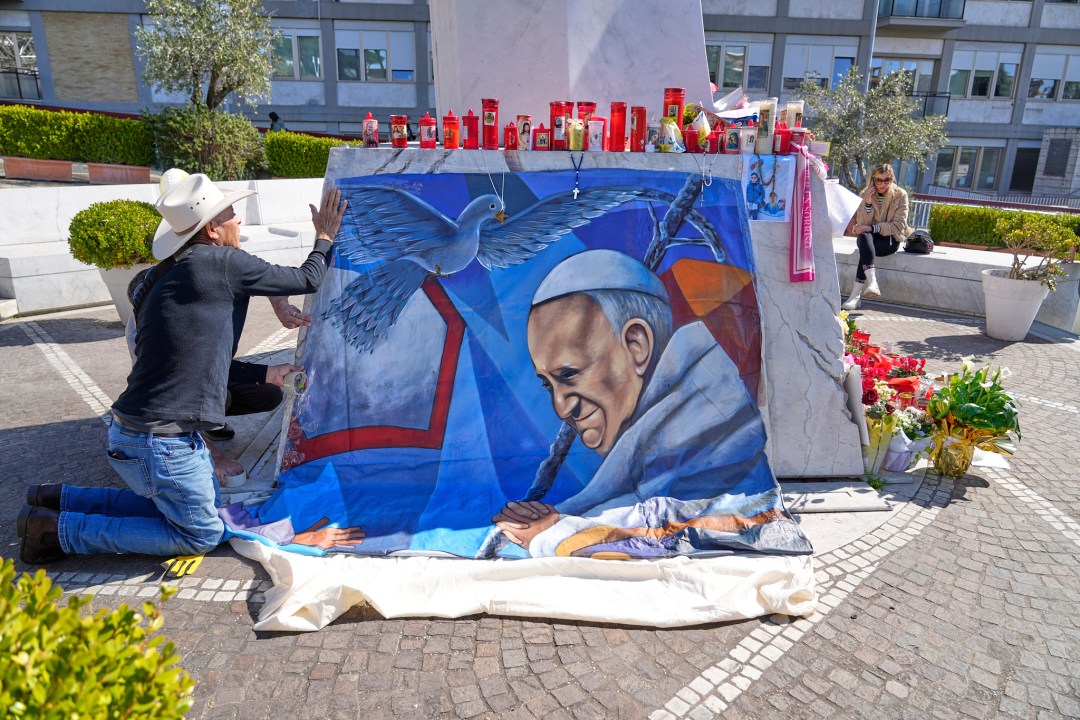
Mexican painter Roberto Marquez places a painting of Pope Francis he made outside the Agostino Gemelli hospital in Rome on March 5. (AP Photo/Gregorio Borgia) 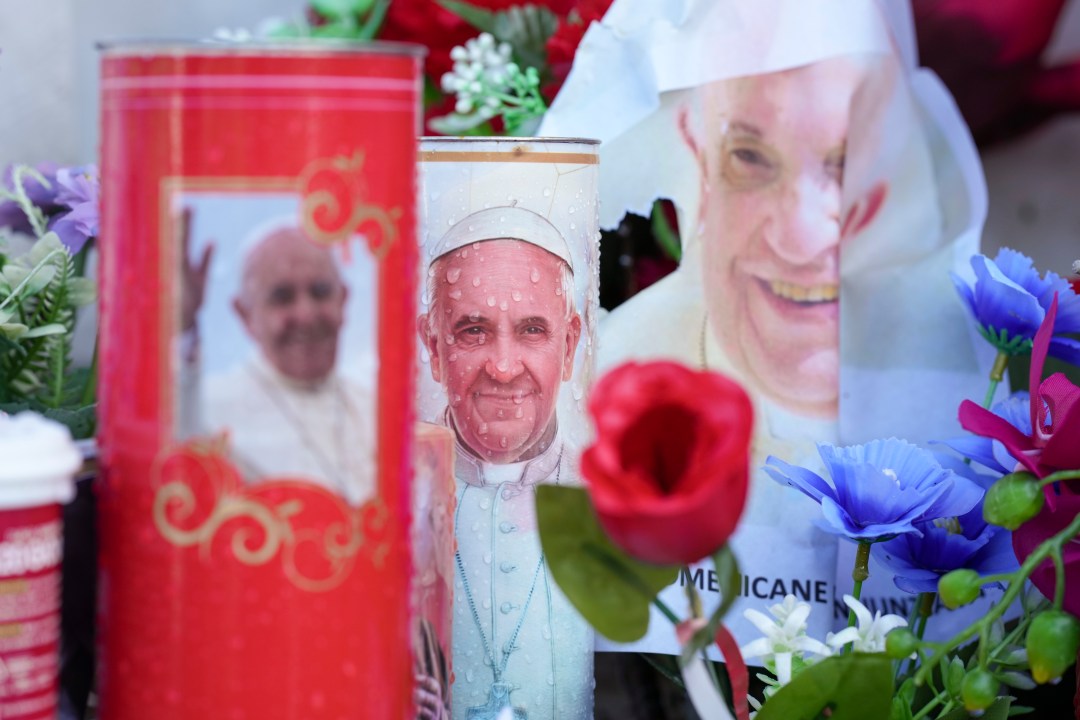
Candles and flowers for Pope Francis are seen at the Agostino Gemelli Polyclinic in Rome on Feb. 26. (AP Photo/Andrew Medichini) 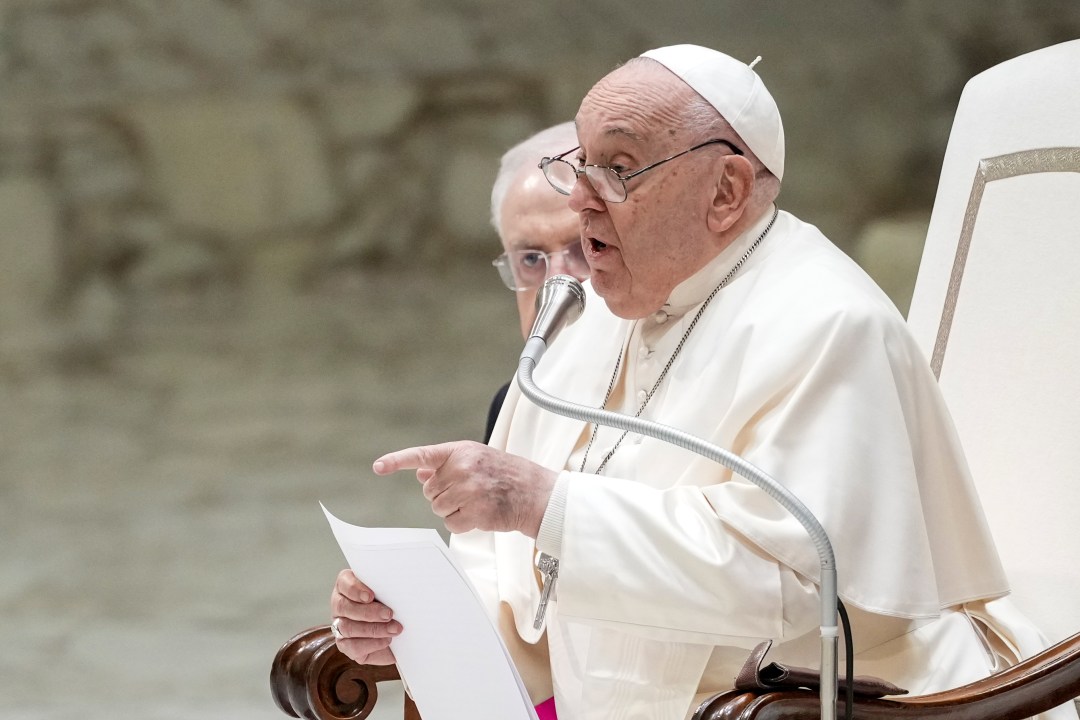
Pope Francis exchanges the season’s greetings with Vatican employees, in the Paul VI Hall at the Vatican, Saturday, Dec. 21, 2024. (AP Photo/Andrew Medichini) 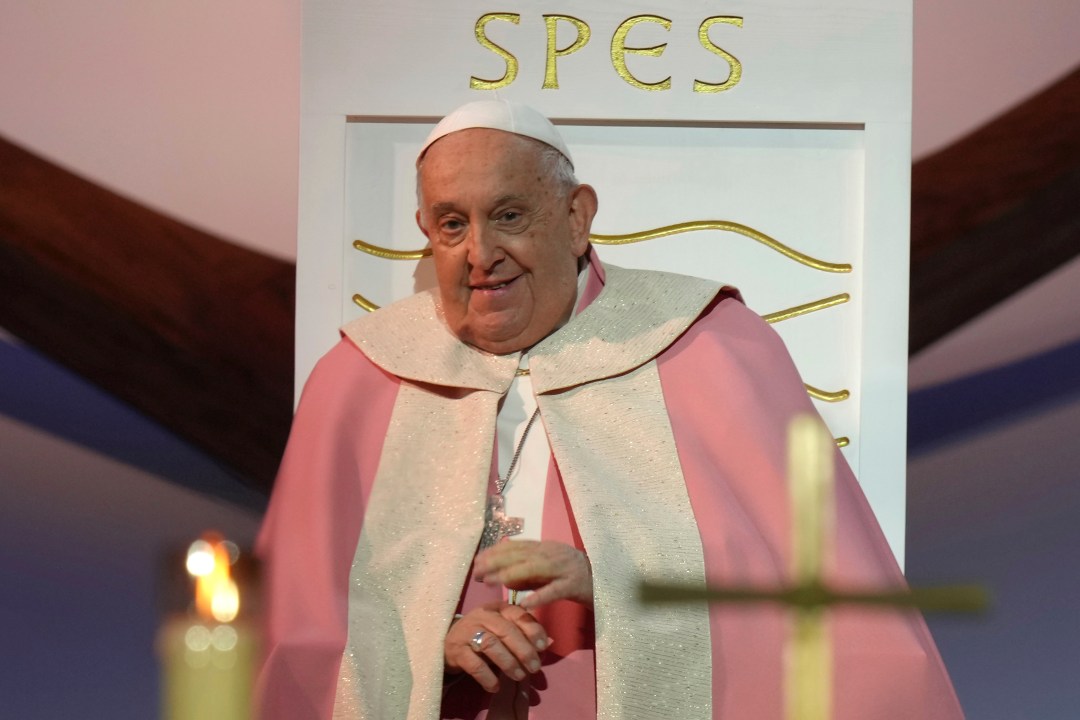
Pope Francis celebrates a mass Sunday, Dec. 15, 2024 in Ajaccio, Corsica island, on the first papal visit ever to the French island of Corsica and called for a dynamic form of laicism, promoting the kind of popular piety that distinguishes the Mediterranean island from secular France as a bridge between religious and civic society. (AP Photo/Thibault Camus) 
Pope Francis leaves at the end of his weekly general audience in St. Peter’s Square, at the Vatican, Wednesday, Sept. 18, 2024. (AP Photo/Andrew Medichini) 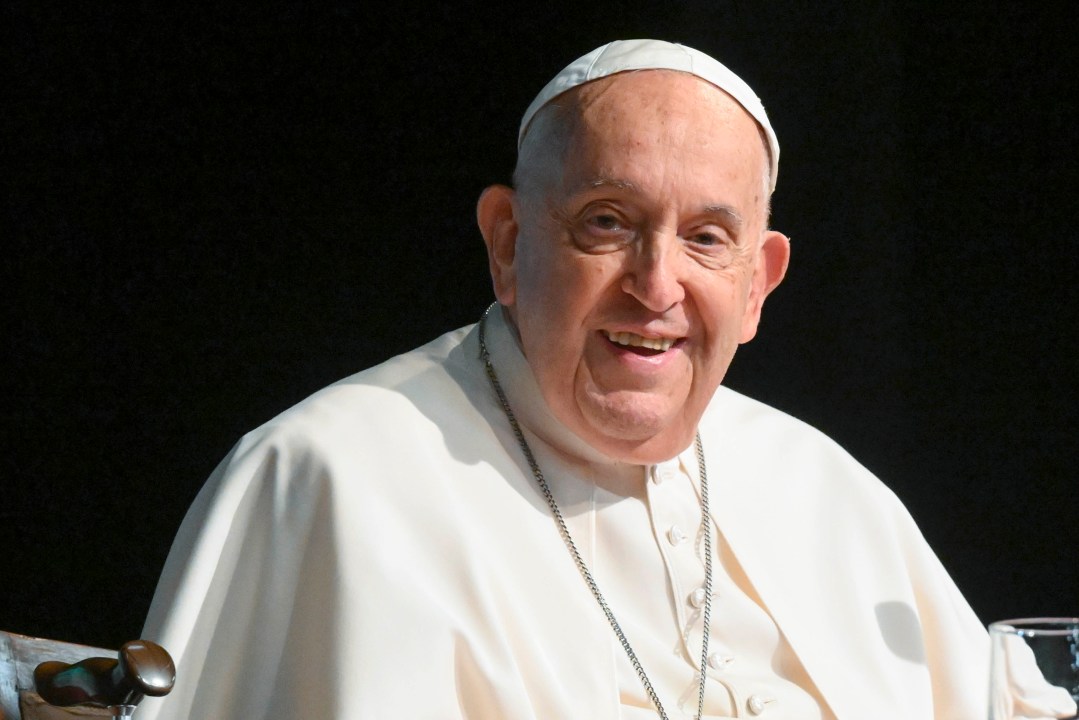
Pope Francis meets some 160 priests who have been ordained for between11 and 39 years at the Salesian Pontifical University on June 11, 2024 in Rome, Italy. (Photo by Vatican Media via Vatican Pool/Getty Images)
More condolences poured in throughout the morning.
“Rest in Peace Pope Francis! May God Bless him and all who loved him!” Trump posted to Truth Social a few hours after the pope’s death.
At the annual White House Easter Egg Roll on Monday, Trump ordered all U.S. flags be flown at half-staff to honor the pontiff, whom he called a “good man.”
Former President Joe Biden also dedicated a social media post to the pope, writing in part, “He was unlike any who came before him. Pope Francis will be remembered as one of the most consequential leaders of our time and I am better for having known him.”
Biden praised Francis for his advocacy for peace and the voiceless. “Above all, he was a Pope for everyone. He was the People’s Pope — a light of faith, hope, and love,” Biden wrote.
Who will be the next pope? Conclave explained
The pope’s death will set off the formal process to select his successor, known as a conclave.
The word conclave is derived from the Latin words “com,” meaning “with,” and “clavis,” meaning “key.” It refers to the practice of Catholic cardinals gathering in a closed room or hall to vote on who should be the next pope.
Per the U.S. Conference of Catholic Bishops, the conclave usually occurs around 15 to 20 days following the death or resignation of a pope.
Only cardinals under the age of 80 are allowed to participate in the secretive, anonymous conclave vote.
There are several frontrunners — or “papabile” — including Cardinals Peter Erdo, Reinhard Marx, Luis Tagle, Marc Ouellet and Robert Sarah, among others.
Young Pope Francis: Who was he before papacy?
Born Jorge Mario Bergoglio in Buenos Aires, Argentina, on Dec. 17, 1936, Francis was the son of Italian immigrants and the first pope appointed from the Americas, according to the Vatican.
Despite what he called a “lack of support” from his mother, Francis’ journey to the priesthood began early in his life.
Francis graduated from the novitiate of the Society of Jesus at 22 years old and became an ordained priest at 33 in 1969.
By this time, his mother had come to accept his choice and asked for his blessing at his ordination.
In 1973, Francis became the head of Argentina’s Jesuit order, remaining there until 1998 when he was appointed the archbishop of Buenos Aires, according to Britannica.
Was Pope Francis a progressive Catholic leader?
On March 13, 2013, he was selected to become pope by the College of Cardinals, taking the name Pope Francis in honor of Saint Francis of Assisi.
Francis was known for embracing a simple life, deciding to live among his people.
“My people are poor, and I am one of them,” he once said to explain why he chose to live in a basic apartment and cook his own meals, according to his biography. He even broke tradition by choosing to live in a two-bedroom apartment instead of the Apostolic Palace in the Vatican after being elected pope.
In addition to living selflessly, Francis was considered more progressive than previous pontiffs and had controversial views on the Big Bang theory and abortion.
He believed the Big Bang theory and evolution do not contradict God’s creation story, and he declared in 2016 that priests were allowed to grant forgiveness to those who received an abortion if they asked, though he maintained it was a “grave sin.”
Francis also spoke out against sexual abuse within the Catholic Church, apologizing to victims and implementing broader provisions for holding abusers accountable.
Environmental issues, including climate change, were also among his most vocal matters, leading to multiple Nobel Peace Prize nominations.
One of his greatest feats occurred in 2023, when Francis formally approved the blessing of same-sex marriages. It was a landmark ruling that allowed Catholic priests to bless same-sex couples seeking God’s love and mercy in their union.
Francis denied the criticism that erupted from his decision that claimed it could split the church. Africa’s bishops, and individual conservative bishops around the world, have said they would not follow the new directive.
“I just want to say that God loves everyone, especially sinners. And if my brother bishops, according to their discernment, decide not to follow this path, it does not mean that this is the antechamber to schism because the church’s doctrine is not brought into question,” Francis said.
Francis published his autobiography, “Life: My Story Through History,” in March 2024, the 11th anniversary of his installation as pope.
In the memoir, written with Italian journalist Fabio Marchese Ragona, Francis traced key moments of his life and their intersection with world events, including World War II, Argentina’s military dictatorship and Vatican intrigue, and how they together inform his priorities as pope.
Francis acknowledged critics inside the Vatican who have accused him of destroying the papacy and have tried to block the reforms that he was mandated by cardinals to enact because of his 2013 election.
Pope Francis’ pneumonia, health problems
Francis addressed recurring speculation about his health problems in his later years, the criticism he faced from conservatives and what both meant for the future of his pontificate. Such questions have always surrounded the papacy, but the prospect of a papal resignation only became a reality with the late Pope Benedict XVI’s historic 2013 retirement.
Francis had part of his large intestine removed in 2021 and was hospitalized three times in 2023, including once to remove intestinal scar tissue from previous surgeries to address diverticulosis, or bulges in his intestinal wall.
In the winter months leading into 2024, Francis battled an array of illnesses, including bronchitis, flu and a cold, which ultimately led to him having an aide read most of his speeches.
He fell sick with double pneumonia in February of this year and was recovering until his death in April.
Regardless, Francis stayed true to his word that the papacy was a job for life.
The Associated Press contributed to this report.