NewsNation National Correspondent Robert Sherman has found himself on the frontlines of some of the world’s biggest stories: from Ukraine to Israel and across the United States. He shares what he’s seeing on the ground. Subscribe to his newsletter: Frontlines with Robert Sherman here.
(NewsNation) — Greetings from San Juan, which at this moment feels like the brink.
It’s been a busy day when it comes to international fronts in both the Caribbean as well as Europe.
Venezuela
Every day, we’re watching a flurry of activity in the Caribbean, especially in Puerto Rico, which is home to some highly strategic air strips.
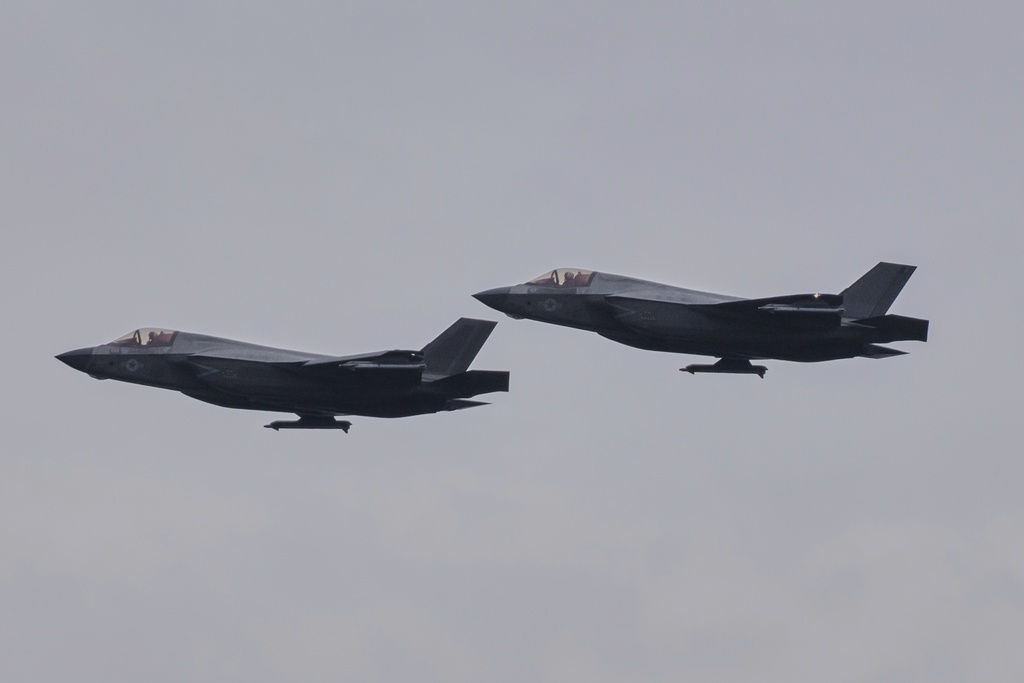
Today, F-35 fighter jets as well as gunships could be seen taking off and landing here on the American territory.
The American military presence in the region has swelled considerably and now includes the USS Henry Ford Carrier Strike Group.
At least 21 known strikes have been carried out on alleged drug smuggling vessels here in the Caribbean, and the White House says those will continue.
“The president has been very satisfied with the successful strikes against narco terrorists and foreign terrorists that are illegally trafficking drugs towards the United States of America,” White House press secretary Karoline Leavitt told reporters. “He’s not going to tolerate that, and you can expect to see those strikes continue.”
Meanwhile in Venezuela, government-led demonstrations carried on throughout the day as President Nicolas Maduro vows to not back down in the face of the build-up.
“Whatever they do, however they do it, wherever they do it, they will not be able to defeat Venezuela. We are invincible. Whatever they do, they have not been able to defeat our homeland, and they never will,” Maduro said.
Venezuela published video of their troops drilling and training, setting up anti-air defense systems and claims they’re prepared to conduct guerrilla-style warfare should any American boots hit the ground.
The U.S. made good on its promise Monday to designate Cartel de los Soles as a “Foreign Terrorist Organization” and Maduro subsequently as a member. He denies those allegations.
Today, Chair of the Joint Chiefs General Caine continues his tour of the region in Trinidad and Tobago, which at its closest point is just seven miles from the Venezuelan coast. Tomorrow, Secretary of War Pete Hegseth will be in the Dominican Republic.
Both Washington and Caracas have said they are prepared to go to the brink, but both have also signaled they are looking for a diplomatic solution. The international community is hoping the latter comes to fruition.
Ukraine
Over in Ukraine, an agreement to bring an end to the fighting appears to be close, according to President Trump.
“The original 28-Point Peace Plan, which was drafted by the United States, has been fine-tuned, with additional input from both sides, and there are only a few remaining points of disagreement,” the president said in a Truth Social post this evening.
Special Envoy Steve Witkoff will be dispatched to Moscow to meet with the Russians.
U.S. Army Secretary Daniel Driscoll will meet with the Ukrainians in Kyiv.
President Trump says he will meet with both President Zelenskyy and President Putin “only when the deal to end this war is final or, in its final stages.”
As we reported last week, the 28-Point Peace Plan has been viewed in Europe as a Ukrainian capitulation as opposed to a compromise. The contents of that deal reportedly included Ukraine giving up land to Russia that the Russians currently do not occupy in the Donbas region and downsizing of the Ukrainian armed forces.
Negotiating teams for the U.S. and Ukrainians have been hashing out tenets of the latest agreement in Geneva, with the White House saying there were “a few delicate, but not insurmountable, details” left to work out.
“Our delegations reached a common understanding on the core terms of the agreement discussed in Geneva,” Ukrainian national security adviser Rustem Umerov said.
Still, Ukrainian President Zelenskyy hedged in his evening address tonight that future security is the most important element of any agreement.
“It is in our shared interest that security is real. I count on continued active cooperation with the American side and President Trump,” Zelenskyy said. “Much depends on the United States because it’s America’s strength that Russia takes most seriously.”
Russian Foreign Minister Sergey Lavrov said the amended agreement currently being hashed out still has yet to be agreed upon by their side: “Russia had welcomed an initial version of a U.S. peace plan for Ukraine and was waiting for an amended interim version of the plan after Washington had coordinated with Ukraine and Europe.”
The battle lines in the east have become the consummate war of attrition, but they are moving. You may recall our exclusive reporting from inside a Ukrainian drone workshop in the Donbas this August. Today, that area is largely considered too contested and dangerous to return to. Things move quickly.
There’s still work to be done on this, but the Ukrainians are certainly balancing support from the U.S. with future guarantees the war will not simply resume in a few years. From their position, they can’t afford to lose either.
An update on lessons from the front
There are 16 days to go until I’m able to share this project I’ve been working on the last few years with you all. My first book, “Lessons From the Front,” hits shelves December 11.
I want to personally thank former White House press secretary Sean Spicer for his endorsement: “I’ve watched Robert Sherman report from places most of us only see on a map. He never chases drama; he chases facts-and that’s why people trust him. Lessons from the Front captures that integrity on every page. If you want to know what war really asks of soldiers, civilians, and leaders, start here.”
This book is not about the politics of war; it’s about how war impacts people at the individual level: what it teaches you about life, and how it changes the way you look at home, family, and time. I’m hoping this will be the most relatable book you pick up this holiday season on the two most consequential wars of the decade.
While some distributors temporarily ran out of stock and were not guaranteeing release-day delivery, we’re working to get the supply back up ahead of the release.
I humbly thank you for all of your support. For those still interested in preordering, you can do so through Amazon, Barnes and Noble or Bloomsbury.
The views expressed in this article are those of the author and not necessarily of NewsNation.