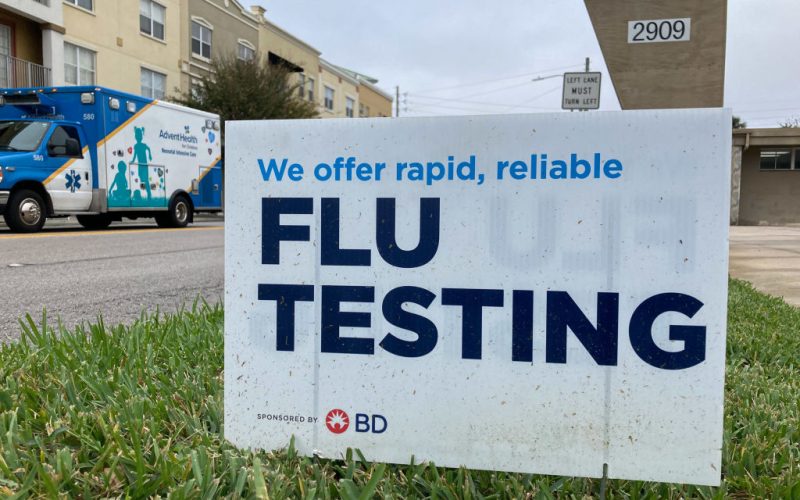
(NewsNation) — Scientists fear a new strain of influenza, which has already caused waves of illness in Japan, Canada and the U.K., could lead to a severe flu season in the U.S.
The new variant is a strain of H3N2, a subtype of influenza A that has caused hospitalizations in other countries, straining health care systems.
What is the new flu variant?
The new variant has been labeled subclade K, a mutation of the H3N2 strain of influenza A.
The flu virus mutates quickly. This subtype emerged over the summer, with seven new mutations.
Why are scientists concerned about this strain of flu?
Subtype K has spread rapidly in several countries, including Japan, the U.K. and Canada. The UK has reported the strain is sending some people to the hospital with severe illness.
Subtype K also emerged after the flu shot for the year was developed, which includes a different subtype of H3N2.
What are the symptoms of H3N2?
The symptoms are similar to those of any flu, including body aches, fever, sore throat, coughing, exhaustion, headache, sweating, chills and a runny nose.
What should I do if I think I have H3N2?
Contact your health care provider so they can test you for flu, which can also determine which strain of flu you have.
Antiviral medications, such as Tamiflu, can help treat the flu but must be started within the first 48 hours of developing symptoms.
Does the flu shot protect against H3N2?
Scientists are still examining data, but it’s possible the shot may be slightly less effective against subtype K, since it emerged after the vaccine was already developed. Researchers say it may be closer to the protection offered at the end of flu season, when the virus has had a chance to mutate, rather than the higher effectiveness typically seen at the start of the season.
To create the flu vaccines, scientists used data to predict which strains of flu may be most dominant in the coming year. This year’s flu vaccine was designed to protect against influenza B and two subtypes of influenza A, H1N1, and an earlier subclade of H3N2.
Preliminary research shows the vaccine still provides 70% to 75% protection against hospitalization in children and 30% to 40% effectiveness at preventing hospitalizations in adults.
The vaccine also still provides expected benefits when it comes to other strains of flu that are circulating.
How can I prevent H3N2?
Getting the flu shot, even if it has slightly reduced effectiveness, is the best way to protect against all strains of flu.
In addition to getting vaccinated, washing your hands frequently and avoiding touching your eyes or mouth can help prevent you from contracting the flu. If you have to cough or sneeze, use your elbow or a tissue to help keep illness from spreading.
If you or your child is sick, stay home from work or school until the virus has run its course.
Is H3N2 in the US?
It’s not clear if subtype K is in the U.S. or how much it may have spread.
The government shutdown meant that the Centers for Disease Control and Prevention was not collecting or publishing surveillance data. Even with the shutdown ended, the agency has seen steep cuts in its workforce that could lessen the effectiveness of disease surveillance.
Currently, CDC data shows low but rising levels of flu with H3N2 as the dominant strain, though the agency has not indicated which subtype of H3N1 is currently circulating.
What happens if there is an outbreak of H3N2?
It’s not yet clear if H3N2 causes more severe illness in most people.
People with underlying health conditions or weakened immune systems, young children, the elderly and pregnant people are all at higher risk of severe illness from flu, regardless of the type.
If an outbreak is significant enough, it can impact the health care system’s ability to provide adequate care if the number of patients overwhelms available resources.