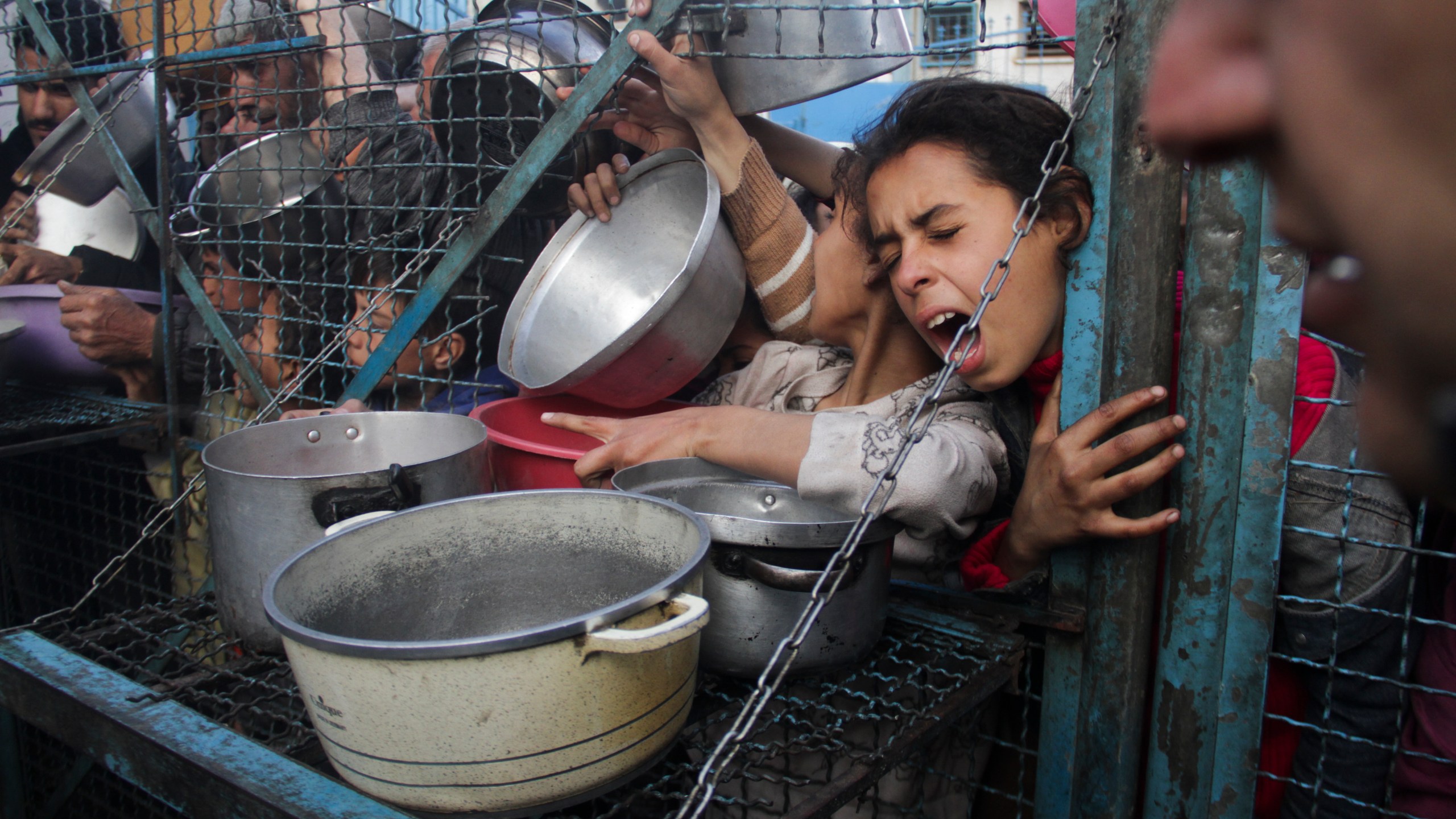
(NewsNation) — Organizations have been struggling to get aid into Gaza since Israel launched a wave of airstrikes across the Gaza Strip last Tuesday, breaking a ceasefire agreement negotiated in January and killing more than 400 people.
One organization, Project HOPE, had to temporarily suspend operations at all six of its primary and maternal health clinics because of the escalating violence.
As of Sunday morning, Project HOPE has been able to resume operations at two primary health clinics, Executive Vice President Chris Skopec said. He said the organization is now reviewing whether it can open up the others every day.
Information Skopec said Project HOPE is looking at when making this decision includes what is accessible, what roads can be safely traveled on and what neighborhoods are safe from rocket fire.
However, Skopec said there “is really no safe space in Gaza” right now.
“There is no secure location in a war context like this,” he said “We’re seeing people displaced from their homes once, twice, multiple times, as they try to continuously find a safe place to reside and live, and that’s what our staff are dealing with on a daily basis.”
Some staff members at Project HOPE have found themselves in red zones and evacuated on foot with “whatever they can carry,” Skopec said, sometimes with as little as 30 minutes notice and without being allowed to use vehicles or carts.
When the two clinics reopened, Project HOPE saw hundreds of patients in each of them, which Skopec said is two to three times more than what they saw during the ceasefire period.
Water trucking has also been suspended. Skopec said they are “eager to resume” it. The organization had been trucking thousands of liters of water to a number of different locations across the Gaza Strip over the last year.
Hisham Mhanna, a spokesperson in Gaza for the International Committee of the Red Cross, told The Guardian that reports of casualties are received every hour, but first responders cannot reach the sites of the attacks because it is too dangerous, or in some cases, there’s not enough fuel for ambulances.
“There is a lot of anxiety about what will happen, especially parents for their children. It is non-stop: evacuation orders, explosions, the hospitals are filled with casualties, we are now seeing food scarcity,” Mhanna said, according to The Guardian.
The International Committee of the Red Cross said its office in Rafah was damaged by an explosive projectile. No staff were injured, but the committee says this “has a direct impact on the ICRC’s ability to operate.”
“Yesterday, contact was lost with emergency medical technicians from the Palestine Red Crescent Society, and their whereabouts remain unknown,” the International Committee of the Red Cross said. “Last week, humanitarian workers in Gaza were killed and injured.”
After an Israeli tank strike hit one of its compounds last week, killing a staff from Bulgaria and wounding five others, the United Nations Secretary-General spokesman Stéphane Dujarric said the UN will temporarily remove about a third of its approximately 100 international staffers working in Gaza.
Israel accused of blocking aid into Gaza
Mediators Egypt and Qatar accused Israel of violating humanitarian law by using starvation as a weapon earlier this month.
Israel has denied the accusations. It says it has allowed in enough aid and blamed shortages on what it called the U.N.’s inability to distribute it. It also accused Hamas of siphoning off aid, according to The Associated Press.
On Friday, Sam Rose from the United Nations’ Palestinian relief agency, UNRWA, told reporters in Geneva that the situation in Gaza is gravely concerning with massive reductions in the distribution of aid supplies.
“This is the longest period since the start of conflict in October 2023 that no supplies whatsoever have entered Gaza,” Rose said.
Six of the 25 bakeries that the World Food Program was supporting had to close down because of a shortage of cooking gas.
At a meeting of the United Nations Security Council on March 18, Tom Fletcher, the UN’s UnderSecretary General for Humanitarian Affairs and Emergency Relief Coordinator, said modest gains made during the ceasefire are being destroyed.
“Overnight, our worst fears materialized,” Fletcher said.
During the meeting, Brett Jonathan Miller, Ambassador and Deputy Permanent Representative of Israel, said, “the return to fighting is a necessity,” citing the country’s commitment to bringing home its hostages and defeating Hamas, according to a UN press release.
The ceasefire brought a sense of stability and security, Skopec said. Project HOPE was able to do initial assessments of the health services available and was even able to plan for extending them up North during the ceasefire, he said.
Now, though, Skopec says, “It’s reminiscent of the earliest stages of the war, when the level of attacks were extremely high but also very unpredictable in terms of what was safe, what was safeguarded, where and how we could operate.”
Illnesses surge in Gaza
Circumstances have dramatically worsened the situation for Gaza’s civilian population, especially since Project HOPE’s ability to provide people assistance is “incredibly compromised,” Skopec said.
Skopec said there’s been a spike in gastrointestinal diseases and skin conditions directly related to a lack of clean drinking water, a rise in respiratory conditions because of crowded living conditions, as well as a huge number of children with various stages of malnutrition.
Two surgeons at Project HOPE working at Al-Aqsa Hospital are still working “around the clock,” Skopec said. While normally, the organization has had at least four doctors on rotation there supporting the hospital staff, Skopec said they have not been able to get additional surgeons in since March 2.
“They’re doing upwards of a dozen surgeries a day,” Skopec said. “They’re having to be to make really impossible triage decisions as to who gets surgery, who gets anesthesia, who gets the post-operative care.”
The Associated Press and Reuters contributed to this report.