Graphic Warning: This story contains graphic images or video that may be disturbing. Viewer discretion is advised.
(NewsNation) — A photojournalist based in Gaza is capturing firsthand the struggle for people in the region to get food, saying supplies and food are often stolen, and airdrops are providing less than what is needed.
Fadel Mghari, a freelance Gaza-based photojournalist, told NewsNation that humanitarian food aid is not reaching him or his family.


“The aid does not reach us because it enters in quantities that are not enough for less than a quarter or less than 10%,” Mghari said.
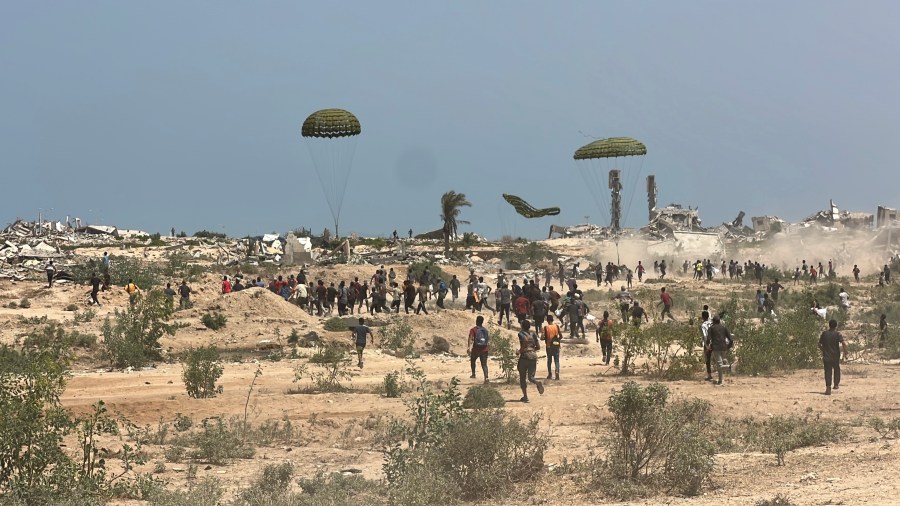
The Associated Press reported last month that planes from the Jordanian and UAE Air Forces airdropped 17 tons of aid packages last month. Philippe Lazzarini, the head of the United Nations agency for Palestinian refugees, warned that airdrops are “expensive, inefficient and can even kill starving civilians.”
The 17 tons of airdropped aid amounts to less than one aid truck carrying food based on the World Food Programme’s calculation of nearly 19 tons per truck.
On Sunday, 180 trucks carrying aid entered Gaza, according to the Israeli military body in charge of overseeing humanitarian aid.
Based in the Nuseirat camp in the central Gaza Strip, Mghari’s photography has been featured in Al Jazeera and other publications since the start of the war. He believes the planes that dropped aid in the region were Belgian and Greek.
He says food that enters the region is often susceptible to theft by armed gangs, often leaving “crumbs” of food left when it gets to its destination.
When he tries to buy his own food, he told NewsNation that simple ingredients like lentils, flour and oil cost him as much as $100.
“There are nine people at home; we eat only one meal. Sometimes, we only eat bread, and sometimes, we don’t eat, just some water,” he said.
NewsNation reached out to the Israel Defense Forces for comment and did not hear back at the time of publication.
Documenting the fight for food in Gaza
As he documents life on the ground in Gaza, Mghari has captured heartbreaking images of mothers losing babies and children dying of starvation.
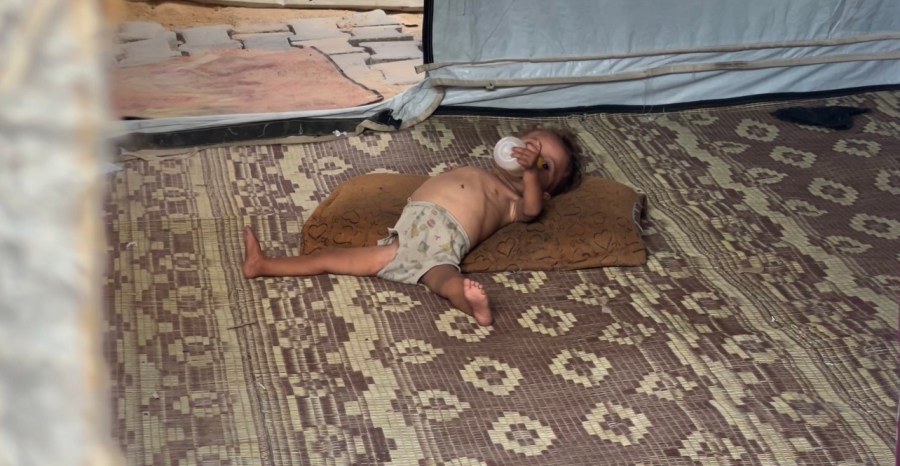
Photos of aid airdropped into the region show the chaos of people rushing to get food.
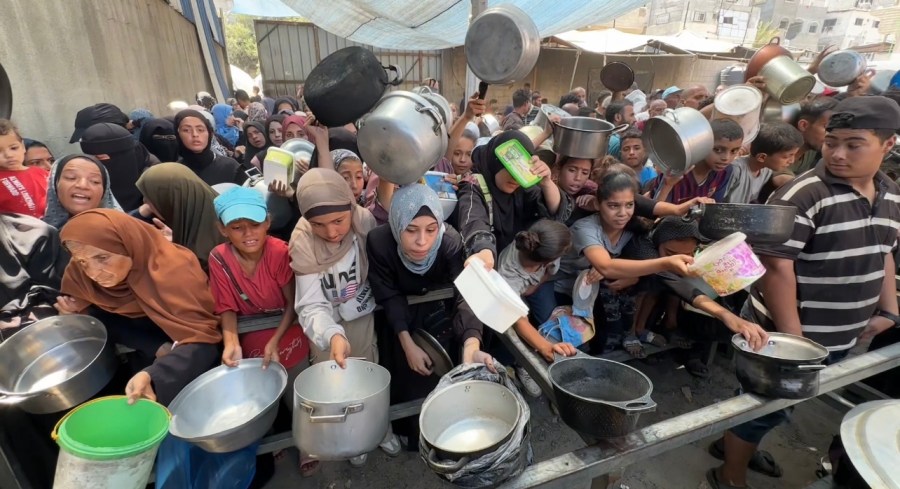
Others show dozens of Gaza residents waiting with empty pots in hopes of having them filled with food.
Mghari said to NewsNation, “It’s easy to say that I’m starting to lose my mind.”
Netanyahu states there is no starvation in Gaza
Last month, Israeli Prime Minister Benjamin Netanyahu contested, “There is no policy of starvation in Gaza, and there is no starvation in Gaza. We enable humanitarian aid throughout the duration of the war to enter Gaza – otherwise, there would be no Gazans.”
President Donald Trump was among those pushing back on Netanyahu’s statement, saying, “Those children look very hungry.”
The United Nations stated in July that Gaza is facing “catastrophic hunger,” and “children are dying before our eyes.”
The World Health Organization announced last month, “Malnutrition is on a dangerous trajectory in the Gaza Strip, marked by a spike in deaths in July.”
The WHO reported that of the 74 malnutrition-related deaths that occurred in 2025, 63 of them happened last month, including 24 children under the age of 5.
“Most of these people were declared dead on arrival at health facilities or died shortly after, their bodies showing clear signs of severe wasting,” the agency reported.
The Associated Press contributed to this report.