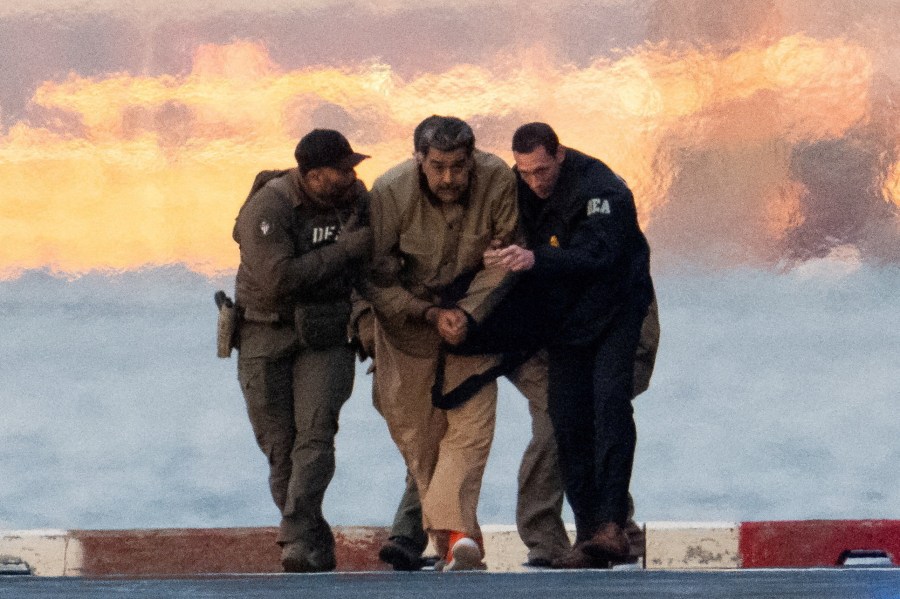
(NewsNation) — Andrés Ignacio Henríquez, a Caracas-based journalist, told NewsNation the days following the capture of Venezuelan President Nicolás Maduro have been extremely tense as groups occupy different points throughout the city.
Henríquez spoke with NewsNation on Thursday, despite the risk of facing potential consequences, such as being jailed for speaking to the American press, saying it’s important for Americans to understand what’s happening on the ground in Venezuela.
He said shock groups known as Colectivos have been deployed by Chavismo, a left-wing authoritarian movement started by former Venezuelan President Hugo Chavez, are restricting traffic and searching phone messages for support of Maduro’s capture. The groups are made up of heavily armed civilians who historically have been used to intimidate the population, Henríquez said.
“They are doing all of this under the orders of Maduro’s allies who remain in power, “ Henríquez explained.
He said at least 14 journalists in Venezuela’s capital city have been detained since Saturday, 13 of whom were from international media outlets.
“As of this hour, 13 have been released without being formally charged, and one has been deported. They were subjected to equipment inspections and the tracking of their calls and social media messages. This is the danger of being a journalist in Venezuela,” the journalist said.
Emmanuel Rincón, political strategist, lawyer, and Venezuelan exile, who fled to the U.S. after Maduro threatened his life, told NewsNation that the Chavista regime has designated laws to arrest anyone speaking out against the dictatorship.
“They have created legislation they call anti-fascist laws to persecute anyone who reports on, amplifies, or speaks out against the regime’s authoritarian policies. For more than a decade, the average number of political prisoners in Venezuela has been in the thousands,” Rincón said.
The Venezuelan attorney stays in contact with friends and family in the nation who live in constant fear.
“In fact, people close to me who remain in Venezuela save my phone number under a different name, and some do not follow me on social media because that could lead to their arrest during random phone inspections,” Rincón said.
Henríquez said following the raid, the streets of Caracas were “completely empty.”
“There was little traffic, and no one went to work. Schools and universities have not yet resumed activities following the Christmas break. Shops and businesses did not open their doors, and there were long lines at supermarkets and gas stations. People were desperate to buy food and water, unsure if more attacks would follow or if the country’s situation would worsen,” he said.
For now, the situation has returned to a “semblance of normalcy,” but Henríquez said there’s “a lingering feeling in the air that anything could happen at any moment.”
In the wake of Maduro’s ouster, Henríquez noted that while there is a general sense of “relief” and “happiness,” there is caution due to Chavismo still being active in the country.
“I can assure you that Chavismo is immensely unpopular in Venezuela. We are talking about a system that has murdered, persecuted and humiliated Venezuelans for decades,” the reporter said.
Henríquez said the Chavistas hold control over the nation’s intelligence agencies and armed forces. Given their power, it was the best decision to leave former Vice President Delcy Rodríguez as the interim president.
“Leaving someone in power who lacks the necessary respect from all these factions would have been suicide,” Henríquez said. “Venezuela could easily descend into chaos if these factors are not taken into account. I believe it was the right decision to leave Rodríguez in power and dictate the necessary guidelines from Washington so that the Chavista regime dismantles itself.”