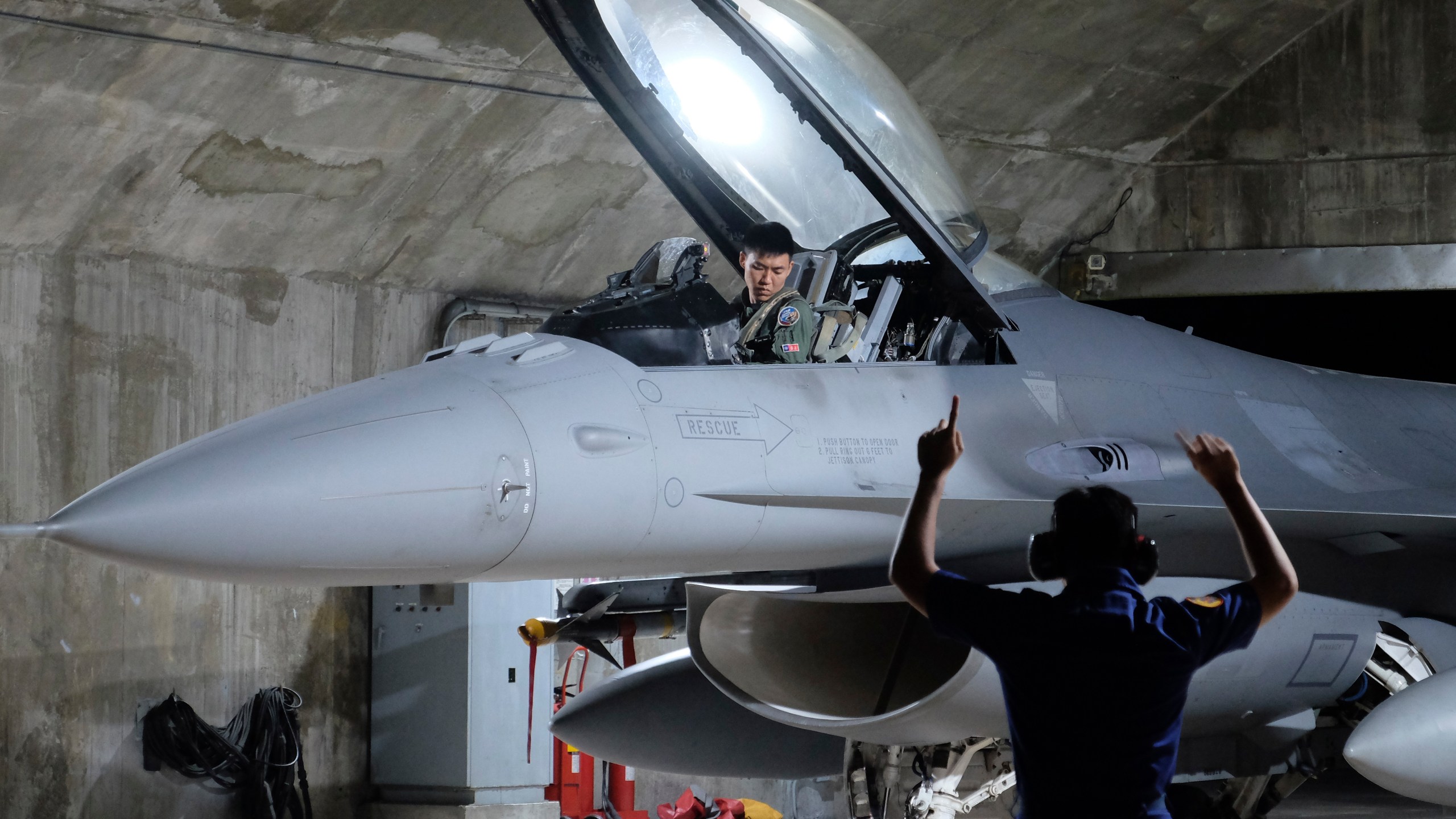
WASHINGTON (Reuters) – The U.S. approved the sale of fighter jet and other aircraft parts to Taiwan for $330 million on Thursday, marking the first such transaction since President Donald Trump took office in January, drawing thanks from Taipei and anger in Beijing.
“The proposed sale will improve the recipient’s capability to meet current and future threats by maintaining the operational readiness of the recipient’s fleet of F-16, C-130,” and other aircraft, the Pentagon said in a statement.
Washington has formal diplomatic ties with Beijing, but maintains unofficial ties with Taiwan and is the island’s most important arms supplier. The United States is bound by law to provide Taiwan with the means to defend itself.
Taiwan’s presidential office, noting the arms sale was the first announced by the current administration, thanked the U.S. government for continuing the policy of regularized arms sales to Taiwan and supporting Taiwan in enhancing its self-defense capabilities and resilience.
“The deepening of the Taiwan-U.S. security partnership is an important cornerstone of peace and stability in the Indo-Pacific region,” presidential office spokesperson Karen Kuo said in a statement.
The sales were expected to “take effect” within one month, Taiwan’s defense ministry said in a statement.
The provision of the parts will help maintain the air force’s fighter readiness and bolster air defenses, strengthen defensive resilience and enhance the island’s ability to respond to China’s “gray-zone” incursions, the ministry said.
China’s military stages regular missions into the waters and skies around Taiwan, which the government in Taipei terms “gray-zone” activities designed to pressure the island but which stop short of actual combat.
China expressed anger, as it always does with U.S. arms sales to Taiwan.
“The Taiwan question is the core of China’s core interests and the first red line that must not be crossed in China-U.S. relations,” foreign ministry spokesperson Lin Jian told reporters in Beijing.
China claims democratically governed Taiwan as its own territory and has not ruled out the use of force to take control of the island. Taiwan’s government strongly objects to Beijing’s sovereignty claims and says only Taiwan’s people can decide their future.
Trump says Chinese President Xi Jinping has told him he will not invade Taiwan while the Republican leader is in office. Neither Xi nor the Chinese government have made such a pledge publicly, and Reuters has not independently verified that they have done so privately.
The announcement of the possible arms sale comes after Trump and Xi met late last month in South Korea in an effort to secure a trade deal. Ahead of the meeting, there was a fear in Taipei that there could have been some sort of “selling out” of Taiwan’s interests by Trump to Xi.
(Reporting by Kanishka Singh; Additional reporting by Ben Blanchard in Taipei, Joe Cash in Beijing, Ismail Shakil and Trevor Hunnicutt in Washington; Editing by Himani Sarkar and Kate Mayberry)