
(WHTM) — No human has ever heard a dinosaur’s roar, so most people believe the iconic film series “Jurassic Park” and “Jurassic World” correctly depict how they communicated. However, according to experts, most dinosaurs sounded completely different than how they were portrayed in the movies.
The BBC says there is no simple answer to what dinosaurs sounded like, as they evolved into countless shapes and sizes, but scientists have used fossils to reconstruct vocal organs to recreate how they could have sounded.
In one study conducted by the New Mexico Museum of Natural History and Science, paleontologists dug up a nearly complete skull of a Parasaurolophus and used computer technology to simulate how the creature sounded.
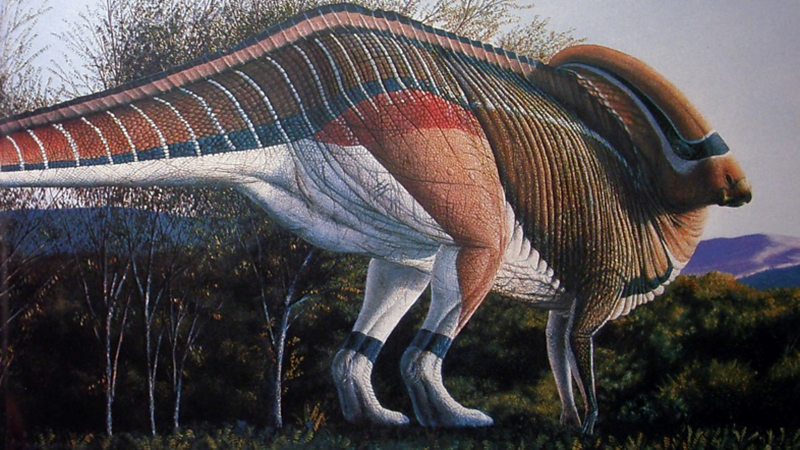
To listen to how the creature may have sounded, click here.
“I would describe the sound as otherworldly,” Tom Williamson told BBC, who was one of those who worked on the dig and is now curator of palaeontology at the museum. “It sent chills through my spine, I remember.”
In an interview with the Carnegie Museum of Natural History, paleontologist Dr. Julia Clarke of the University of Texas explained that instead of open-mouthed roars, scientists theorize that many dinosaurs may have produced closed-mouth vocalizations.
“Animals produce closed-mouth vocalizations by inflating their esophagus (the tube that connects the throat and stomach) or tracheal pouches (pouches on their windpipe) while keeping their mouth closed, producing something comparable to a low-pitched swooshing, growling, or cooing sound,” said Dr. Clarke.
According to Vox, the most notable dinosaur sounds from the Jurassic Park series were mainly constructed using combinations of different types of mammal sounds, including tigers, lions, koalas, donkeys, dolphins, and elephants.
Dr. Clarke adds that T-rexes did not typically open their mouths and roar like the movies depicted.
“The Jurassic Park films have got it wrong,” said Dr. Clarke in another interview with BBC. “A lot of the early reconstructions of dinosaurs have been influenced by what we associate with scary noises today from large mammalian predators like lions. In the Jurassic Park movies, they did use some crocodilian vocalisations for the large dinosaurs.
“But on screen, the dinosaurs have their mouths open like a lion roaring. They wouldn’t have done that, especially not just before attacking or eating their prey. Predators don’t do that – it would advertise to others nearby that you have got a meal, and it would warn their prey they are there.”
Jurassic World: Rebirth is expected to release on July 2, 2025.