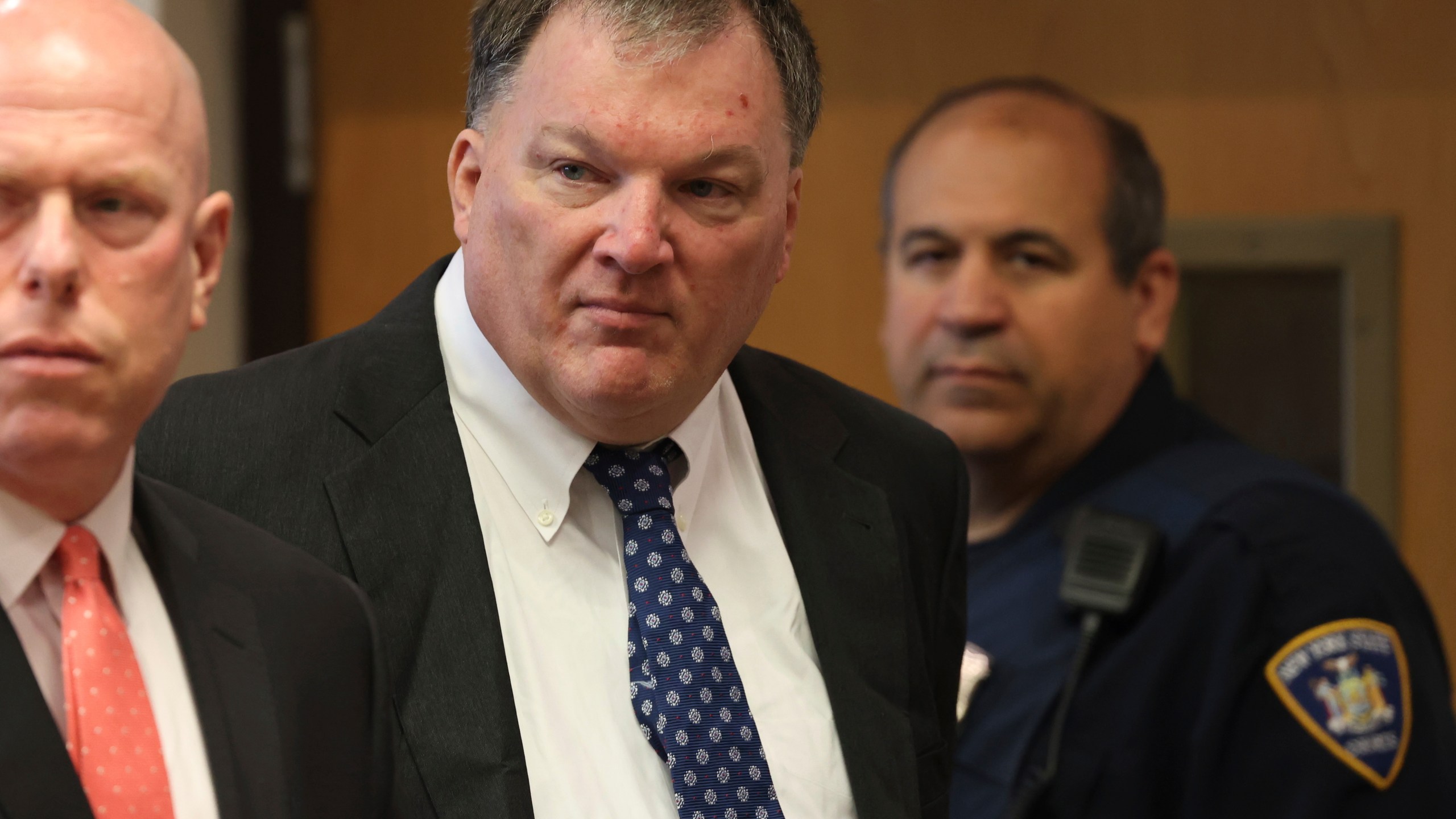
NEW YORK (PIX11) — Accused Gilgo Beach serial killer Rex Heuermann was back in court on Long Island on Tuesday. His defense team pleaded that the judge not accept DNA findings as evidence. Prosecutors said those findings will show that Heuermann killed seven women.
DNA is at the core of the prosecution’s case against the alleged killer. But defense attorneys claim the science, called nuclear DNA, has never been used before in a New York court of law.
Heuermann stood with no expression as defense attorney Michael Brown claimed prosecutors were hanging their case on forensics found on one strand of hair from each of the seven victims. The California lab that performed the test, he argued, is not certified in New York.
Suffolk County District Attorney Ray Tierney defended the use of the evidence and noted the science has been around for many years.
“This is the first time we’re taking a sound science and applying it to the criminal coverage area. It is the field of DNA analysis accepted both in New York State and the country,” Tierney said.
Judge Timothy Mazzei granted the defense another two weeks to receive more DNA evidence that is caught up in a lengthy download situation.
“They call it science. We’re disputing that, and we’re looking forward to getting things we are entitled to. We’re still waiting for a significant portion of discovery we’re entitled to,” Brown said.
Heuermann has pleaded not guilty to first and second-degree murder in the killings along Gilgo Beach of Melissa Barthelemy, Amber Lynn Costello, Megan Waterman, Maureen Brainard-Barnes, Jessica Taylor, Valerie Mack and Sandra Costilla.
In another argument in court, the defense called for separate trials, contending that one trial influences the jury when so many allegations are lumped together.
“They have nothing to do with each other in sense of location, where bodies were found, type of murder that was committed and the evidence that they have. They have no business trying some of those in court being tried at the same time,” Brown contended.
However, the prosecution said it’s a serial killer case and that they all belong at one trial.
“This defendant is a serial killer who methodically hunted down and murdered seven women. That is our case. A lot of the evidence of one charge should be admissible in court as evidence of the same charge,” Tierney said.
After a year and a half, the judge in the case appears to be running out of patience and is eager to move the case to trial. He has now ordered everyone back in court March 12 to further consider whether the DNA evidence from the California lab should be admissible at trial.