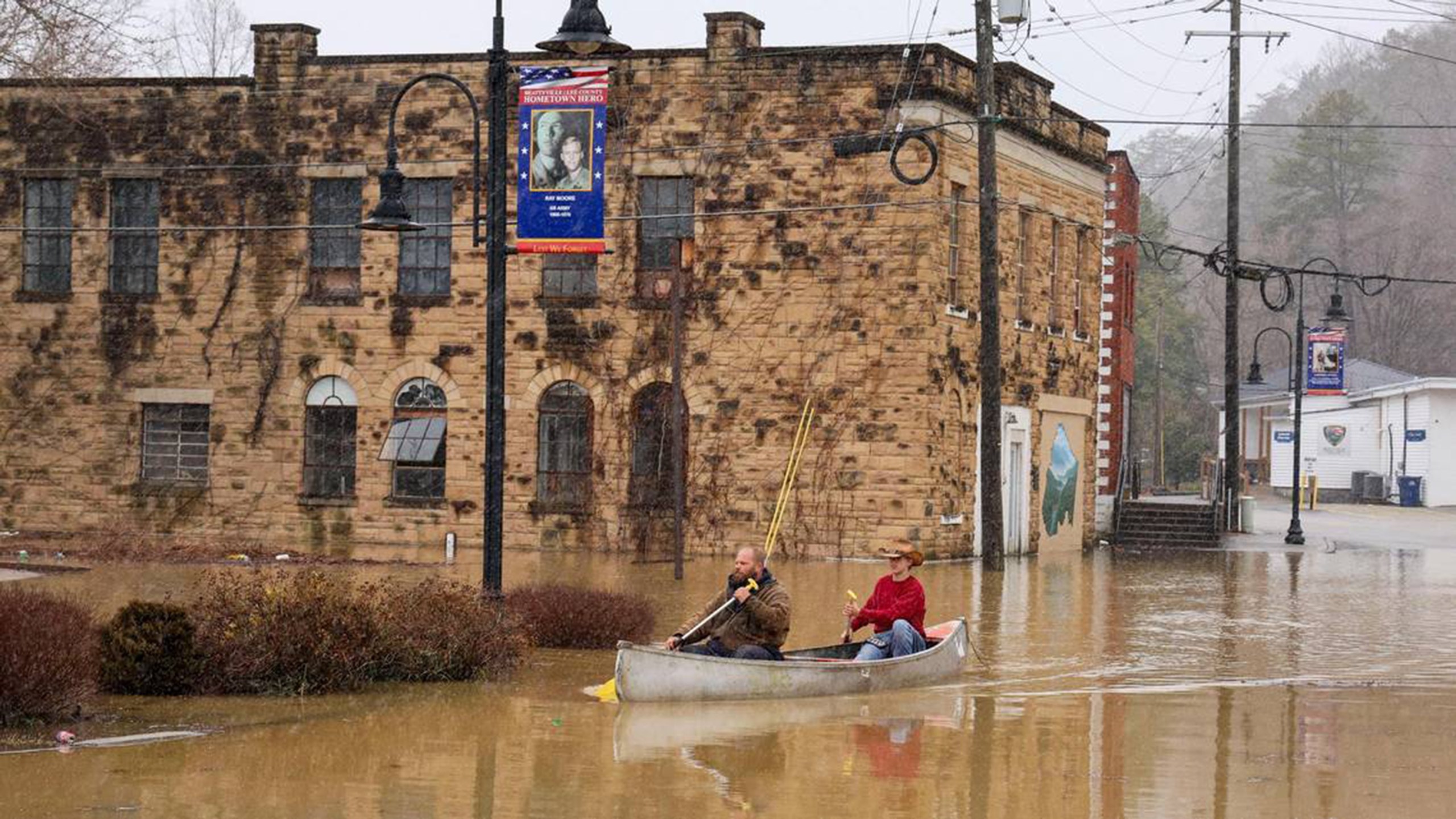
(NewsNation) — Only about 1% of Kentucky residents carry flood insurance despite many parts of the state currently coping with what Gov. Andy Beshear calls “one of the most significant natural disasters we’ve seen in our lifetime.”
Recent flooding has claimed at least 14 lives this winter, coming less than three years after 44 people were killed in severe floods in 2022. At the time, however, the Kentucky Energy and Environment Cabinet estimated that 20% of claims were filed by people living outside the high-risk areas.
Despite the deadly flooding, some Kentuckians may not be able to afford flood insurance. Meanwhile, others who live in high-risk areas or who have received assistance are required to pay for it.
In many cases, yearly premiums that may seem manageable for middle-class homeowners have become “almost impossible” to afford.
The two deadly flooding events since 2022 have Kentuckians ready to change their thinking “dramatically” about whether to pay for flood protection, Michael Weglarz, director of the Risk Management and Insurance program at Eastern Kentucky University, said.
“You don’t think it’s going to happen,” Weglarz told NewsNation. “But when it does, you think, ‘OK, do I have insurance coverage to provide the protection that we need?’”
Kentucky floods affecting the poorest communities
The Federal Reserve of Cleveland reported that 60% of homes damaged in 2022 were occupied by residents earning $30,000 or less yearly.
After that event, flood insurance premiums doubled in some Kentucky counties following the 2022 storms, the Lexington Herald-Leader reported.
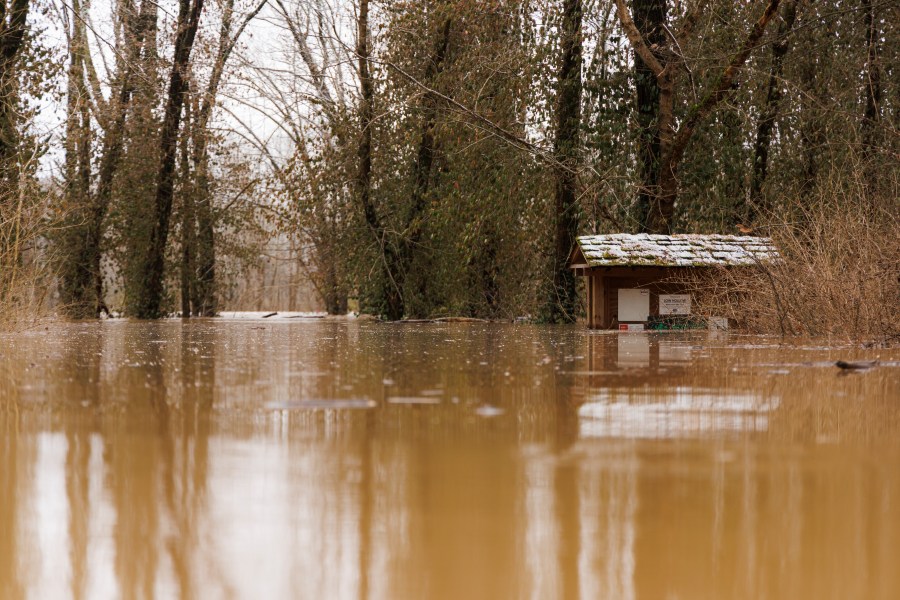
In Knott County, where 18 people died, FEMA insurance price projections indicated that premiums nearly doubled from $1,347 per year for a single-family home to $2,675.
In Martin County, where about 40% of people live in poverty, annual premiums jumped by 290% to a price of $4,509, according to the Kentucky Lantern.
However, a spokesman for the Insurance Information Institute said that federal law mandates that NFIP premium increases are capped at 18% per year. Those caps, however, do not relate to private flood insurance policies, which the spokesman said are limited in Kentucky.
Rising premiums have also become problematic in communities like Hazard, where 15% of the population live on less than $10,000 per year, and 40% live on less than $25,000, R. Scott McReynolds, the executive director of the Housing Development Alliance, said.
“That really makes it unaffordable,” McReynolds told NewsNation. “It’s a real dilemma.”
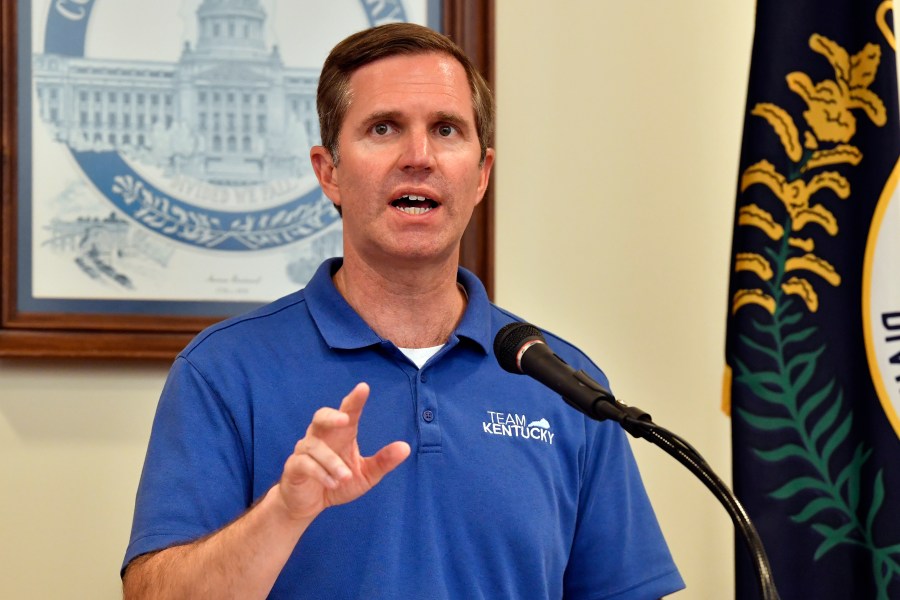
Many of the people McReynolds works with struggle to make ends meet. After flood insurance rates grew substantially after flood events in 2021 and 2022, many people were forced to choose how to best stretch their dollar, he said.
“If it’s not part of your mortgage, it’s going to be easy to go without it,” McReynolds said. “That’s not a problem until it’s a problem, and then, it becomes a big problem.”
How much does flood insurance cost in Kentucky?
The average flood insurance premium in Kentucky was $1,287 per year in 2024, according to the Insurance Information Institute. The rate was more than $400 higher than the national average price for policies offered through the Federal Emergency Management Agency’s National Flood Insurance Program (NFIP).
Kentuckians who live in high-risk flooding zones that were mapped out by FEMA and who carry a mortgage through a traditional bank must carry flood insurance. Traditional homeowners insurance does not cover flood damage.
Additionally, homeowners who have accepted federal assistance must carry flood insurance, even if a home that was damaged or destroyed by flooding was replaced by a new one, FEMA said. In 2023, FEMA changed its flood insurance pricing policy “to deliver rates that are actuarially sound, equitable … and better reflect a property’s flood risk.”
For many, though, the insurance remains too costly as some policyholders will see their premiums double or triple, the Kentucky Lantern reported.
“The problem is, if it’s not required, people typically won’t buy it,” Weglarz said.
Will Kentucky see insurance companies pull out like Florida and California?
Wildfires in California and hurricanes in other parts of the United States have led some insurance companies to pull out of states like Florida due to natural disasters.
As of two years ago, in Louisiana, at least 12% of homeowners across the state didn’t have any insurance at all. In Florida, homeowners’ insurance costs have increased by 102% in the last three years, the Insurance Information Institute told NewsNation.
But Weglarz remains uncertain about the issue of how often deadly flooding hits Kentucky could change how insurers react. The Kentucky Energy and Environment Cabinet considers flooding the most frequent and costliest natural disaster risk facing the state, which Weglarz said carries weight.
Weglarz believes some insurers could rethink how much they charge in flood insurance premiums amid the latest flooding.
He said for every $1 property insurers receive in premiums, they pay $1.60 in flood damage claims. To change who is required to carry flood insurance, FEMA would need to change its maps that designate high-risk flood areas.
A FEMA spokesperson told NewsNation that there is no “single process” for updating flood maps. Instead, the maps are updated continuously based on an individual community’s needs. The spokesperson said that flood maps are dynamic and do need to be changed, but that the age of a map does not necessarily reflect its accuracy in depicting minimum standards for floodplain management and the highest risk areas that require flood insurance.
Yet, as FEMA’s mapping process remains fluid, Weglarz worries that like the agency’s strategy, the threat of more dangerous flooding could remain an ongoing concern.
“These 100-year events are happening more on a regular basis,” Weglarz warns.” No one is immune to these catastrophic events, and you should be prudent in your decision-making.”