(NewsNation) — President Donald Trump announced the launch of the “gold card,” a new visa program allowing investors to enter the United States.
During a roundtable discussion with Commerce Secretary Howard Lutnick and tech business leaders, Trump announced that the website for the program would soon be live for people to look at and sign up for. The president said the program is like a green card, but comes with “better privileges and a stronger path to citizenship.”
A “platinum card” program is still in the works, as well as a “corporate gold card” for businesses.
He added all funds from the visas would go toward the U.S. government. Here’s what you need to know about the program.
What are the gold card, gold corporate and platinum cards?
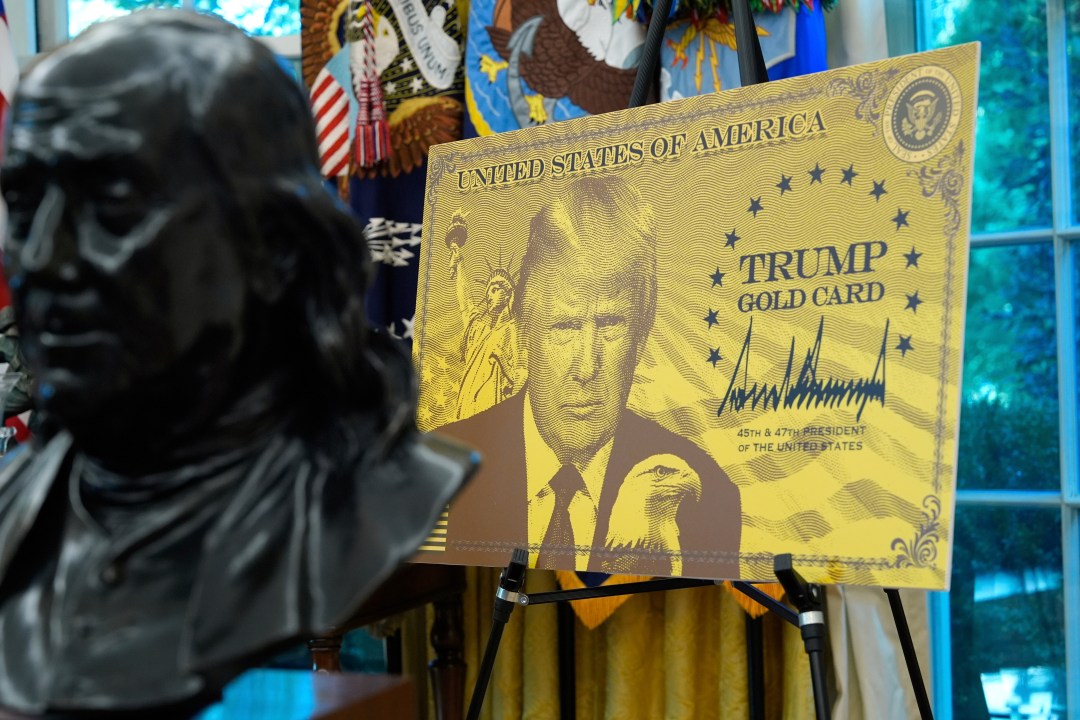
According to its website, the gold card is a visa that is based upon an individual’s ability to “provide a substantial benefit to the United States.” In order to apply, interested applicants are required to pay a $15,000 nonrefundable processing fee to get things started on their application. Once a person is approved, they are required to make a $1 million gift to the U.S.
The website says that after paying necessary fees and undergoing vetting by the Department of Homeland Security, applicants will receive U.S. residency “in record time.”
The platinum card, which has not yet been launched and requires interested people to join a waitlist, allows for future applicants to live in the U.S. for 270 days per year without being subject to tax on non-U.S. income. Like the gold card, applicants must pay a $15,000 processing fee and undergo DHS vetting.
After a $5 million contribution to the U.S. government, people who have a platinum card will be guaranteed citizenship in the country.
The corporate gold card, aimed at businesses, is issued to corporate sponsors for one or more of their employees. The company must pay a $15,000 nonrefundable processing fee for each employee, and once vetting is done, the corporate sponsor must pay a $2 million fee for each employee it is sponsoring for citizenship in the country. The corporate gold card may be subject to an annual maintenance fee, an amount that has not been set.
As of right now, it is unclear how long the DHS vetting will take.
Where does the money go?
Trump and Lutnick said Wednesday that the money collected from the visas will go toward the Treasury Department.
What are the vetting requirements for the visas?
The vetting requirements were not yet made clear by the Trump administration, but all vetting will be done by DHS.
Can a gold card be revoked?
Yes. According to the gold card website, the visas can be revoked if a person poses a national security risk or other risk to the U.S.
Do you have to pay taxes if you have a gold card?
Yes. Gold card and platinum card applicants will have to pay taxes just like other permanent residents and U.S. citizens.
How does the gold card differ from the green card and H-1B visa process?
Trump said gold card visas hold the same privileges as a green card, but it is not the same as an H-1B visa, which allows employers to hire non-U.S. citizens for highly skilled jobs temporarily.
The visas are valid for three years and can be extended once for a total of six years. Recipients must hold a bachelor’s degree or higher in a field related to their specialty.
Is there a cap on the number of gold cards issued?
No. The president has said there will not be a cap on the number of gold cards given to people, as both he and Lutnick expressed Wednesday that they want to bring in the “best of the best” into the country.
Will any nations be excluded from the gold cards?
As of right now, it is not clear if the Trump administration is excluding any nations from applying for a gold card.
What have been criticisms of H-1B visas and foreign workers?
In September, Trump signed a proclamation that requires a $100,000 fee for all applicants for an H-1B visa. The administration in the past has said the program takes jobs away from skilled American citizens, and some critics have argued the same thing.