(NewsNation) — Risking whether a migrant criminal who is captured by federal immigration agents on an active warrant is released from police custody is forcing U.S. Border Patrol to rethink whether to turn detainees over to local law enforcement agencies where sanctuary policies are in place, officials told NewsNation.
With space at federal detention centers at a premium, local jails in some Republican-led states have provided a holding space for those in federal custody. However, as more sanctuary cities dig their heels in by refusing to cooperate with immigration enforcement efforts, officials say that Border Patrol agents are facing a conundrum with those they apprehend.
David Kim, the assistant chief patrol agent at the Border Patrol’s El Centro, California, sector, told NewsNation some migrants arrested on warrants have been turned over to local police only to be released on bond. Some failed to appear in court and disappeared, leaving Border Patrol to “go back to square one” and denying justice to the victims of the crimes.
“It definitely gives us pause about if turning this person over is worth the risk it would pose to the American people if we let this person go,” Kim said. “Honestly, that’s a hard call because you never know.”
Homeland Security takes aim at sanctuary cities
The Department of Homeland Security has identified nearly 500 cities as having sanctuary policies in place. The agency accused those places of “deliberately obstructing the enforcement of federal immigration laws and endangering American citizens.” Trump administration officials have accused sanctuary city leaders of providing a safe haven for rapists and murders while also placing federal immigration agents at risk.
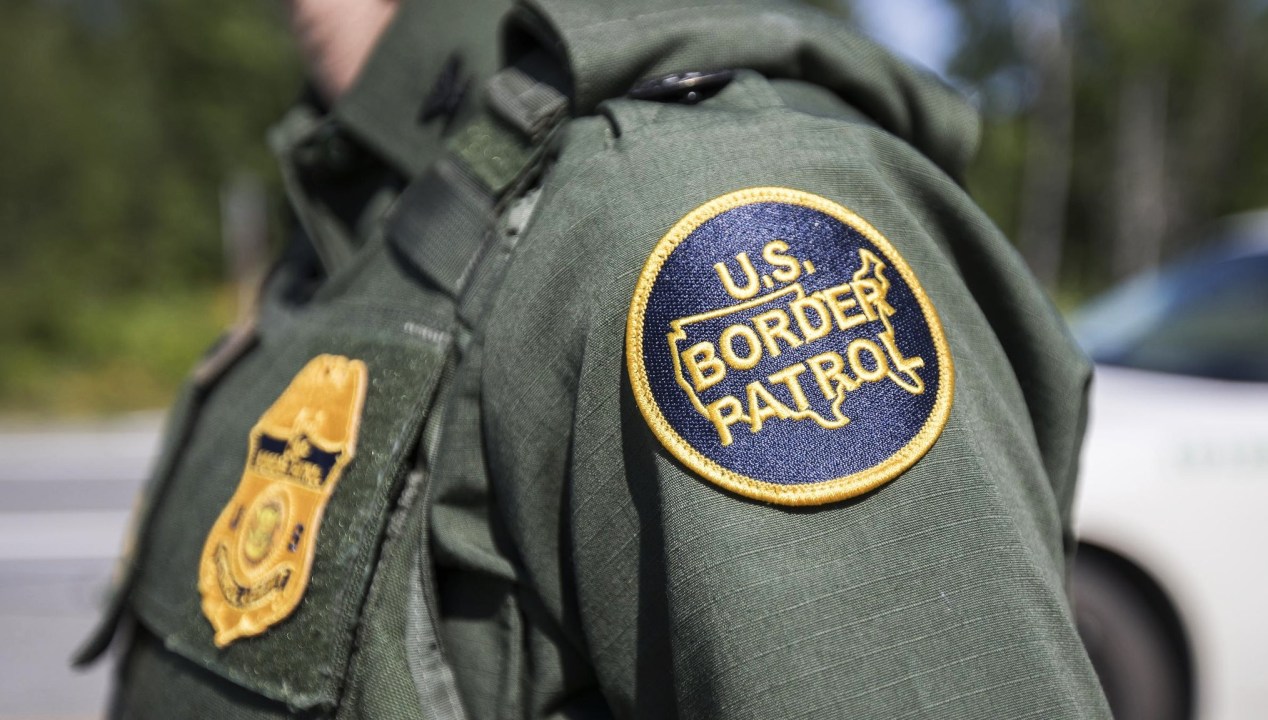
Border Patrol recently refused to turn a migrant it arrested in California, whom agency officials said had overstayed a visa and had a warrant out for his arrest on an assault with a deadly weapon charge.
Rather than being turned over to the local department outside of Los Angeles that issued the warrant, the man was turned over to ICE and faces deportation, Chief Border Patrol Agent Gregory Bovino said. The man was arrested during a Border Patrol traffic stop, 121 miles from where the criminal warrant was issued.
The Monterey Park Police Department, which issued the warrant, said on its website that immigration enforcement remains a federal duty, not local. The statement said the department recognizes the importance of fostering trust between community members and local law enforcement to ensure public safety and the effective delivery of municipal services.
Kim said agents who make captures around sanctuary cities must consider the totality of the case and use their judgment to decipher the likelihood that the person could be released and subsequently victimize others, while Border Patrol relaunches their search for someone they have previously captured.
U.S. Customs and Border Protection does not actively track how many detainees are handed over to federal agencies rather than to local officials. But the Border Patrol’s practice of choosing not to deal with law enforcement agencies that are prohibited from cooperating with federal immigration enforcement efforts is nothing new, Kim said.
Because of the California Values Act, local police and sheriff’s offices are not required to honor federal detainers put on migrants being sought. Those departments may cooperate with federal agencies when more serious charges, including murder, are involved. Yet, with lesser charges, even though local police chiefs and sheriffs do not take issue with federal officers, politicians who enact sanctuary laws tie the hands of the local officers, Kim said.
That has forced Border Patrol to choose to eliminate dealing with local departments altogether in some cases. Chris Clem, the retired Border Patrol sector chief in Yuma, Arizona, told NewsNation that while the preference of Border Patrol is to work directly with local departments, the current political climate has changed that.
“Given the fact we get zero cooperation from sanctuary cities, I can see where that is a smart move because we want to get the subject out of the country if he’s deportable,” Clem said.
Chad Bianco, the sheriff in Riverside County, California, who is also running for governor in California, has expressed frustration with not being able to do more. He previously told NewsNation that if elected, he plans to do away with the state’s sanctuary law.
“We have never cared about doing their job,” Bianco said of carrying out federal immigration enforcement. “We need that tight-working relationship … We must have that interaction with them so we can keep everyone safe, and this law, the sanctuary state law, absolutely prevents that.”
Sanctuary cities have become ‘combative’ over past 10 years
Clem, who retired in 2022 after serving served with Border Patrol for more than 27 years before, said sanctuary city laws prohibiting cooperation with federal immigration enforcement have created problems for the nation’s larger cities over the past decade.
With illegal border crossings dropping by more than 94% from this time in 2024, since President Donald Trump took office in January, the focus of federal immigration agencies has shifted away from the border itself.
That has led to a larger immigration enforcement effort in cities like Los Angeles, Chicago, New York and Boston, where Border Patrol agents are being deployed to search out migrants who are on the target lists for federal agencies.
But that has also led to more cases of Border Patrol agents facing the choice of whether to turn detainees directly over to ICE.
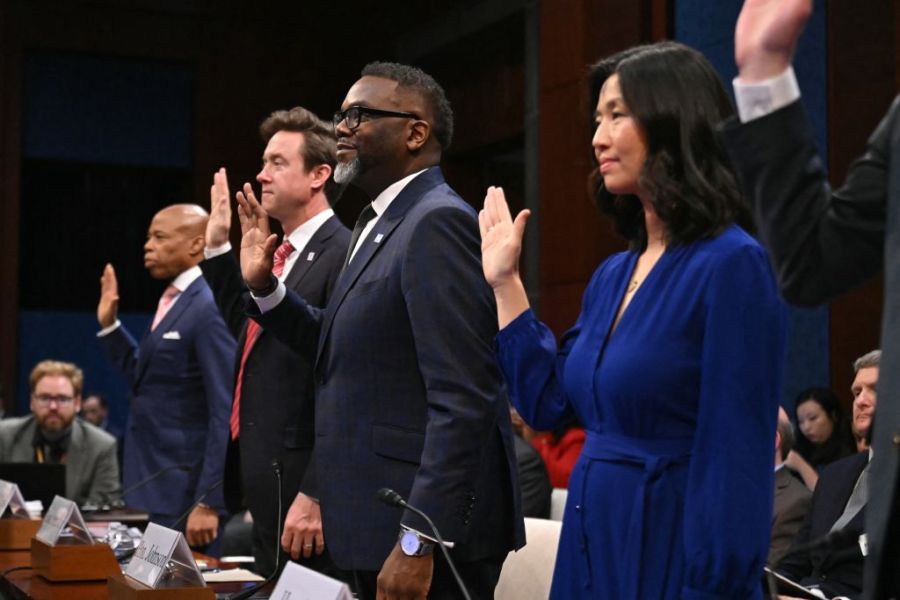
While leaders like Los Angeles Mayor Karen Bass and Chicago’s Brandon Johnson have expressed their desire to see the most serious of migrant criminals deported, they have criticized Trump’s immigration plans and his involvement of federal agencies like ICE.
Clem says the solution is a more simplistic immigration reform that blends common sense and compassion. He said that those pushing for due process for migrants taken into federal custody need to understand that they need to be handed over to an immigration judge to receive it.
“At the end of the day, if we don’t have the accountability of the enforcement, then the integrity of the entire process is thrown out,” Clem said.