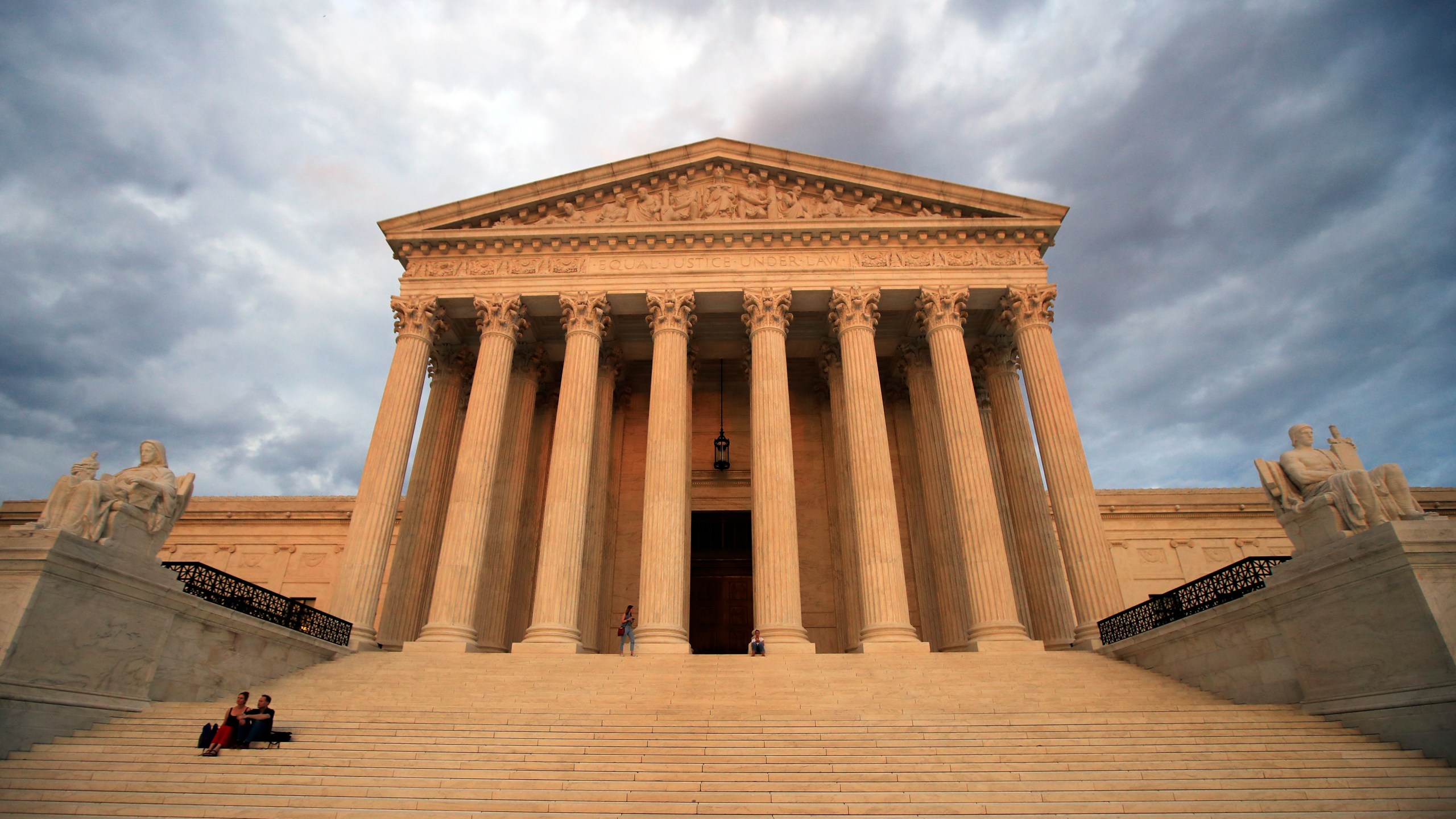
(NewsNation) — Trump administration officials are seeking intervention from the U.S. Supreme Court to overturn a judge’s decision that blocks the deportation of five Venezuelan nationals that President Donald Trump is seeking to remove from the United States under the Alien Enemies Act.
The Justice Department is seeking an emergency order that would allow the Venezuelans to be deported, claiming that they are members of the prison gang Tren de Aragua. This week, Chief U.S. District Court Judge James Boasberg paused the scheduled flights, saying that the detainees deserve a hearing in which they plan to deny that they are gang members.
Boasberg is also seeking more details about two flights on March 15 to decide if the administration defied his oral and written orders to block the flights. A panel of appellate court judges then ruled in a 2-1 decision upholding a previous order that temporarily blocks the deportations of the migrants.
Boasberg previously ordered planeloads of Venezuelan detainees to return to the United States after they had taken off. That did not take place, however, and since then, Boasberg has asked the administration for further details about the timing of the plane’s departures. Administration officials have refused, claiming “state secret privilege” in declining to provide the judge with more specifics.
Trump, along with Attorney General Pam Bondi, Homeland Security Secretary Kristi Noem, Secretary of State Marco Rubio, and other federal officials were named in the filing, which is asking the Supreme Court to vacate Boasberg’s order to halt the flights.
Trump administration officials are arguing that because Trump declared Tren de Aragua a foreign terrorist organization in an executive order shortly after taking office, officials have the right to deport the immigrants without them appearing in court.
Meanwhile, the Supreme Court has asked attorneys for the five Venezuelans who are challenging the administration’s efforts to invoke the Alien Enemies Act to respond to the Justice Department by Tuesday morning.
Trump’s invoking the war-time act, which was passed in 1798, is the first time it has been used since World War II.
“This case presents fundamental questions about who decides how to conduct sensitive national-security-related operations in this country — the President, through Article II, or the Judiciary, through (temporary restraining orders),” Acting Solicitor General Sarah Harris wrote in the 44-page filing. “The Constitution supplies a clear answer: the President. The republic cannot afford a different choice.”
Justice Department officials argued in the filing that federal courts should not interfere with diplomatic negotiations. They said that attorneys for the Venezuelan nationals brought their argument to the wrong court, claiming that their motion should have been filed in Texas, where the five migrants are being detained.
“Here, the district court’s orders have rebuffed the President’s judgments as to how to protect the Nation against foreign terrorist organizations and risk debilitating effects for delicate foreign negotiations, Harris wrote in the court filing.