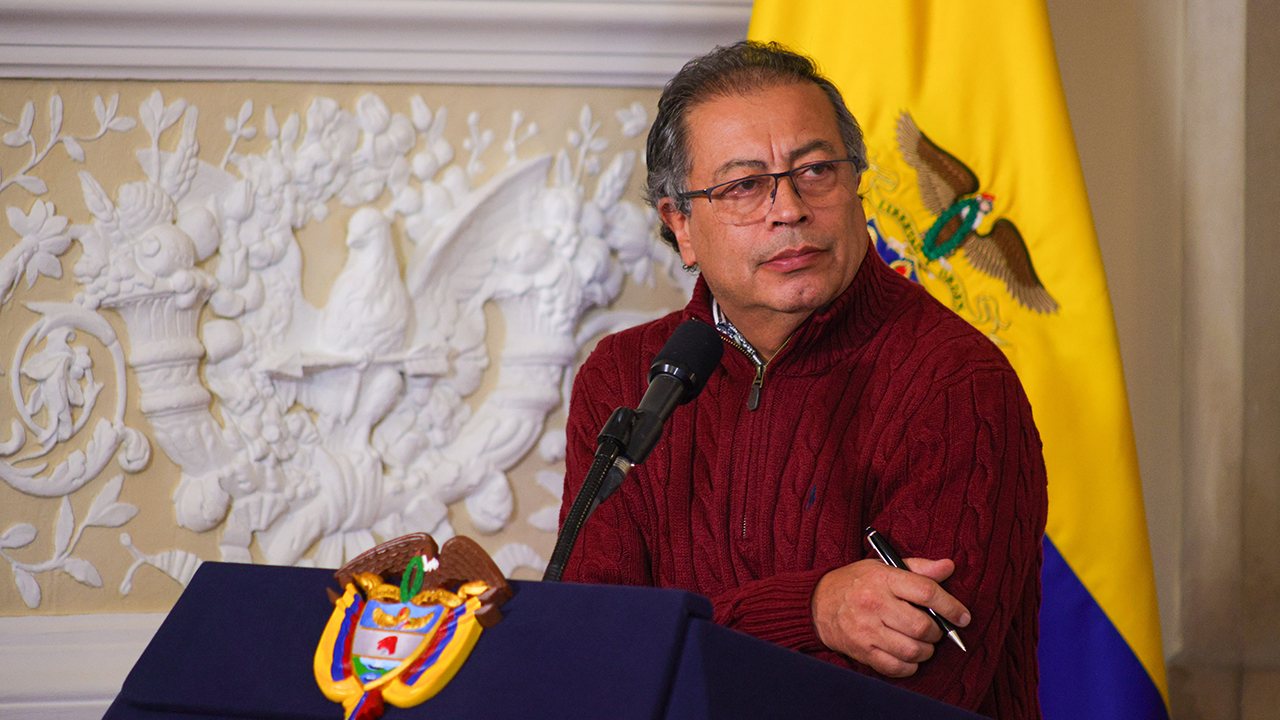
EL PASO, Texas (Border Report) – The president of Colombia is defending his decision to stop sharing drug intelligence with the United States.
In a Wednesday post on X, Gustavo Petro responded to critics in his country, accusing him of not consulting with Colombian armed forces leaders before taking punitive action against the U.S. for bombing drug boats off his country’s coast.
“The supreme commander of the military forces of Colombia is the president,” Petro wrote.
On Tuesday, members of the Colombian military told AFP they had seen Petro’s announcement on social media but had not been notified through official channels of the order to “suspend communications and other dealings with U.S. security agencies.”
The order stands until the Trump administration stops bombing drug boats in the Caribbean, Petro wrote on X. The U.S. reportedly has destroyed 19 boats and killed at least 75 occupants since September.
Military sources told AFP that U.S. agents rely on their Colombian counterparts to learn where high-speed boats carrying drugs take off toward the Caribbean. Americans then have to rely on detecting the boats at sea.
A former Colombian prosecutor told Bogota’s El Tiempo that Petro’s decision strengthens the U.S. argument for sanctions the U.S. Treasury Department placed on him and his family last month for allegedly facilitating the illegal trafficking of cocaine to America.
Petro is also facing criticism from political rivals worried that his spate with President Donald Trump threatens a decades-long military alliance and funding from the United States.
“President Petro is playing with fire,” said Juan Manuel Galan, an opposition senator and presidential candidate in Colombia. “He is leaving Colombia defenseless against organized crime and tearing the peace of mind of Colombians.”
Galan said transnational criminal organizations will be the winners of the Trump-Petro spate.
“The president (Petro) talks about intelligence, but does not think with intelligence. Suspending cooperation with (American) security agencies is a serious strategic error. Colombia needs to strengthen its intelligence, not weaken it. Isolating the country and breaking years of international cooperation only benefits the criminal groups,” Galan wrote on X.
Former Colombian President Andres Pastrana, who has a longstanding political feud with Petro, urged him to resign.
“I don’t know what he is consuming, I don’t know what is going on, but this is serious,” Pastrana told El Colombiano this week. “(He) has a mental problem.”

The U.S.-Colombia feud on cocaine trafficking to the United States has been brewing for years. Colombian coca production has been on the rise, according to the UN Office on Drugs and Crime.
The spike has been reflected in cocaine seizures at the U.S.-Mexico border. Customs and Border Protection seized approximately 70 tons of the drug in fiscal years 2024 and 2025.
Petro last month disputed the reported increase in coca production, said his administration has seized record amounts of cocaine, and that most illegal exports are going to Europe, not the U.S.
“Now we have missile strikes against fishermen in the Caribbean, where Colombia has its islands, its sea,” he said in a social media video. “No army in the world can use weapons against people, less so in the Caribbean against Colombians, innocent fishermen.”