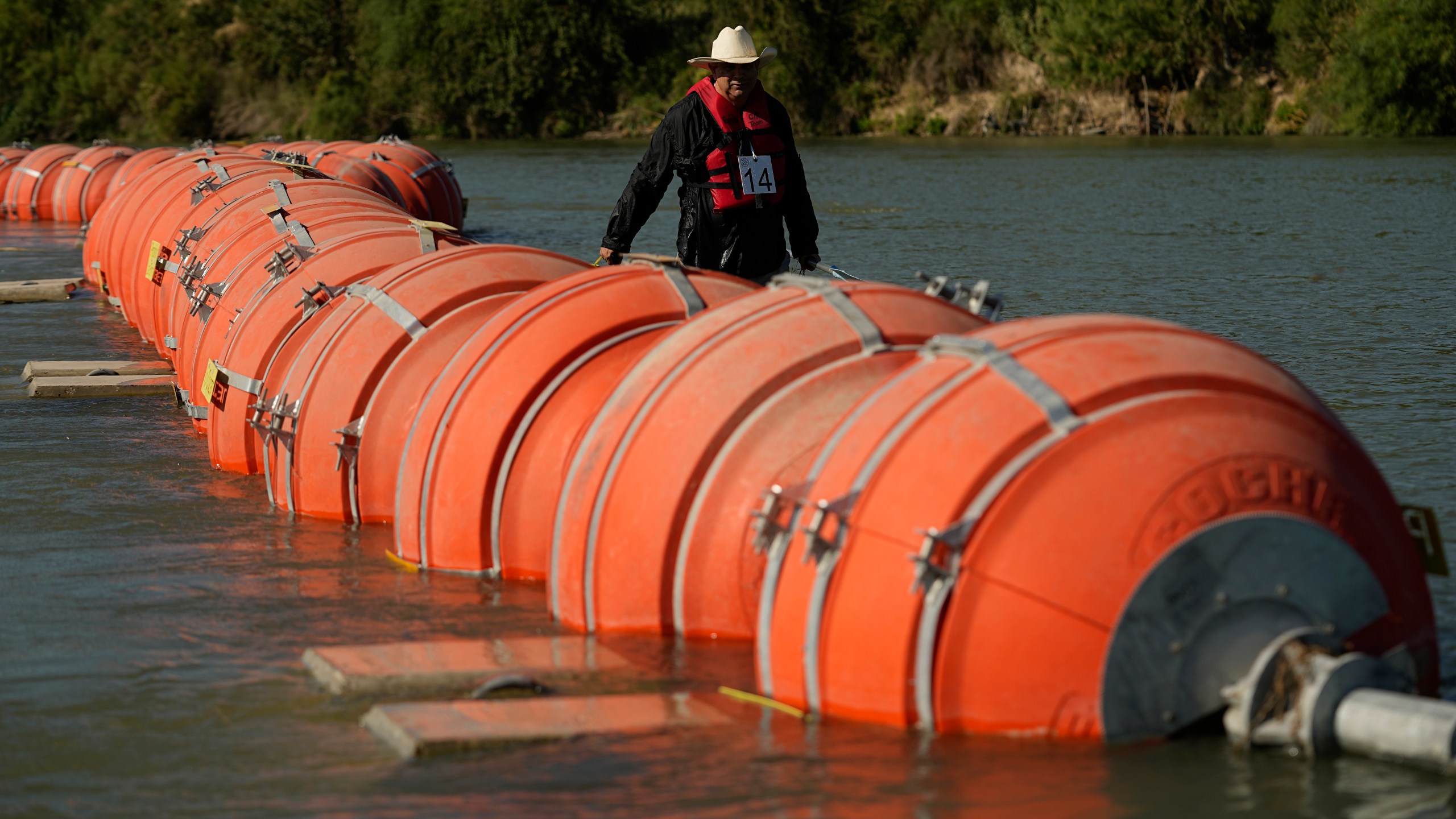
(NewsNation) — Aiming to prevent more people from crossing the border illegally, Texas Gov. Greg Abbott has doubled the size of a buoy barrier in the Rio Grande in the last couple of years.
Around 1,000 feet has been added to the barrier, which has previously been challenged in court. It was created in July 2023.
Border crossings can be dangerous. In November of 2023, hundreds of migrants attempted to cross the border in Eagle Pass, Texas. Several people, even babies, were swept away. NewsNation witnessed one man who was unconscious and required CPR to resuscitate him.
Crossings have dropped this year, reportedly by 94% compared to 2024. Officials have attributed this to several factors, including mass Immigration and Customs Enforcement deportations done under President Donald Trump’s administration.
Vance visits the border
Federal officials, including Vice President JD Vance, made a stop in South Texas on Wednesday at a location that was once a hot spot for migrant crossings.
NewsNation went out on a boat with Border Patrol during Vance’s trip.
During his visit, Vance urged people in the U.S. without authorization to return to their countries voluntarily and return only through legal pathways to avoid deportation.
He also said the administration hopes to build the entire border wall by the end of the term.
In response to a question about whether the United States can strike cartels in Mexico since they are now considered terrorist organizations, Vance said the designation allows them to “deploy the full resources of the United States military to engage in serious border enforcement.”
“Of course, the President is going to make the determination about how we deploy those forces,” Vance said. “But our hope here, our hope is that Mexico takes this job seriously.”
NewsNation’s Xavier Walton contributed to this report.