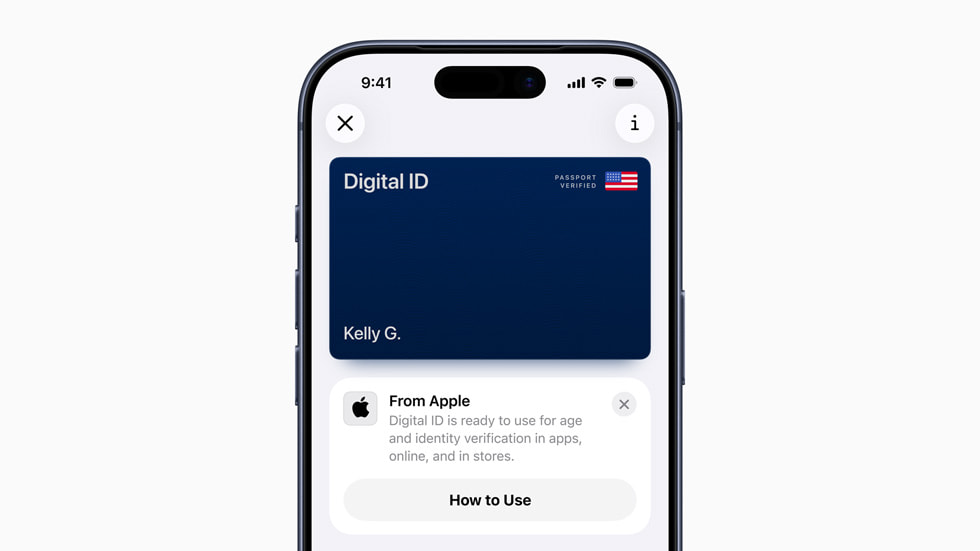
(NewsNation) — Tech giant Apple has rolled out its new Digital ID feature, which allows users to make an ID in their Apple Wallet using information from their U.S. passport.
“With the launch of Digital ID, we’re excited to expand the ways users can store and present their identity — all with the security and privacy built into iPhone and Apple Watch,” Jennifer Bailey, Apple Pay and Apple Wallet vice president, said in a statement.
Bailey added the team came up with the Digital ID after seeing how many users liked a 2022 feature that let users add their driver’s licenses and state IDs to their Apple Wallet on the iPhone and Apple Watch. Twelve U.S. states and Puerto Rico allow residents to add their IDs to Apple Wallet, according to its website.
Digital ID will do beta testing at TSA checkpoints at more than 250 airports in the U.S. for in-person identity verification during domestic travel. Future ID usage will be tested soon, though Apple did not provide a timeline for this.
Apple said Digital ID will let people present an ID even if they don’t have a REAL ID-compliant driver’s license or state ID. The company said it is not a replacement for a physical passport and cannot be used for international travel.
However, some advise against it as cracking phone passcodes has become an easier feat for hackers, which could possibly put you at risk in case of theft and even for law enforcement, as they have technology to get into iPhones during searches.
According to data from nonprofit Upturn, there are 2,000 law enforcement agencies in all 50 states across the country that have the tools necessary to search a person’s iPhone in the event of an investigation.
The Fourth Amendment protects you against illegal search and seizure, and a provision in the Electronic Communications Privacy Act of 1986 outlines what law enforcement needs to get anything off your phone, whether it be a warrant, court order or subpoena.