(NEXSTAR) — The second supermoon of 2021 is bringing with it a cosmic phenomenon on Wednesday: the only total lunar eclipse of the year.
But what causes a super flower “blood” moon? It’s a series of phenomenon in conjunction.
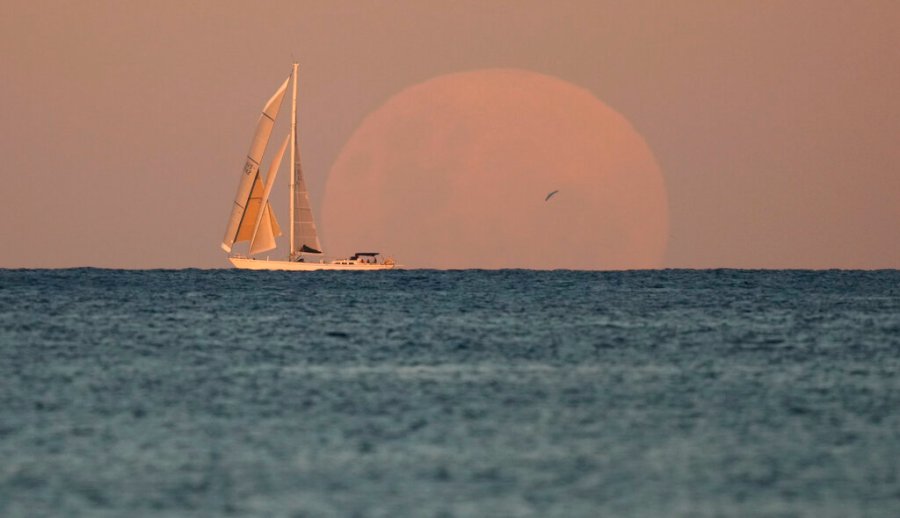
The “Full Flower Moon” will grace the night sky on Wednesday, marking the second of three supermoons this year. This moon got its name because of the abundance of springtime flowers in the Northern Hemisphere around this time, according to the Farmer’s Almanac. May is also the time when farmers begin to seed their fields after hard frosts have ended.
The full moon will appear slightly larger than average because it will reach perigee, or the closest point to Earth in its current orbit, making it a supermoon.
May’s supermoon is distinctive because it’s also a “blood moon” due to the total lunar eclipse, which occurs when the Earth, positioned directly between the moon and sun, blocks the moon from sunlight.
It’s called a blood moon because of the reddish hue it takes on during the eclipse, according to NASA. The red color comes from sunlight filtering through Earth’s atmosphere as the moon passes through the planet’s shadow over several hours.
This is the first of only two lunar eclipses in 2021. A partial lunar eclipse will occur on Nov. 19.
How to Watch
According to NASA, the entire eclipse will last about five hours, from 04:47:39 UTC (Coordinated Universal Time) to 13:49:41 UTC, while the peak — at 11:19:52 UTC — will last about 14 minutes. That translates to a start time of 4:47 a.m. Eastern Standard time and 1:47 a.m. Pacific.
This means that on the west coast of the Americas, the eclipse will occur in the early morning hours when the moon is setting.
If you don’t happen to be in an optimal viewing area, there will be several free live views of the eclipse online Wednesday.
The Griffith Observatory in Los Angeles plans to stream live views starting at 4:45 a.m. EDT, two minutes before the penumbral phase of the eclipse begins. Starting at 5:30 a.m. EDT, the Lowell Observatory, where the dwarf planet Pluto was discovered, will broadcast the eclipse live from multiple telescopes at its facility in Flagstaff, Arizona. Also, check out the Virtual Telescope Project, which will have a live feed starting at 6 a.m. EDT on Wednesday. It will also have a second stream at 3. p.m. EDT.
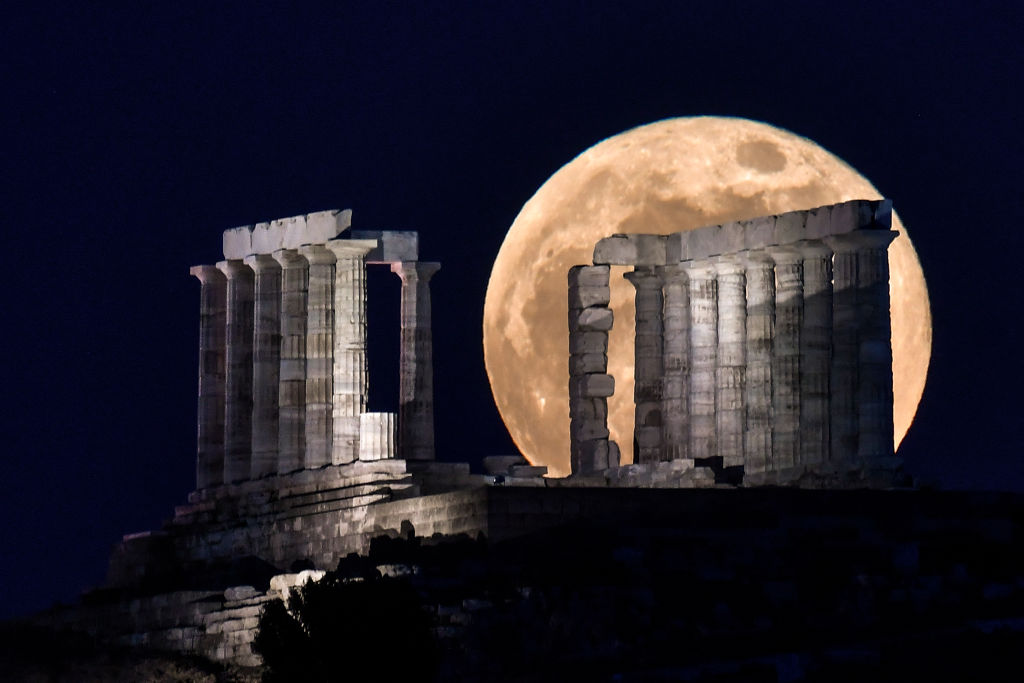
The “flower full moon” rises behind the Temple of Poseidon (neptun) at Cape Sounion, some 70 km south of Athens on May 26, 2021. (Photo by Louisa GOULIAMAKI / AFP) (Photo by LOUISA GOULIAMAKI/AFP via Getty Images) 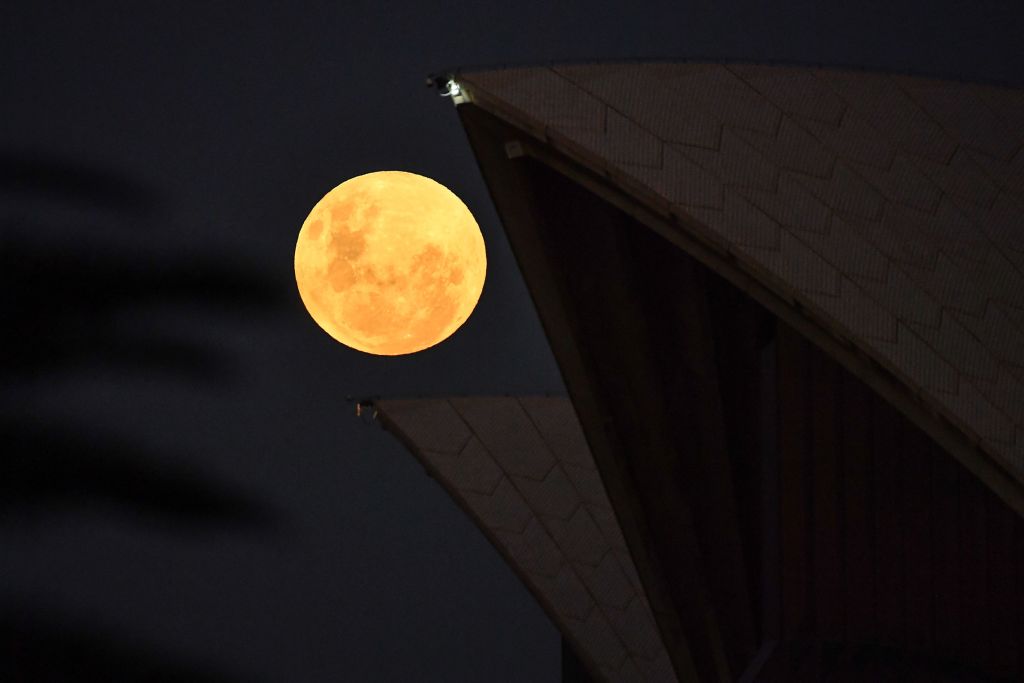
The Moon rises over the Opera House in Sydney on May 26, 2021, ahead of a total lunar eclipse as stargazers across the Pacific are casting their eyes skyward to witness a rare “Super Blood Moon”. (Photo by Saeed KHAN / AFP) (Photo by SAEED KHAN/AFP via Getty Images) 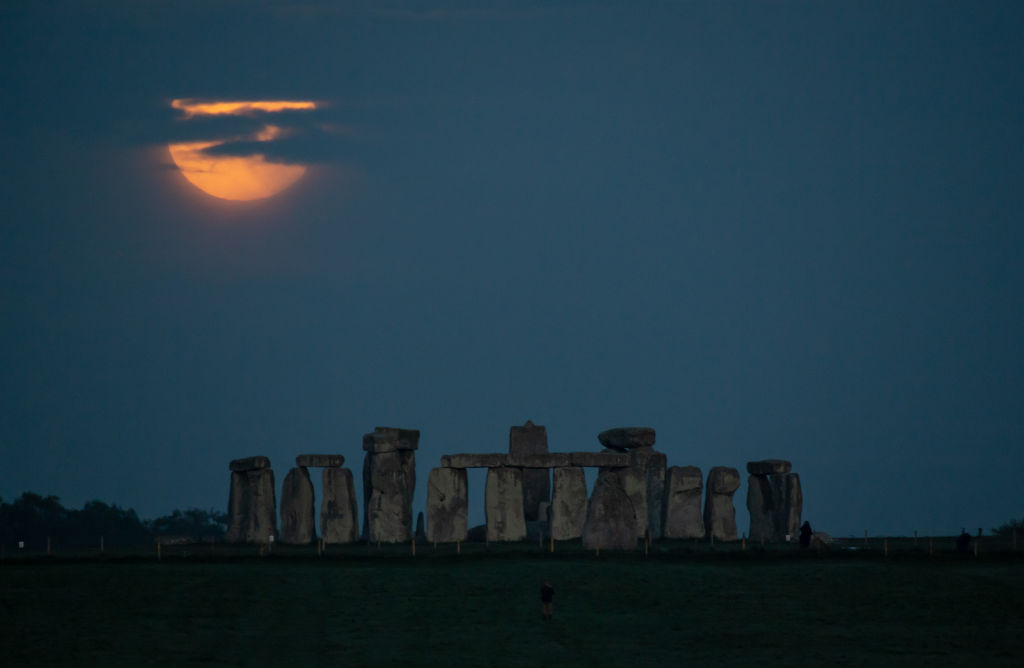
WILTSHIRE, ENGLAND – MAY 26: The Flower Moon sets over Stonehenge on May 26, 2021 in Amesbury, United Kingdom. May’s full moon, the “Flower Moon” will be the biggest and brightest of 2021 which will reach its peak this Wednesday and is the closest to the Earth this year. (Photo by Finnbarr Webster/Getty Images) 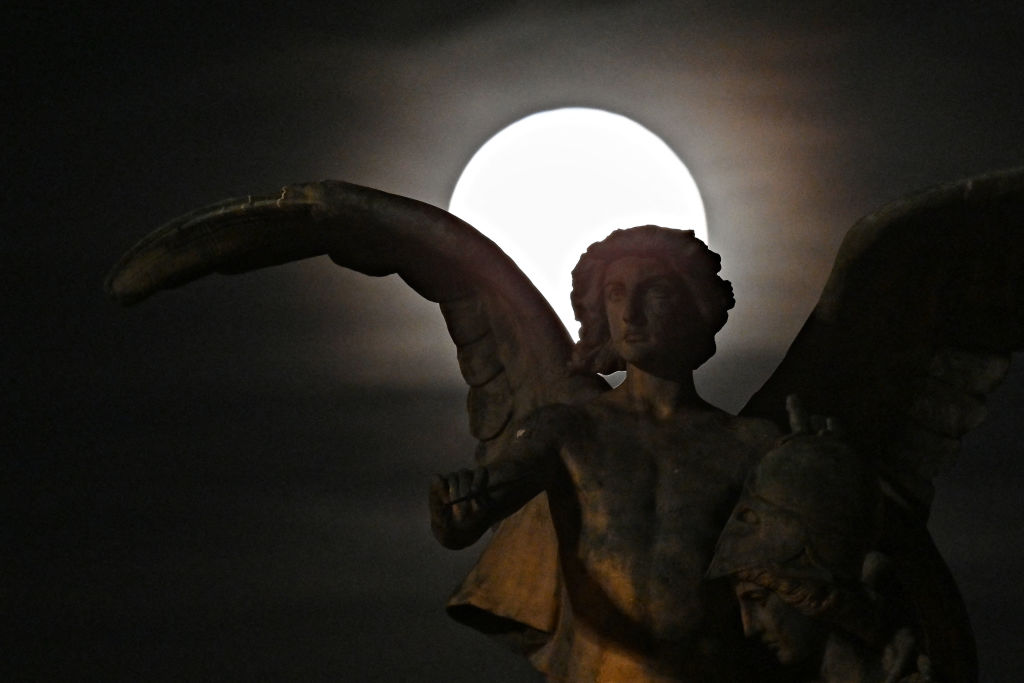
The “flowering full moon” rises behind one of the monuments of the Altare della Patria in Piazza Venezia, in Rome on 26 May 2021. (Photo by Andreas SOLARO / AFP) (Photo by ANDREAS SOLARO/AFP via Getty Images) 
SYDNEY, AUSTRALIA – MAY 26: A surfer rides a wave as a super blood moon rises above the horizon at Manly Beach on May 26, 2021 in Sydney, Australia. It is the first total lunar eclipse in more than two years, which coincides with a supermoon. A super moon is a name given to a full (or new) moon that occurs when the moon is in perigee – or closest to the earth – and it is the moon’s proximity to earth that results in its brighter and bigger appearance. (Photo by Cameron Spencer/Getty Images) 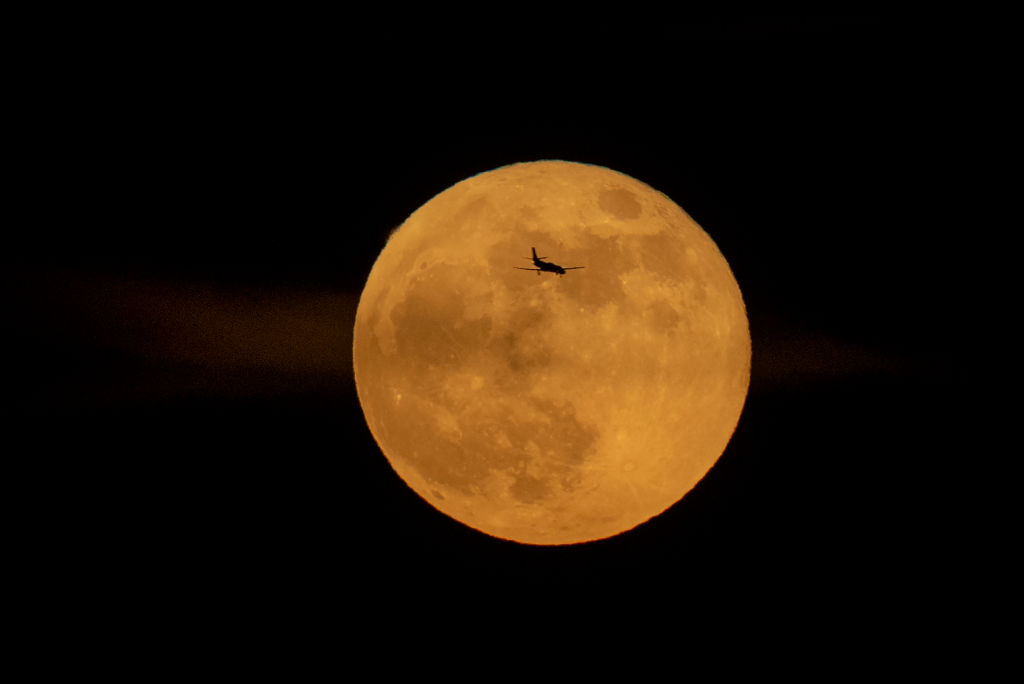
The silhouette of a plane is seen in front of the full moon on May 26, 2021 in Rome. (Photo by Tiziana FABI / AFP) (Photo by TIZIANA FABI/AFP via Getty Images) 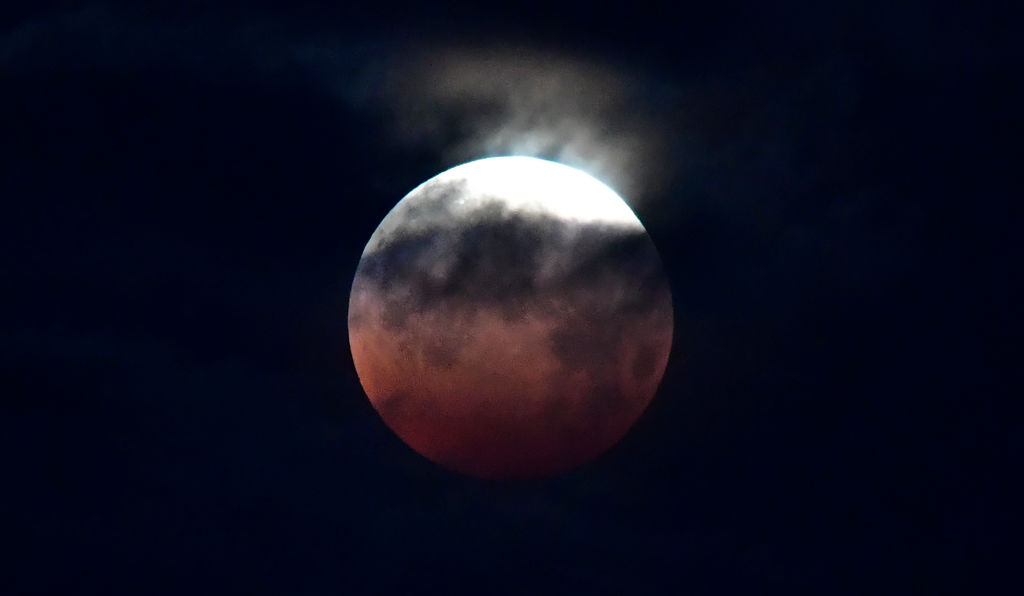
The Moon as seen over Santa Monica, California on May 26, 2021 during the “Super Blood Moon” total eclipse. – Stargazers across the Pacific Rim will cast their eyes skyward on Wednesday night to witness a rare “Super Blood Moon”, as the heavens align to bring an extra-spectacular lunar eclipse. The first total lunar eclipse in two years will happen at the same time as the Moon is closest to Earth, in what astronomers say will be a once-in-a-decade show. (Photo by Frederic J. BROWN / AFP) (Photo by FREDERIC J. BROWN/AFP via Getty Images) 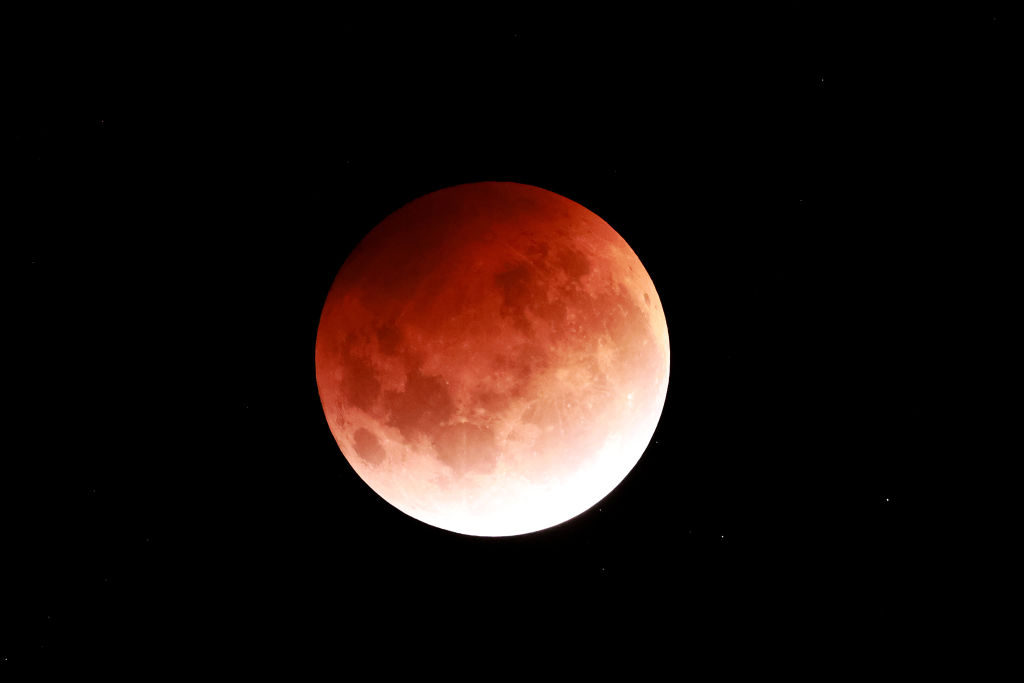
AUCKLAND, NEW ZEALAND – MAY 26: The Total Lunar Eclipse of the Moon is seen on May 26, 2021 in Auckland, New Zealand. It is the first total lunar eclipse in more than two years, which coincides with a supermoon. A super moon is a name given to a full (or new) moon that occurs when the moon is in perigee – or closest to the earth – and it is the moon’s proximity to earth that results in its brighter and bigger appearance. (Photo by Phil Walter/Getty Images) 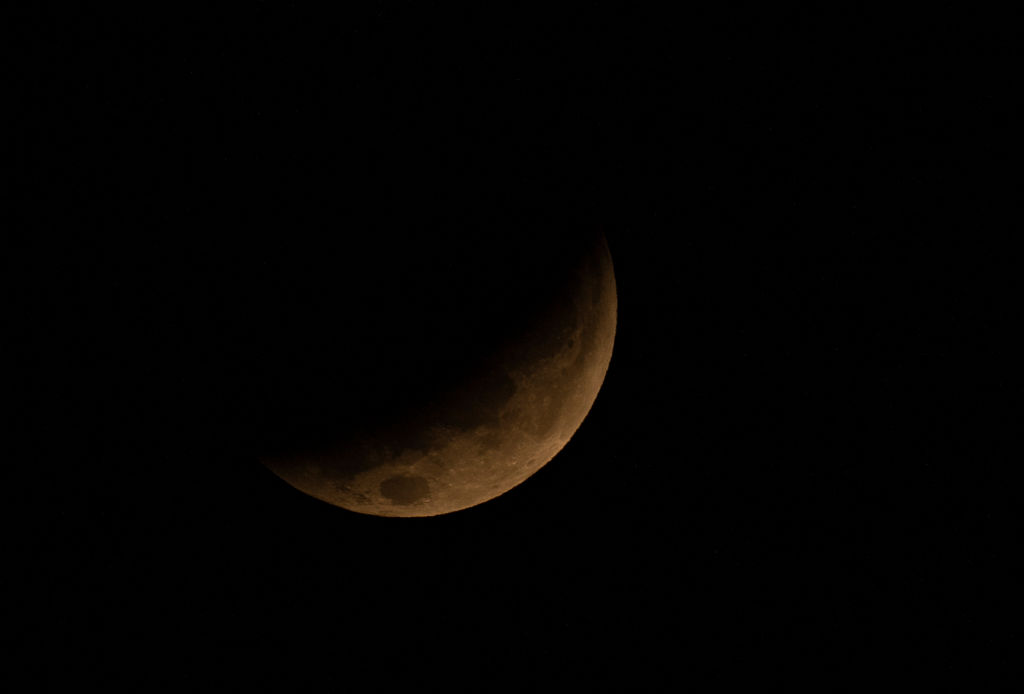
Picture taken during the penumbral phase of a total eclipse of the moon, in Santiago (totality not seen from the Chilean capital), on May 26, 2021. – A penumbra lunar eclipse appears when the moon enters the penumbra of the earth. (Photo by Martin BERNETTI / AFP) (Photo by MARTIN BERNETTI/AFP via Getty Images)