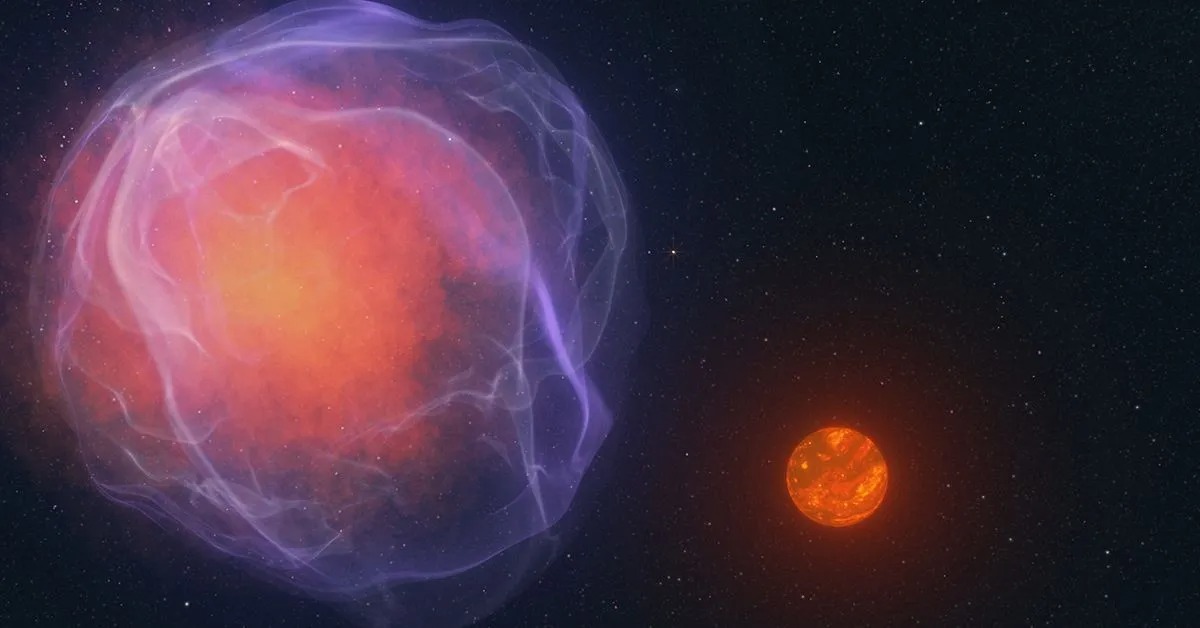
(NewsNation) — A supernova could have triggered one of the Earth’s ice ages, something that could happen again in the future.
A new study revealed the timing of the Vela supernova aligned with a period known as the Younger Dryas, when global temperatures dropped and ice sheets began advancing.
Scientists believe the exploding star bombarded the planet with radiation that severely damaged the ozone layer based on tree ring records showing a spike in radioactive carbon-14, which indicates atmospheric radiation increased.
Ice cores also revealed a decrease in methane concentrations, and archaeological sites across North America have “black mat” deposit,s and fossil records show the extinction of mammals, including the mammoth and saber-toothed cats.
Without protection from the ozone layer, harmful ultraviolet radiation would reach the surface of the Earth, triggering massive wildfires and causing DNA damage to plants and animals.
The study also found several other potential connections between supernova incidents and changes in the Earth’s climate.
Other scientists are skeptical about the results, pointing out alternative explanations, including ocean circulation disruptions from freshwater floods, solar storms spiking carbon-14 and mammal extinctions due to asteroid impacts or human hunting.
If supernovas are the cause, it could be something the Earth faces again. Several nearby stars could become future supernovas, including a red giant called Betelgeuse that may explode within the next million years.
A supernova might not necessarily cause a mass extinction, but it could still have impacts on the planet’s atmosphere and climate.