(NewsNation) — The first total lunar eclipse the United States has seen in nearly three years dazzled skywatchers across the country early Sunday morning.
The peak of the eclipse occurred around 3:30 a.m. ET, forming a “blood moon,” a term based on its red glow.
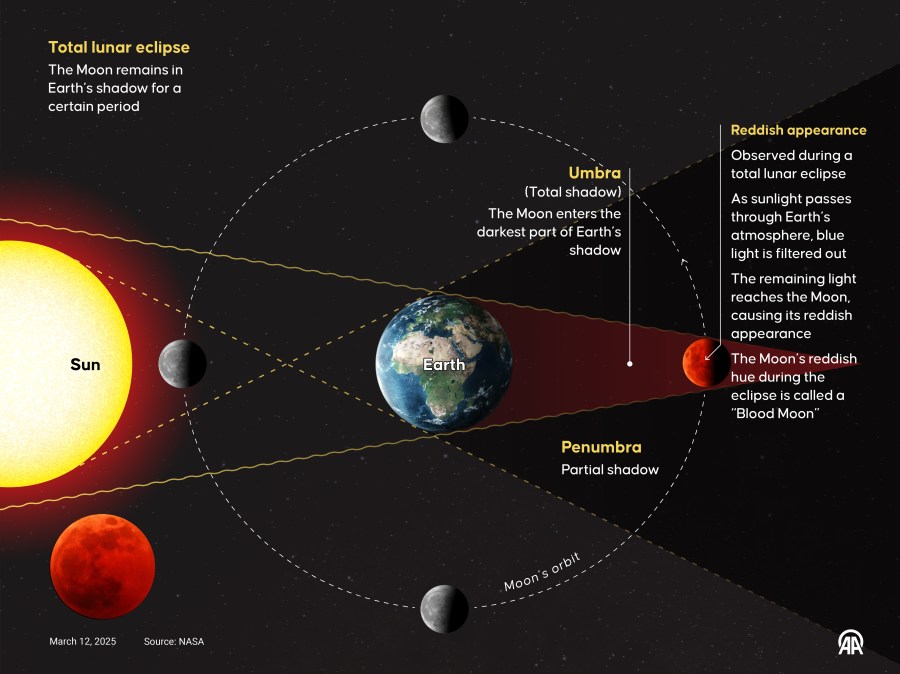
The blood moon occurs during a total lunar eclipse, according to NASA, when Earth lines up between the moon and the sun, hiding the moon from the sunlight.
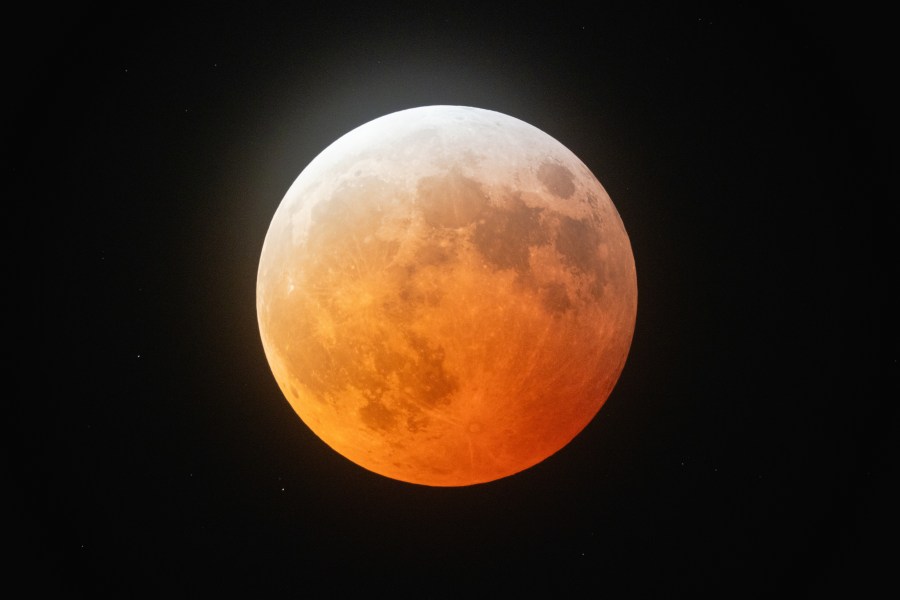
Much of the country could see the moon’s phases overnight. First, there was a partial lunar eclipse, in which it seemed to disappear before suddenly taking on a reddish-orange glow during totality.
The moon’s amber glow appeared similar to sunset colors.
Astrophysicist Neil deGrasse Tyson explained the process to NewsNation earlier this week on “Morning in America.”
“Even though it’s in our shadow, sunlight is passing around our atmosphere, and as it goes through our atmosphere, it sends sunset colors into our shadow,” he said. “And so, the moon’s tinge will appear the same colors of what the sun looks like when it’s low on the horizon.”
Some skies, however, were too cloudy to enjoy the lunar eclipse as a storm system developed across the western U.S. and parts of the South.
People across North America and Europe were in the line of sight, while other parts of the world — Asia, Australia and the Pacific — will get their chance to see the next eclipse in September.
The next chance to enjoy a total lunar eclipse in the U.S. and North America will be March 3, 2026.
Total lunar eclipses, which are less frequent than partial ones, typically occur once or twice a year.
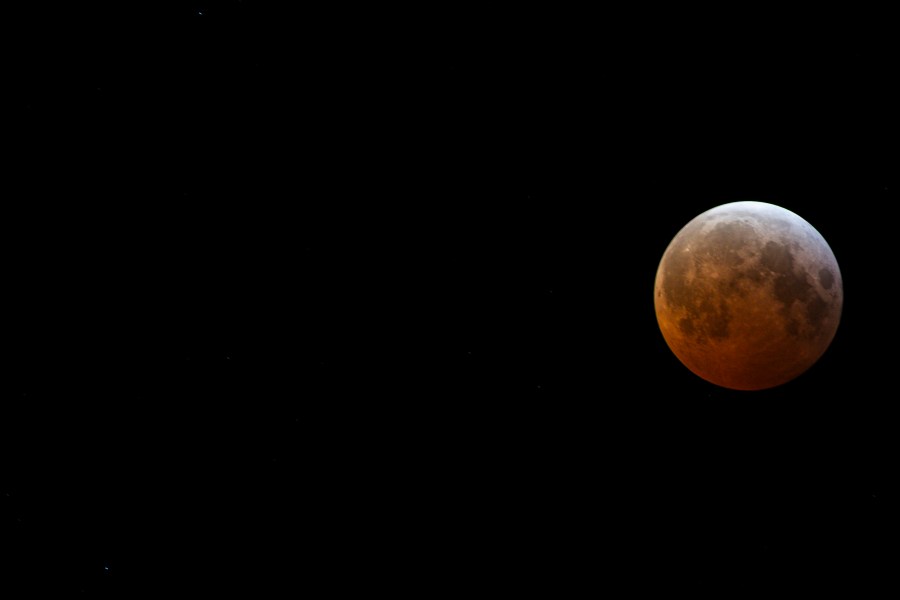
The moon is seen on March 14 in Daytona Beach, Florida. (Photo by Miguel J. Rodriguez Carrillo Getty Images) 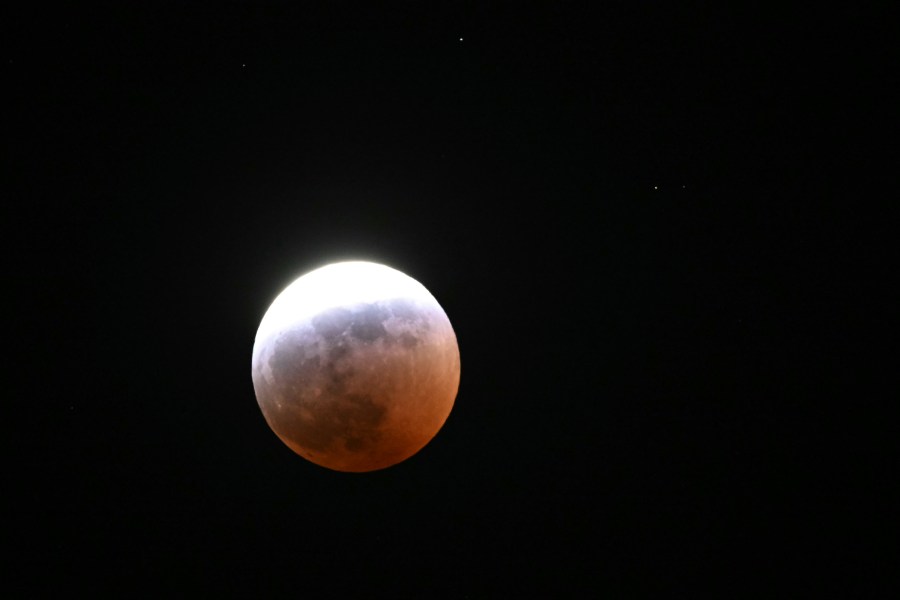
A partial lunar eclipse is seen above Palm Springs, California, on March 13. (Photo by Patrick T. Fallon / AFP) (Photo by PATRICK T. FALLON/AFP via Getty Images) 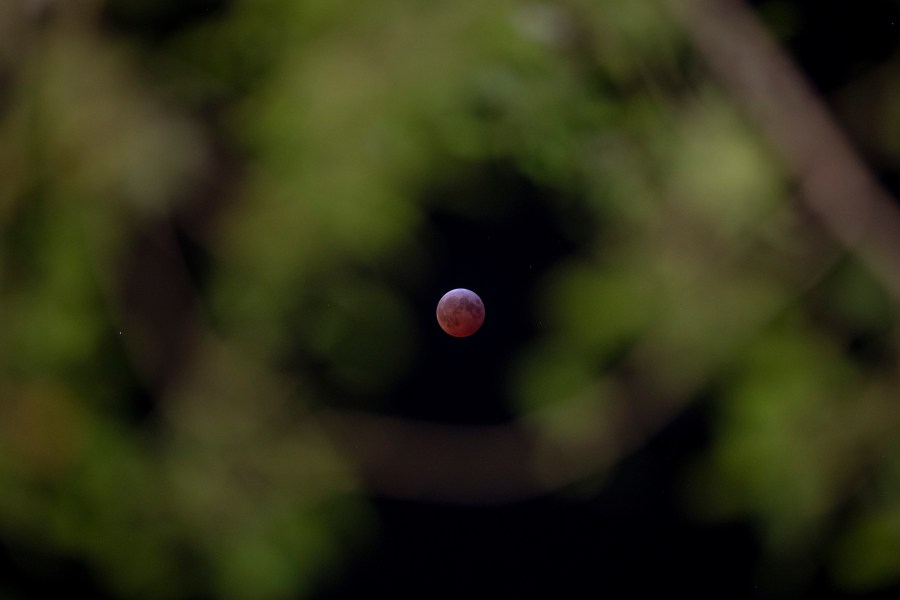
The full moon is seen during a total lunar eclipse on March 14 in Saltillo, Mexico. (Photo by Antonio Ojeda/Agencia Press South/Getty Images) 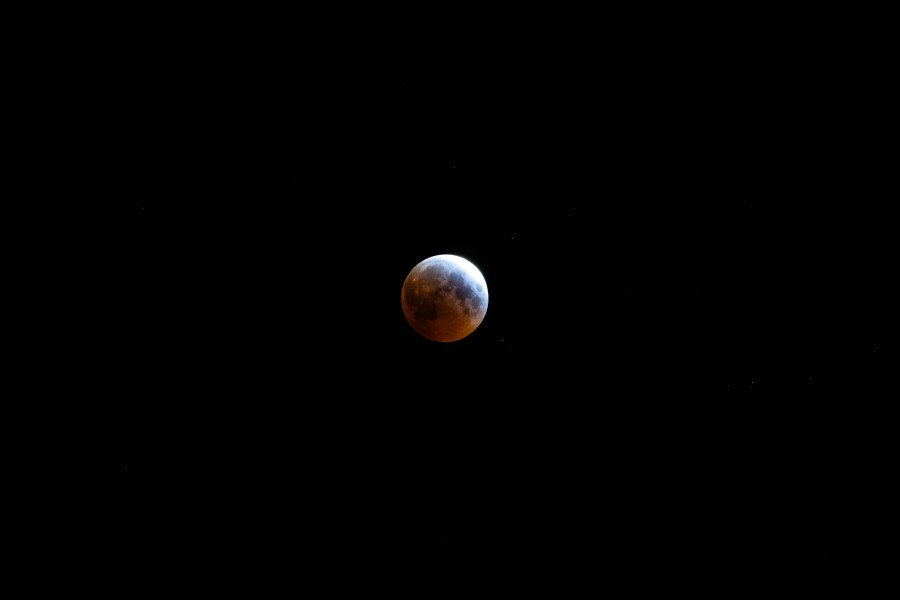
The full moon is seen during a total lunar eclipse on March 14 in Merritt Island, Florida. (Photo by Brandon Bell/Getty Images) 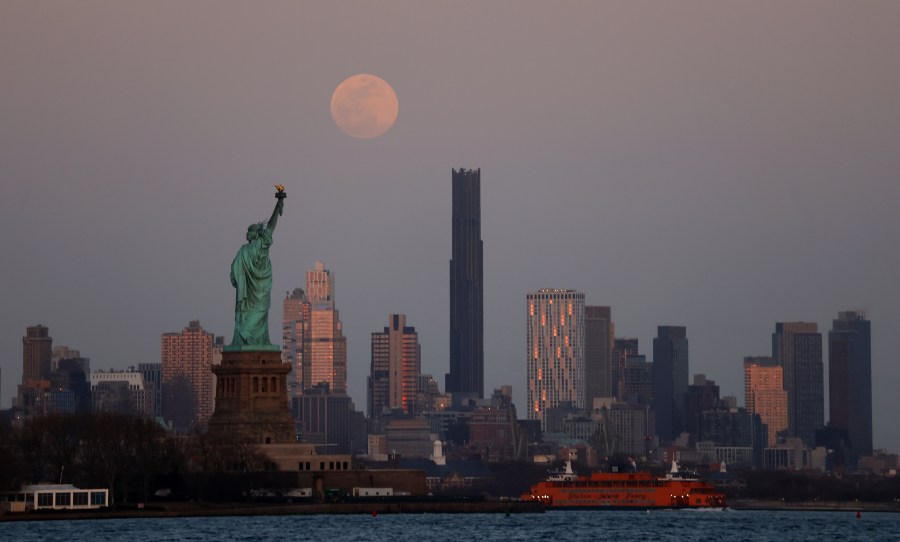
The full moon rises above the skyline of New York City and the Statue of Liberty as the sun sets ahead of a total lunar eclipse on March 13 as seen from Jersey City, New Jersey. (Photo by Gary Hershorn/Getty Images) The total lunar eclipse is seen above Austin, Texas, on March 14. (Photo by Rick Kern/Getty Images)