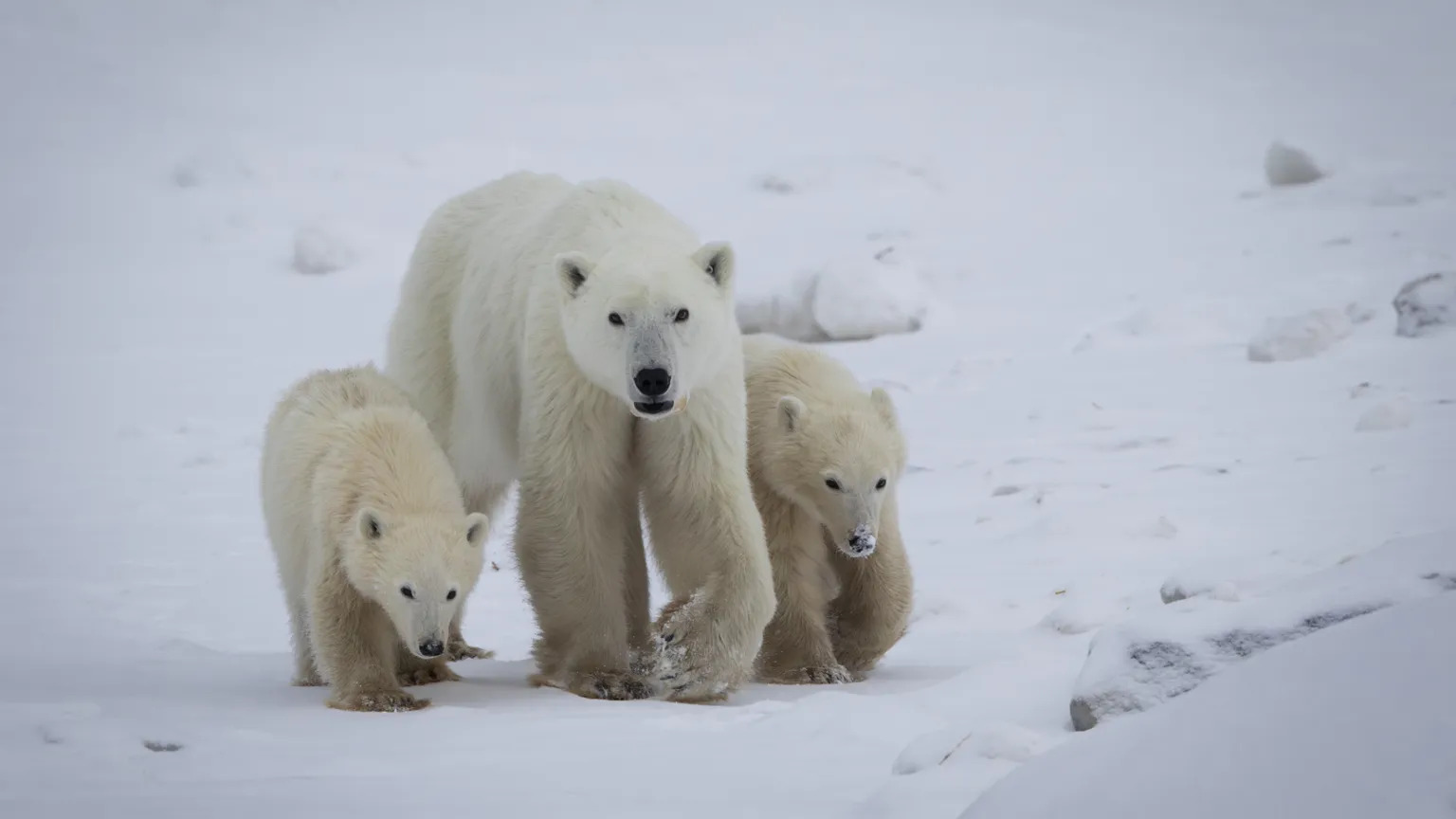
(NewsNation) — Genetic changes in polar bears have been found by researchers, suggesting they could be evolving in response to climate change in real time.
Polar bears rely on sea ice for hunting, and the rapid disappearance of ice as a result of climate change threatens their survival. Two-thirds of the polar bear population is expected to go extinct by 2050, and scientists have warned the entire species is at risk of extinction.
A new study provides a glimpse of hope, however, as it shows that polar bears may be evolving to deal with changes to the environment. It is the first time scientists have found a statistically significant link between rising temperatures and changes in the DNA of wild mammals.
Researchers at the University of East Anglia analyzed blood samples from polar bears in two different regions of Greenland and compared small, mobile pieces of the genome known as “jumping genes” that influence how other genes work.
The scientists examine the genes in relation to temperatures in each region and changes in gene expression.
They found that the genetics of the bears seemed to be adapting, with bears in the warmest part of Greenland showing more changes than the other group of bears, located in a northern region with colder and less variable temperatures.
Animal DNA sequences change over time, but that change can be accelerated by environmental stressors.
Some of the changes in the polar bears’ DNA could help them survive when food is scarce, including changes to DNA areas linked to fat processing.
That could be a response to differing diets, with bears in warmer parts of the country having rougher, more plant-based diets compared to northern bears that subsist on fatty seal meat.
Researchers say the next step is to examine other polar bear populations around the world to see if their DNA is also changing.
The research could help protect polar bears from extinction, but scientists stressed that it is still important to stop the global temperature from rising by reducing the use of fossil fuels.