(NewsNation) — A team of researchers claims to have found what they believe is evidence of Noah’s Ark at the Durupinar site in eastern Turkey, using advanced scanning technology to support their theory that the biblical account represents historical fact rather than parable.
Andrew Jones, lead archaeological researcher for Noah’s Ark Scans, told NewsNation his team has been investigating the ship-shaped rock formation since 2019. The site was discovered in 1959 by Turkish Army Capt. Ilhan Durupinar.
“We have a shape of a ship, and then you look at the size of it … exactly 300 royal Egyptian cubits,” Jones said Thursday on NewsNation’s “Vargas Reports.” “That’s what Moses wrote in the book of Genesis.”
Many scientists say discovery is most likely natural geological formation
Though many scientists say the rock is most likely a natural geological formation, the team conducted nondestructive geophysical scans, including ground-penetrating radar and electrical resistivity tomography, which Jones said revealed structural patterns inconsistent with such formations.
The scans detected what appear to be chambers and corridors extending up to 30 feet underground. They say the scans reveal buried timber-like patterns consistent with a man-made vessel.
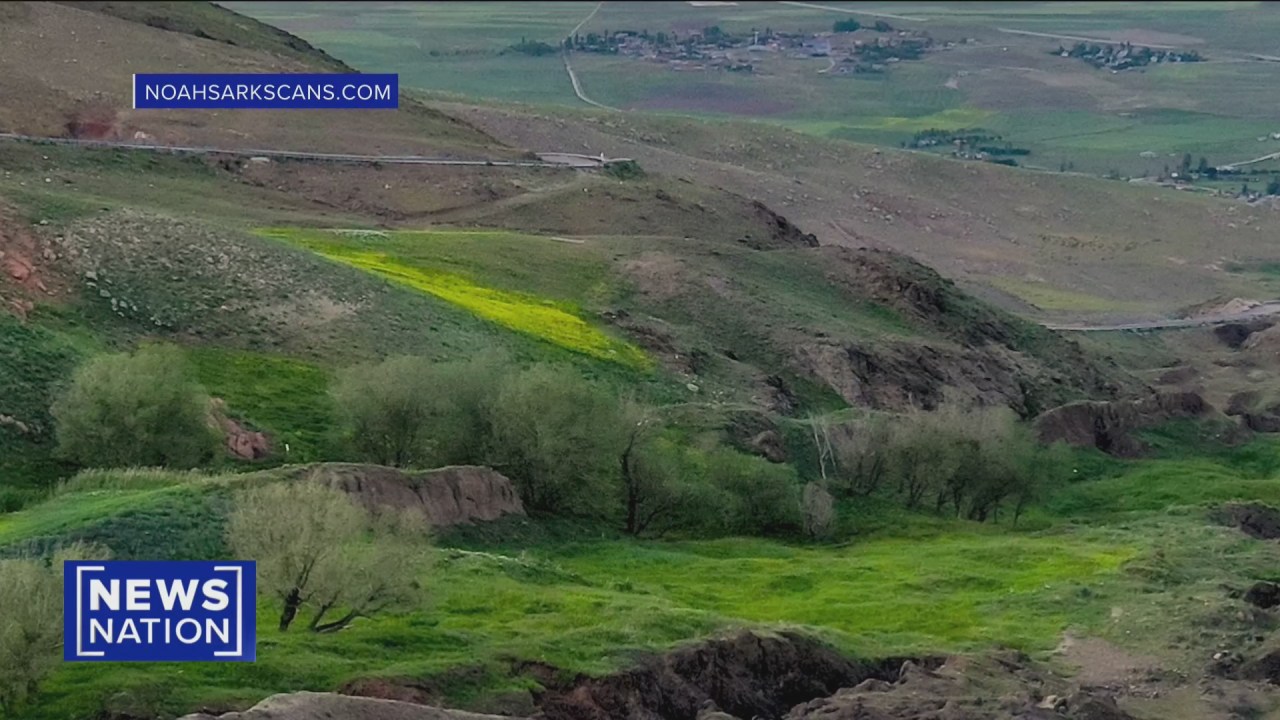
Soil testing revealed the formation contains nearly “three times more organic matter” than surrounding areas, with elevated potassium levels that researchers suggest could indicate decomposed wood.
The site is located in the mountains of Ararat, matching the biblical account in Genesis that describes the ark’s resting place.
Jones said the scans show three distinct layers of material, with what appears to be a central tunnel and side chambers with right angles, suggesting constructed walls and rooms.
Jones acknowledged that others have previously claimed to discover Noah’s Ark but said his team will continue research until another site provides comparable evidence.