Faith is an integral part of millions of Americans’ daily lives. “One Nation Under God” is committed to reflecting America’s voices, values and communities covering stories of faith and religion, from the latest headlines to stories of hope. Subscribe here.
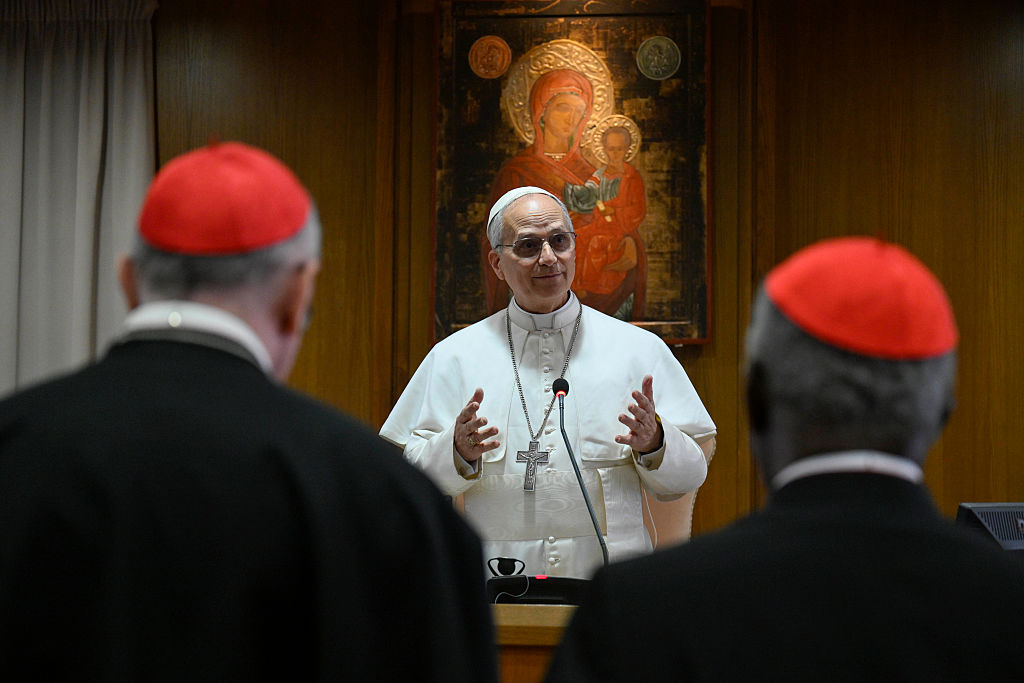
(NewsNation) — Shortly after being elected, Pope Leo XIV identified artificial intelligence as one of the central challenges for the modern world and said he intends to make the Christian approach to navigating it a hallmark of his pontificate.
In his first address to the college of cardinals, the first American pope called the developments in AI a new industrial revolution that “pose new challenges for the defense of human dignity, justice and labor.” He said the Church offers a “treasury” of resources to use it safely and ethically.
Pope Leo has referred to the “immense potential” of artificial intelligence, which he said required “responsibility and discernment in order to ensure that it can be used for the good of all, so that it can benefit all of humanity.”
So, until now, what has the Catholic Church said about artificial intelligence?
Vatican releases document on AI
In January 2025, the Vatican released a document signed by Pope Francis that addressed the ethical challenges raised by artificial intelligence.
“Like any product of human creativity, AI can be directed toward positive or negative ends,” the Vatican document says. “When used in ways that respect human dignity and promote the well-being of individuals and communities, it can contribute positively to the human vocation.
“Yet, as in all areas where humans are called to make decisions, the shadow of evil also looms here. Where human freedom allows for the possibility of choosing what is wrong, the moral evaluation of this technology will need to take into account how it is directed and used.”
AI and society
The Vatican says artificial intelligence could be used for innovation and improvement in agriculture, education and culture. But it says the digital divide has also led to greater inequality. “The inherent dignity of each human being and the fraternity that binds us together as members of the one human family must undergird the development of new technologies,” explains the Vatican document.
AI poses risk to human relationships
While the Vatican says artificial intelligence can be used to foster connections, it also poses a serious risk to human relationships. It could hinder “a true encounter with reality and, ultimately, lead people to a deep and melancholic dissatisfaction with interpersonal relations, or a harmful sense of isolation,” the Vatican warns.
AI and deepfakes
The Vatican warns the public about “generating manipulated content and false information, which can easily mislead people due to its resemblance to the truth.”
The Vatican encourages careful regulation since “AI-generated fake media can gradually undermine the foundations of society.”
AI and warfare
Another serious risk posed by artificial intelligence involves weapons systems and the ability to conduct military operations remotely, the Vatican says. According to Pope Francis, these systems have led to a lessened perception of the devastation caused by war and “an even more cold and detached approach to the immense tragedy of war.”
“Like any tool, AI is an extension of human power, and while its future capabilities are unpredictable, humanity’s past actions provide clear warnings,” the Vatican warns.
AI and healthcare
According to the Vatican, health care professionals have the vocation and responsibility to be “guardians and servants of human life.” So if AI replaces the relationship between patients and doctors, the sick would suffer greatly, increasing the loneliness and desolation that often accompany illness, the Vatican warns.
AI and education
Artificial intelligence poses both advantages and challenges in the field of education, the Vatican says. AI can be a valuable resource if used within a healthy teacher-student relationship. However, the technology can also damage students’ critical-thinking skills since it provides quick answers and information.
In conclusion
In the face of the ethical challenges posed by artificial intelligence, the Vatican emphasizes that the professionals involved in its development should realize the moral responsibility they bear. “AI should be used only as a tool to complement human intelligence rather than replace its richness,” the document concludes.