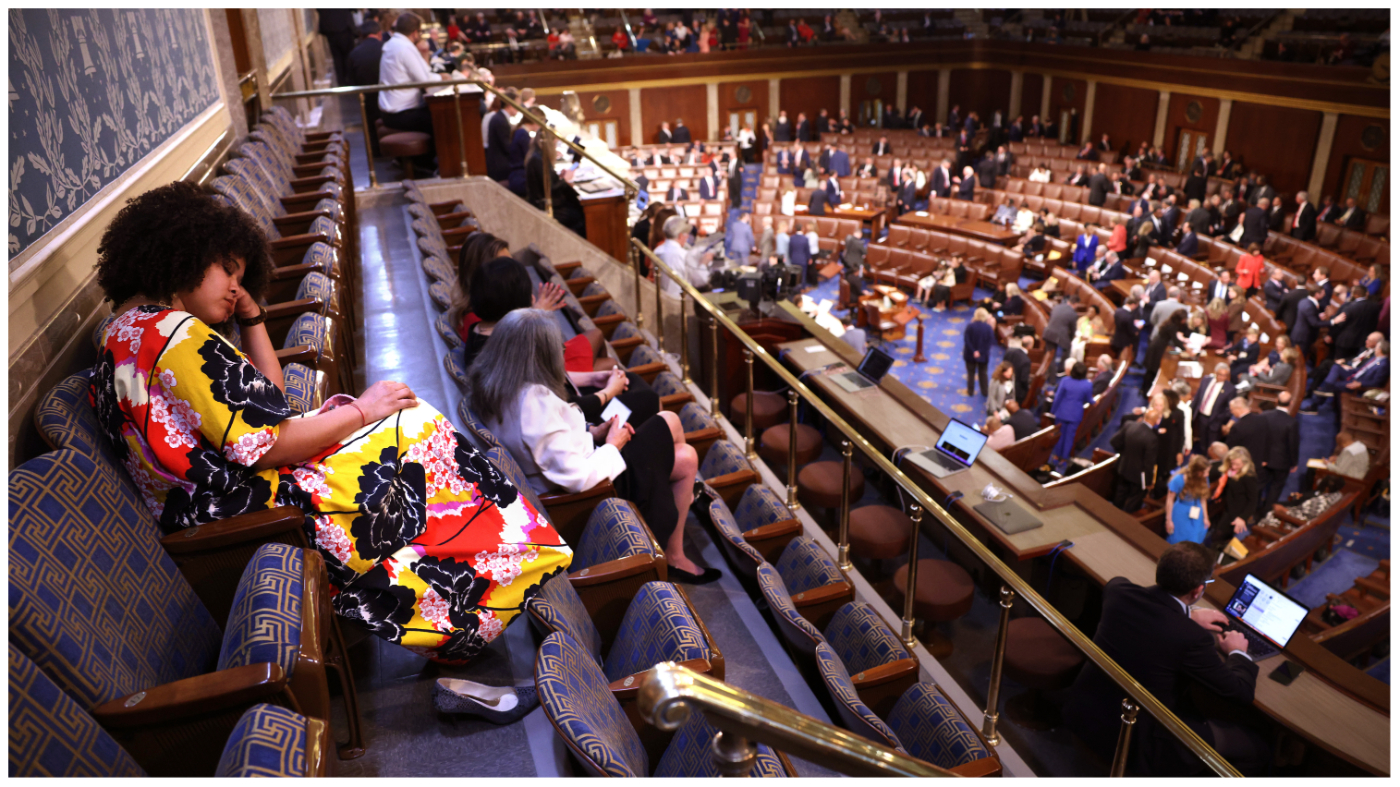
(The Hill) — The House reconvened on Wednesday at noon to continue the process to choose a new Speaker after it was unable to elect one during the first day of its new session.
Tuesday was the first time in a century that the House failed to elect a Speaker on the first ballot. House GOP Leader Kevin McCarthy (Calif.) fell more than a dozen votes short of the total he needed to win a majority through three ballots, placing the House at a standstill.
Article I of the U.S. Constitution states that the House shall choose its Speaker and that it may decide its own rules of how its proceedings work. But the Constitution does not say much about the role of the Speaker beyond this.
The House is required to choose a Speaker at the start of its session and is not allowed to conduct any additional business, including swearing in members, before one is selected.
The Speaker is the one who presides over the chamber and is responsible for swearing in the members of the House, according to a report from the Congressional Research Service (CRS).
Without a Speaker in place, there are not officially members of the House, so the body cannot take any action, including passing rules for the term and introducing and considering legislation.
The Speaker also announces their policies on certain floor practices after the House adopts the rules for the new Congress. The rules grant the Speaker this authority.
The House clerk from the previous Congress is responsible for calling the House to order and presiding over the chamber until the Speaker is elected and sworn in, according to CRS. The House sergeant-at-arms is responsible for this in the clerk’s absence.