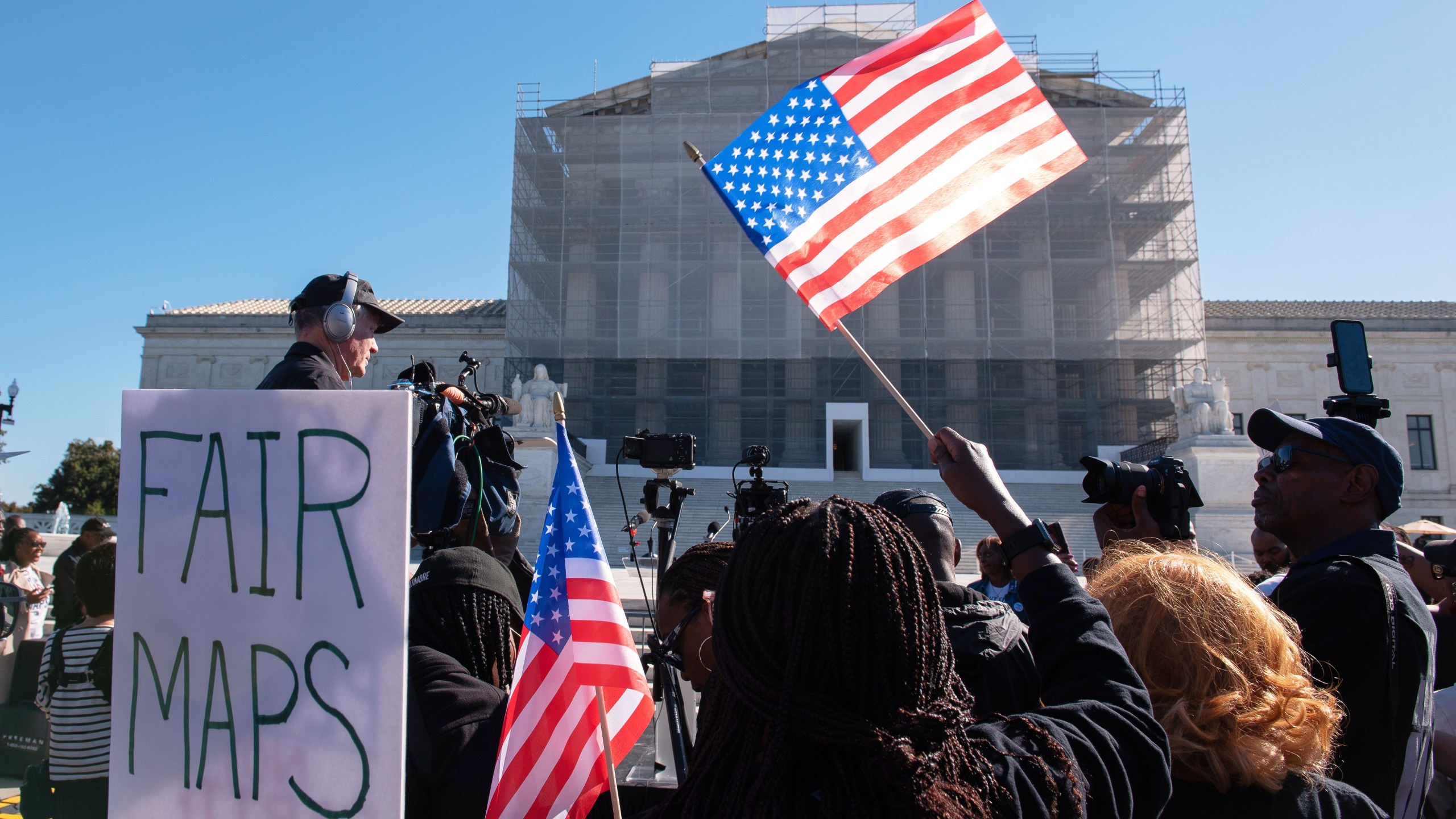
(NewsNation) — The Supreme Court heard a key challenge Wednesday that could reshape how congressional maps are drawn across the United States.
Oral arguments began Wednesday in Louisiana v. Callais, a case that questions whether states can consider race when redrawing districts. The outcome could gut a central part of the Voting Rights Act that prohibits racial discrimination in the redistricting process.
This week marks the second time the high court has taken up the Louisiana case. The state’s 2024 congressional map created two majority-Black districts out of six, up from one, despite the fact that about one-third of Louisiana’s population is Black.
“It’s time for the courts to stop forcing us to separate our voters by race. Our Constitution prohibits the sorting of Americans into voting districts based on their skin color,” Louisiana Attorney General Liz Murrill said in a statement. “Our constitution sees neither Black voters nor white voters; it sees only American voters.”
Supreme Court could scrap Voting Rights Act pillar
A group of self-described “non-African American” voters filed the lawsuit, arguing the map was racially gerrymandered in violation of their civil rights, as the map sorts voters primarily by race.
If the court rules in their favor, it would undo Section 2 of the Voting Rights Act, which requires minorities to have an equal opportunity to participate in the electoral process.
Voting rights advocates have argued Section 2 is crucial to maintaining minority representation, though some legal scholars contend it is unconstitutional.
“Section 2 has remained, and that’s been the most important tool in the voting rights arsenal,” said M. Christian Green, president of the League of Women Voters of Louisiana.
“If the Supreme Court overturns this case and overturns the districts in Louisiana, we are set to go back, back into a time where Black voters are not heard and are not seen,” said Louisiana Public Service Commissioner Davante Lewis.
Dems could lose control of 19 seats if Section 2 axed
The Trump administration has supported the petitioners’ argument and requested the Supreme Court strike down Louisiana’s 2024 map.
If Section 2 is ruled unconstitutional, as many as 19 congressional seats could flip from Democrats to Republicans nationwide.
Voting rights groups have warned the decision could shrink the Congressional Black Caucus by about a third and cut the Hispanic Caucus by more than 10%.