(NewsNation) — President-elect Donald Trump is expected to nominate Sen. Marco Rubio, R-Fla., to serve as secretary of state, two sources with knowledge of the matter confirmed to NewsNation.
Rubio once had a combative history with Trump, but he’s since positioned himself as an ally and aligned himself with MAGA-friendly views.
The senator’s possible role in Trump’s administration is one of several announcements the president-elect has made regarding his future cabinet.
Trump is set to meet Wednesday with President Joe Biden at the White House to discuss the transition of power.
Marco Rubio’s path to Congress
Born to Cuban immigrants in Florida, Rubio entered public service through local government after he graduated from law school. When serving in Florida’s legislature, Rubio became the first Cuban American to act as the speaker of the House in the state.
Rubio clashed with centrist Republicans in Florida’s Senate and Florida Gov. Charlie Crist during his time in office. Though Rubio tried to push Florida to the right, he was also known behind the scenes as someone who would work across the aisle and supported a proposal for the state government to apologize for slavery while also backing initiatives focused on helping Black youth.
After being elected to the U.S. Senate in 2011, Rubio attempted a run for the presidency in 2016, suspending his campaign as Trump moved to gain the party’s nomination.
In the Senate, Rubio worked across the aisle on some issues, including immigration reform as part of the bipartisan Gang of Eight. The group proposed a comprehensive immigration reform plan that would have included a pathway to citizenship for people currently in the U.S. who had crossed into the country illegally. The plan was never taken up by the House.
Rubio’s positions
Rubio is considered one of the most conservative senators in Congress, despite his position on immigration reform having diverged from the party’s consensus at one point. In the years since that proposal, he has moved toward a more hard-line view on immigration, including his response to the current border crisis.
He rejects the scientific consensus on climate change, opposed the Affordable Care Act and objected to efforts to reduce harsh sentences for drug-related crimes. Rubio is an abortion opponent, supporting a full ban on the procedure with the only exception being if the mother’s life is at risk.
Rubio has supported closing the federal Department of Education, been a strong proponent of charter schools and opposed gun control efforts even in the wake of the 2018 shooting at Stoneman Douglas High School in Parkland, Florida.
The senator has supported a cap on economic regulations and advocated for an increase in the retirement age for Social Security.
In terms of foreign policy, Rubio supported U.S. interventions in Iraq and Libya and has been supportive of sanctions against Iran. He has warned against China’s influence in the global sphere, supporting higher tariffs to limit the country’s ability to export cheaper products to the U.S.
Rubio has been a strong supporter of Israel in the wake of October 7, but also voted against a foreign aid bill that provided funding for Israel, Ukraine and Taiwan. In his rejection of the bill, he pointed to the economic struggles faced by Americans compared to the billions of proposed foreign aid.
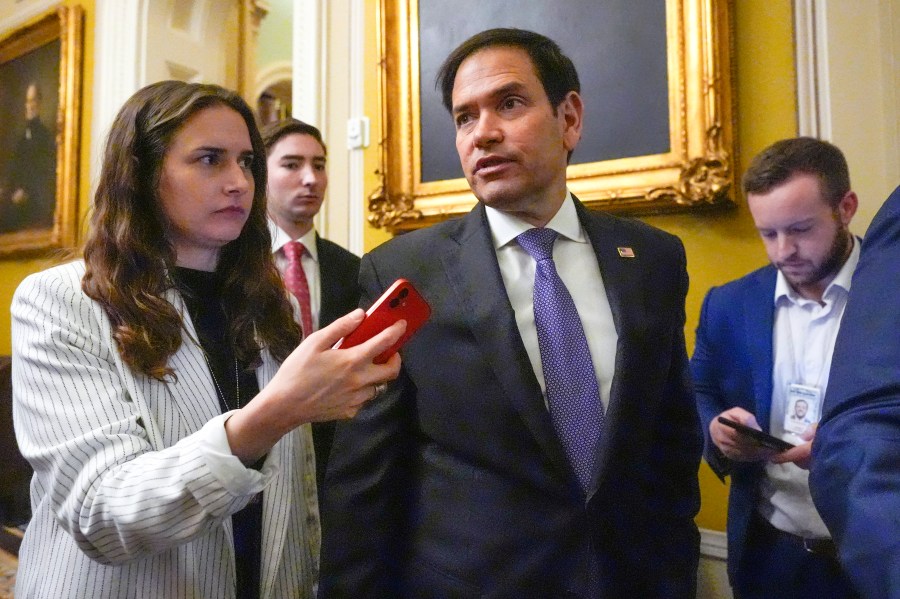
FILE – Sen. Marco Rubio, R-Fla., speaks with reporters as he walks, Feb. 28, 2024, at the Capitol in Washington. The Senate has advanced legislation that would reauthorize a key U.S. surveillance tool as lawmakers and the Biden administration rushed to tamp down fresh concerns about the program violating Americans’ civil liberties. (AP Photo/Mark Schiefelbein, File) 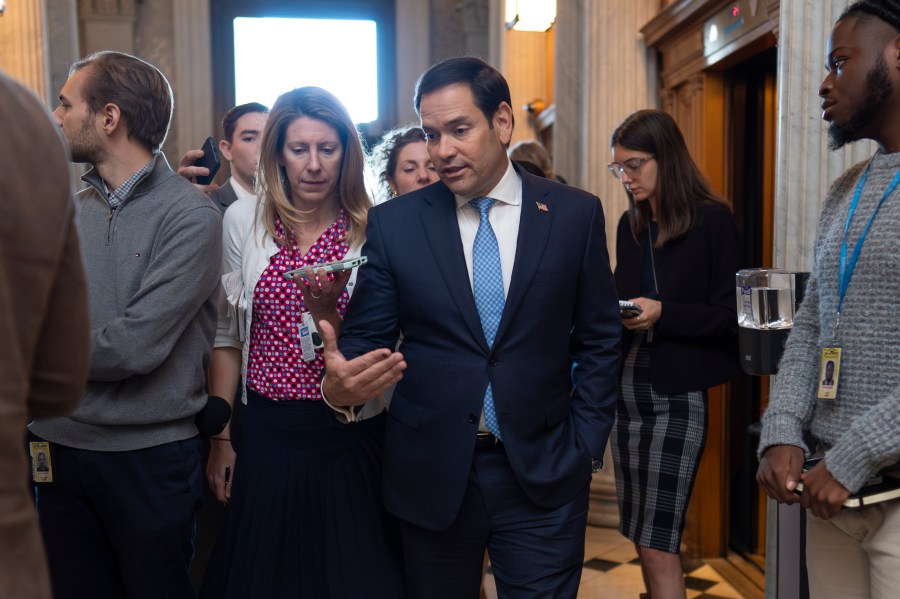
Sen. Marco Rubio, R-Fla., speaks with a reporter as the Senate prepares to advance the $95 billion aid package for Ukraine, Israel and Taiwan passed by the House, at the Capitol in Washington, Tuesday, April 23, 2024. (AP Photo/J. Scott Applewhite) 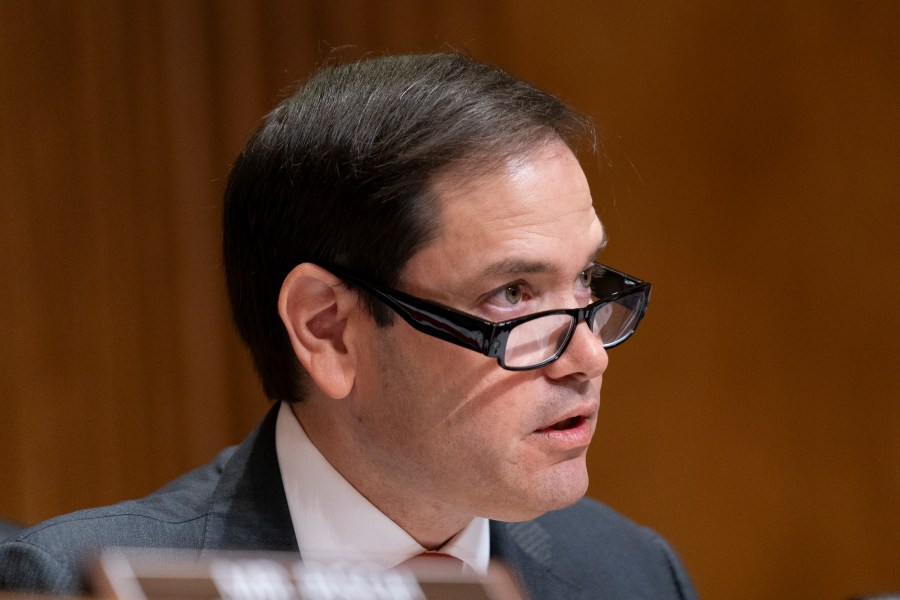
Sen. Marco Rubio, R-Fla. speaks during a Senate Foreign Relations Committee hearing to examine the nomination of Jacob Lew, former treasury secretary under President Barack Obama, as Ambassador to the State of Israel, Wednesday, Oct. 18, 2023, in Washington. (AP Photo/Stephanie Scarbrough) 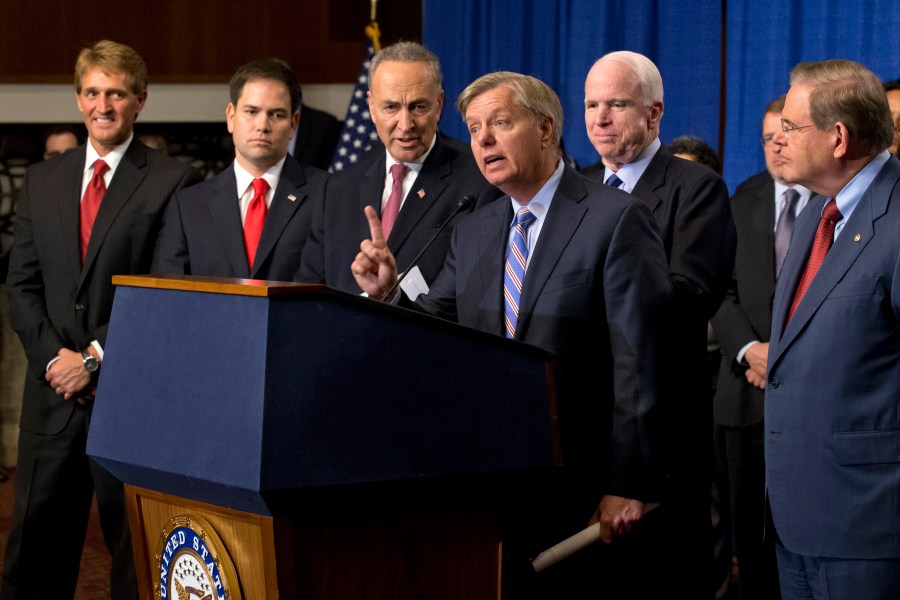
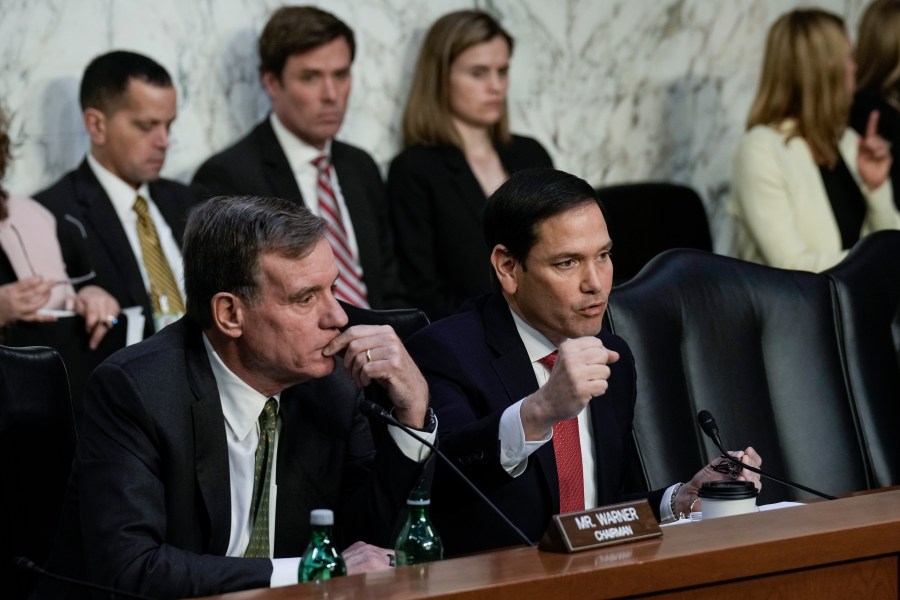
WASHINGTON, DC – MARCH 8: (L-R) Committee chairman Sen. Mark Warner (D-VA) looks on as ranking member Sen. Marco Rubio (R-FL) questions witnesses during a Senate Intelligence Committee hearing concerning worldwide threats, on Capitol Hill March 8, 2023 in Washington, DC. The leaders of the intelligence agencies testified on a wide range of issues, including China, Covid-19 origins, and TikTok. (Photo by Drew Angerer/Getty Images) 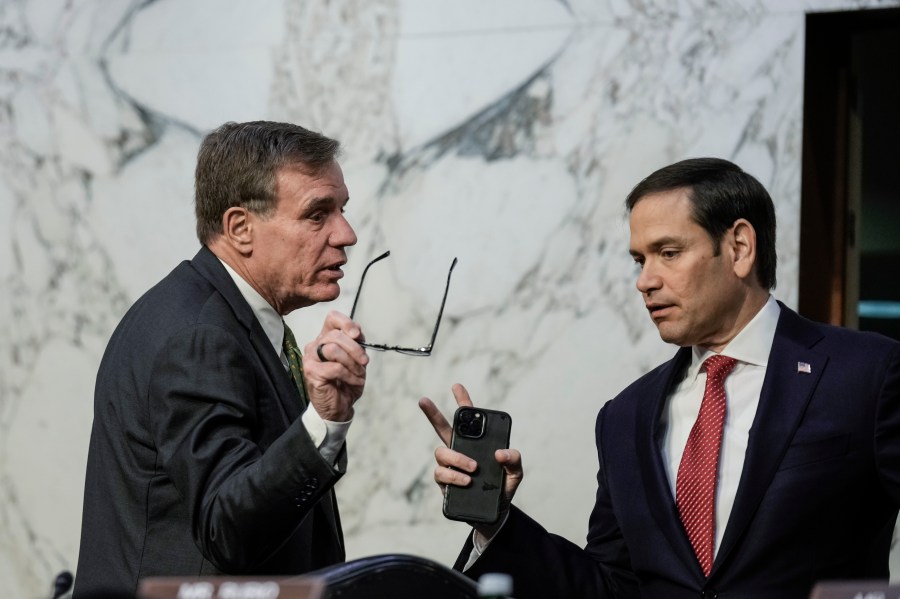
WASHINGTON, DC – MARCH 8: (L-R) Committee chairman Sen. Mark Warner (D-VA) talks with ranking member Sen. Marco Rubio (R-FL) during a Senate Intelligence Committee hearing concerning worldwide threats, on Capitol Hill March 8, 2023 in Washington, DC. The leaders of the intelligence agencies testified on a wide range of issues, including China, Covid-19 origins, and TikTok. (Photo by Drew Angerer/Getty Images) 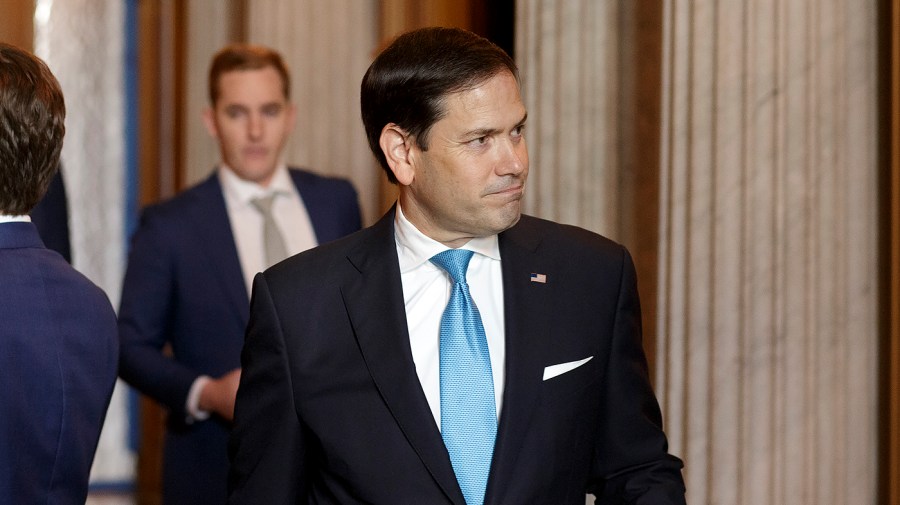
Sen. Marco Rubio (R-Fla.) arrives for the weekly Senate Republican policy luncheon on Tuesday, August 2, 2022. 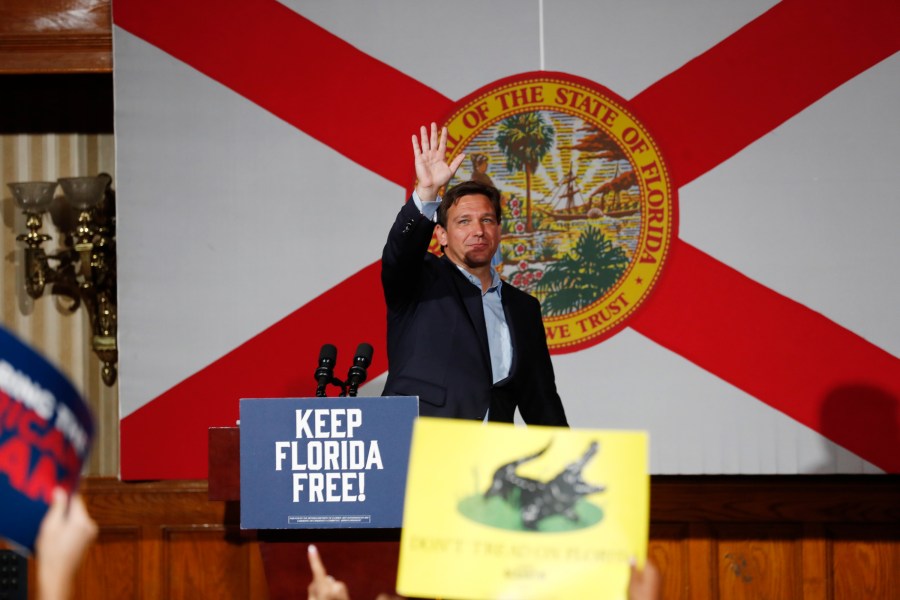
ORLANDO, FL – NOVEMBER 07: Republican Florida Gov. Ron DeSantis acknowledges supporters after giving a campaign speech at a rally for Florida Republicans at the Cheyenne Saloon on November 7, 2022 in Orlando, Florida. DeSantis faces former Democratic Gov. Charlie Crist in tomorrow’s general election. (Photo by Octavio Jones/Getty Images)
Rubio and Trump’s relationship
While competing for the 2016 GOP nomination, Rubio and Trump butted heads. Rubio referred to Trump as a “con man,” mocking the former president’s spelling errors on social media and referring to his outbursts as meltdowns.
Trump, in return, christened Rubio “Little Marco” and attacked his appearance, including mocking him for having large ears and accusing him of sweating too much.
After Trump was elected, however, Rubio became a supporter of the former president. Rubio also shifted his views to more MAGA-friendly positions, including taking a harsher stance on immigration, moving from his usual interventionist foreign policy view to side with isolationists against aid for Ukraine and opposing a Congressional investigation into the Jan 6. riot.
While Rubio voted to certify the results of the 2020 election at the time, he has recently refused to publicly commit to accepting the 2024 results, accusing Democrats of sowing doubt about the electoral process.