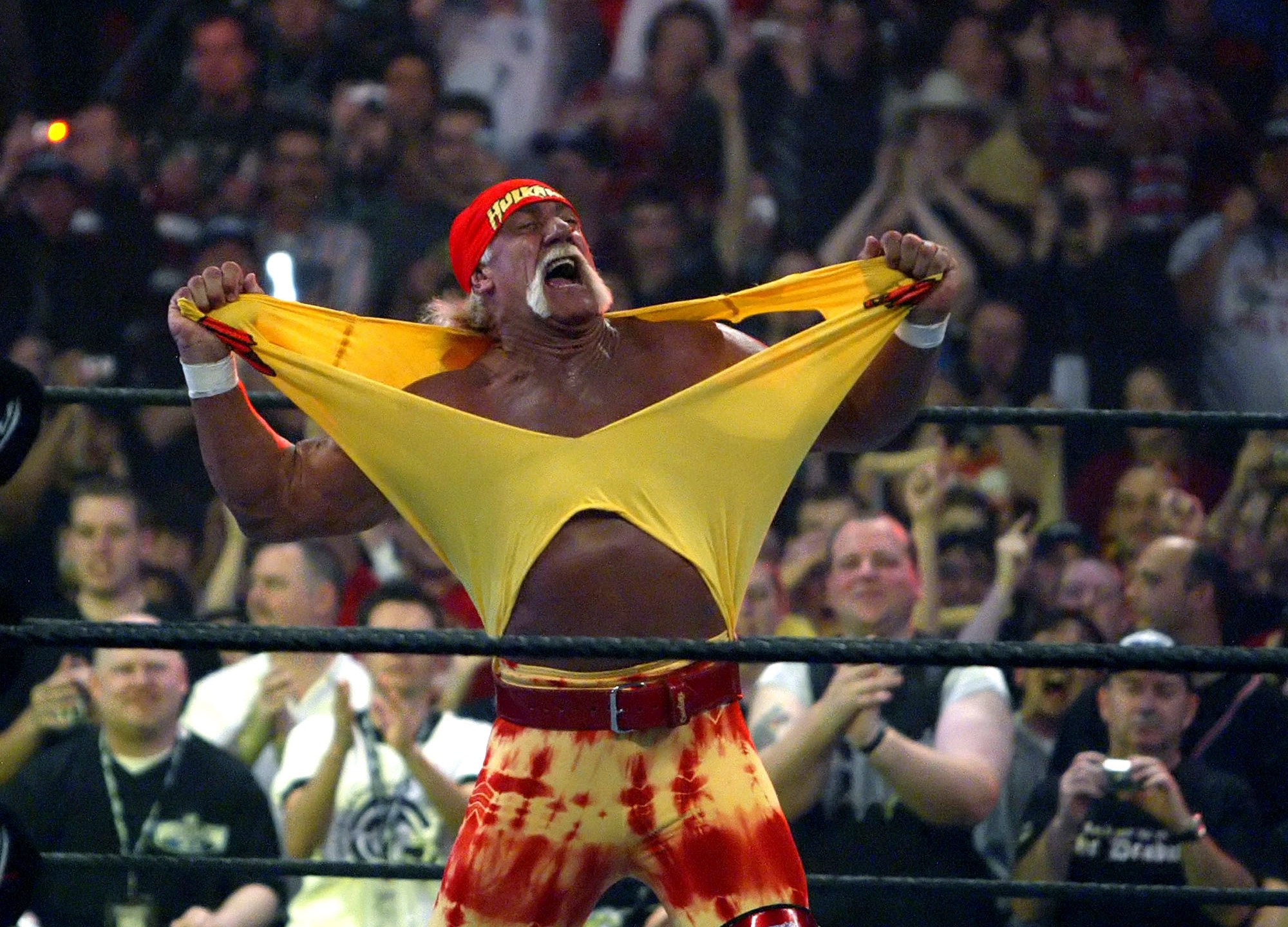
(NewsNation) — Hulk Hogan made wrestling cool. He made it culturally relevant. He was on the cover of Sports Illustrated, starring in feature films, TV shows and cartoons. He inspired an entire generation of kids to “say their prayers and eat their vitamins.” He expanded beyond the ecosystem of professional wrestling and ushered in a new era called sports entertainment. Hulk Hogan is the very first face that gets etched on the Mt. Rushmore of pro wrestling.
I became a fan of wrestling in the 1980s when “Hulkamania” was running wild all across the country. It was a different time back then. Cable television had just been launched. There was no social media. No way to go “viral” overnight. The world of pro wrestling operated in territories and gained exposure via regional TV deals. Wrestling in itself didn’t have a national following. It wasn’t “cool” to be a fan. It was “fake.”
And then came along Vince McMahon and the World Wrestling Federation (WWF, now WWE) with a vision for a national enterprise with a broad TV presence and a singular superstar to promote named Hulk Hogan. The WWF would partner with a new cable channel called MTV and produce the weekly “Rock ‘n’ Wrestling” connection that exposed WWF and Hulk to an entirely new audience. By the time Hogan headlined the inaugural WrestleMania, music superstars like Cyndi Lauper, Ozzy Osborne and Alice Cooper were partaking in the fun.
From there came a partnership with NBC that put the world of professional wrestling on broadcast television for the first time, producing the highly successful “Saturday Night’s Main Event” franchise during “SNL’s” summer hiatus. The star of the show was Hulk Hogan. This success convinced another well-known icon of the ’80s to host WrestleMania 4 and 5 at his hotel and casino in Atlantic City. More on him in a minute.
If you’ve never watched a single second of wrestling, you still know the name Hulk Hogan. Few talents are able to achieve that level of exposure – to become the face of a franchise and to singularly carry it to new heights. In an era defined by names like Jordan, Jackson, Madonna and Oprah, “The Hulkster” belongs in that rarified air.
Hogan became a symbol of the American dream. His iconic entrance music declared, “I am a real American, fight for what’s right in every man, I am a real American, fight for what’s right, fight for your life.” During the Persian Gulf War, Hogan would carry the American flag on his way to the ring. He would wave it proudly after victoriously disposing of the Saddam Hussein sympathizer Sgt. Slaughter at WrestleMania 7. He was a larger-than-life personality who captivated and inspired millions around the world.
And that’s the thing I’ve always found so interesting about the world of pro wrestling. It is these larger-than-life personalities, tapping into their real-life personas to tell stories – with their bodies and with their words. The very best of them elicit emotion – love or hate – and their only goal is to make you care enough to cheer or boo.
In their world, the worst thing you could do as a fan is to react with apathy or indifference. To them, a cheer is the same as a jeer. It’s why I always say to people in the media or politics, if you don’t understand how Donald Trump happened, you need to tune into an episode of Monday Night Raw or Friday Night Smackdown and really pay attention to what and who the audience reacts to.
Today, World Wrestling Entertainment is a global content and marketing juggernaut. It boasts the 10th largest subscriber following on YouTube in the world. At any given time, it’s programming is featured on Netflix, NBC/Peacock, the USA Network, A&E, ESPN and social media platforms like X. Superstars like Dwayne “The Rock” Johnson, John Cena, Dave Bautista, Roman Reigns, Liv Morgan and Cody Rhodes are being cast in feature films and TV/streaming series. Entertainers, athletes, and influencers like Jelly Roll, Tyrese Halliburton and Logan Paul are participating in weekly storylines. All of which would not be possible if Hulk Hogan hadn’t done it first.
I know there will be a lot of discussions about Hogan’s legacy and how his multitude of controversies and political activism impact that legacy. But no matter what you think of Terry Bollea the man, Hulk Hogan is immortal, and his cultural impact will be felt “4 life.”
Kurt Bardella is a NewsNation Contributor. You can follow him @KurtBardella on X and @KurtTakes on Instagram/Threads.
The views expressed in this article are those of the author and not necessarily of NewsNation.