OTTAWA, Ontario (NewsNation Now) — COVID-19 restriction protests at the U.S.- Canada border could lead to shipping delays and more inflation.
Canadian protesters pushing back against COVID-19 restrictions have been disrupting travel on the busiest international crossing in North America all week. The Ambassador Bridge that links Windsor, Ontario and Detroit was partially blocked with travels still heavily impeded Wednesday morning. Protesters have said they will not leave until all vaccine mandates and COVID-19 restrictions in Canada are lifted.
Even though the demonstration is centered in Canada, these new escalations have the potential to land a major blow to the U.S. supply chain.
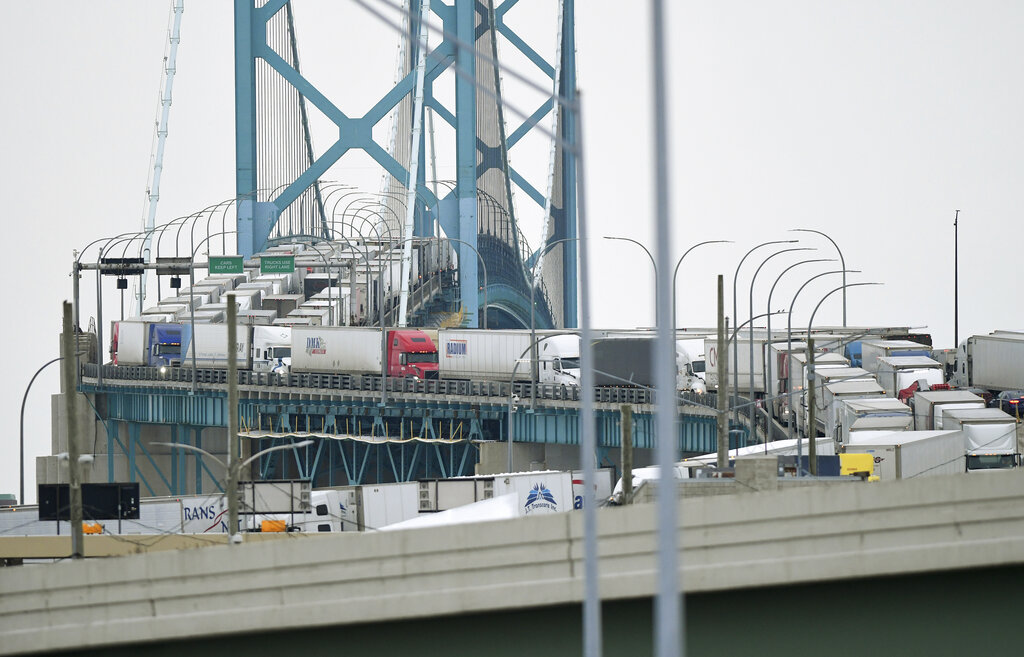
Trucks are backed up heading to and from Canada on the Ambassador Bridge, due to protests on the Windsor side, in Detroit on Monday, Feb. 7, 2022. Canada’s public safety minister said Monday that U.S. officials should stay out of his country’s domestic affairs, joining other Canadian leaders in pushing back against prominent Republicans who offered support for the protests of COVID-19 restrictions that have besieged downtown Ottawa for more than a week. (Daniel Mears /Detroit News via AP) 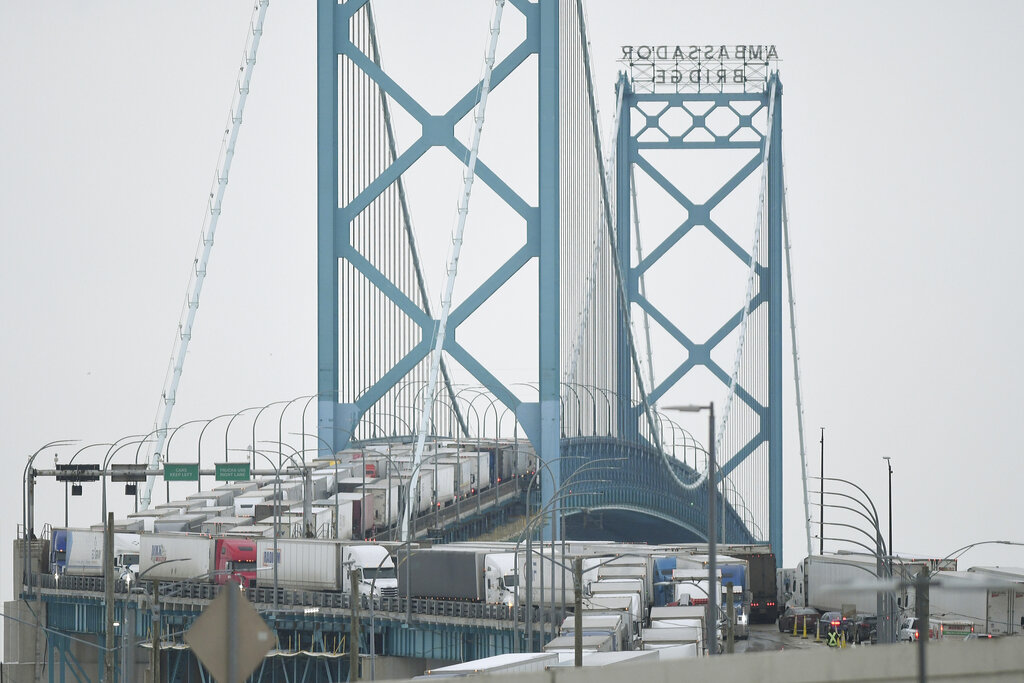
Trucks are backed up heading to and from Canada on the Ambassador Bridge, due to protests on the Windsor side, in Detroit on Monday, Feb. 7, 2022. Canada’s public safety minister said Monday that U.S. officials should stay out of his country’s domestic affairs, joining other Canadian leaders in pushing back against prominent Republicans who offered support for the protests of COVID-19 restrictions that have besieged downtown Ottawa for more than a week. (Daniel Mears /Detroit News via AP) 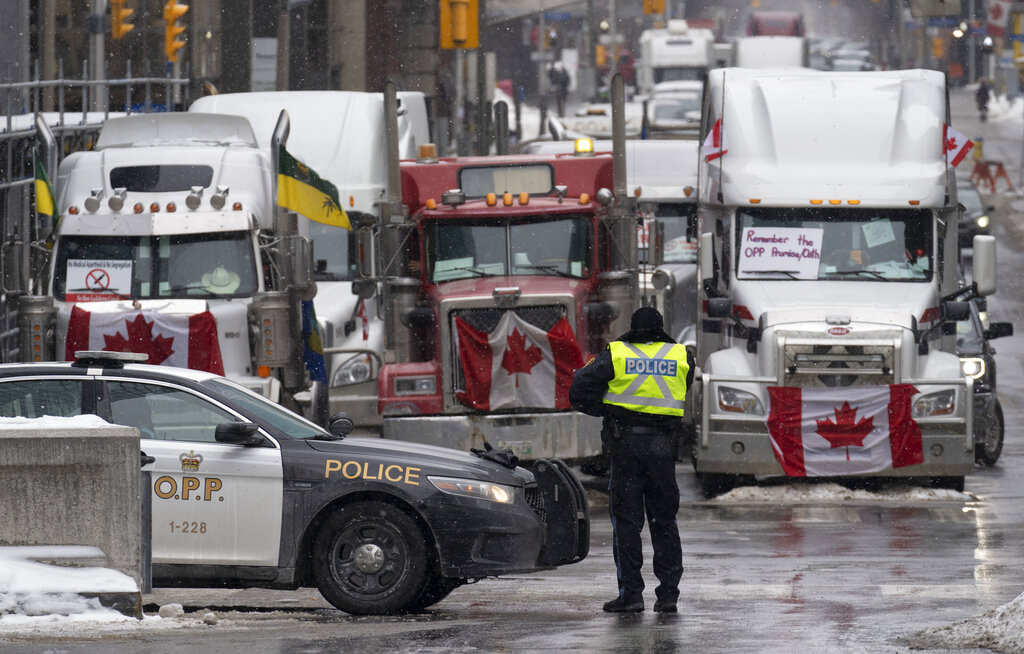
Police man a barricade in front of vehicles parked as part of the trucker protest, Tuesday, Feb. 8, 2022 in Ottawa’s downtown core. Canadian lawmakers expressed increasing worry about protests over vaccine mandates other other COVID restrictions after the busiest border crossing between the U.S. and Canada became partially blocked. (Adrian Wyld /The Canadian Press via AP) 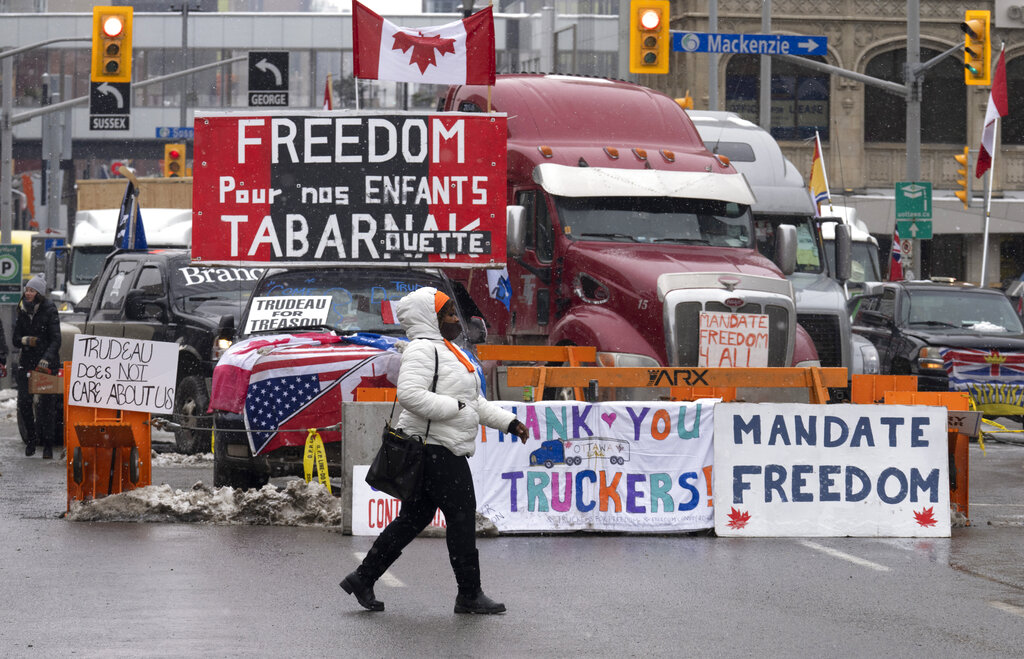
A woman crosses the street in front of vehicles parked as part of the trucker protest, Tuesday, Feb. 8, 2022 in Ottawa. Canadian lawmakers expressed increasing worry about protests over vaccine mandates other other COVID restrictions after the busiest border crossing between the U.S. and Canada became partially blocked. (Adrian Wyld /The Canadian Press via AP) 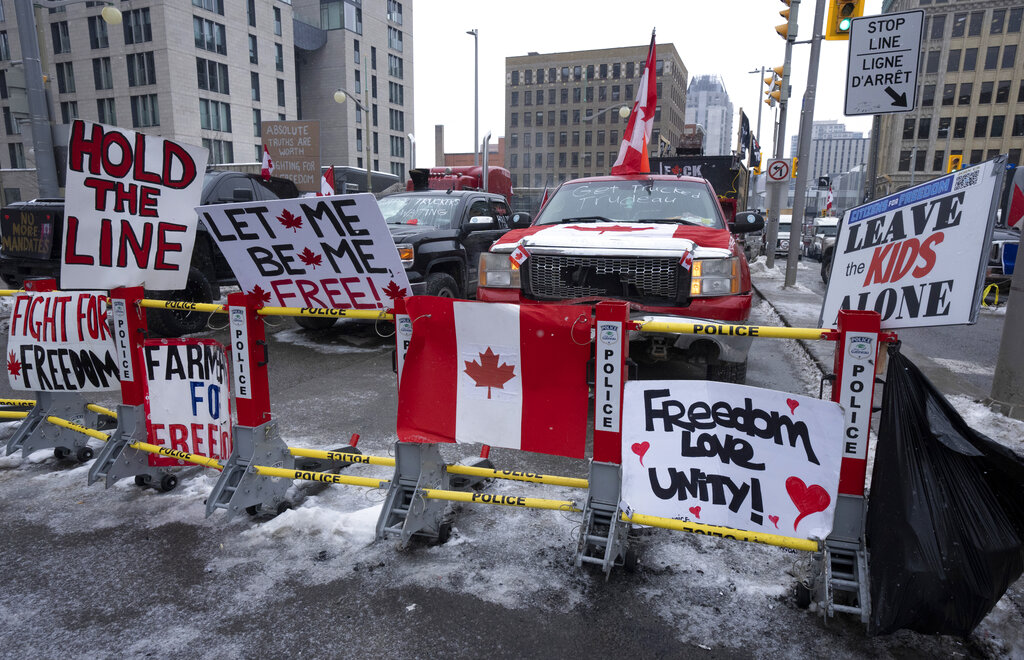
Signs sit on a barricade in front of parked vehicles as part of the trucker protest, Tuesday, Feb. 8, 2022 in Ottawa’s downtown core. Canadian lawmakers expressed increasing worry about protests over vaccine mandates other other COVID restrictions after the busiest border crossing between the U.S. and Canada became partially blocked. (Adrian Wyld /The Canadian Press via AP)
The United States exports and imports over 180% more items from Canada now than we did in the early 1990s — a sign of just how important this trading relationship has become. In 2019, American goods and services trade with Canada totaled an estimated $718 billion. Canada is the U.S.’s second-largest goods trading partner and largest goods export market. 27% of all American trade with Canada crosses the 1.6-mile Ambassador Bridge.
On a normal day, more than 40,000 people and $323 million in goods cross the Ambassador Bridge. The auto industry faces the biggest risk if the disruptions continue, with about a third of those imports worth roughly $100 million being auto-related.
If the blockading continues, prices could go up and delivery times will be pushed back, the Automotive Parts Manufacturers Association said. It could also be an issue for auto suppliers in Michigan, Ohio, Indiana and Illinois who use that border crossing to send their cars to Canadian customers.
Industry leaders say that they may also be forced to look at layoffs if shipments are delayed even further. There are other crossings between the U.S. and Canada, but some are hours away.