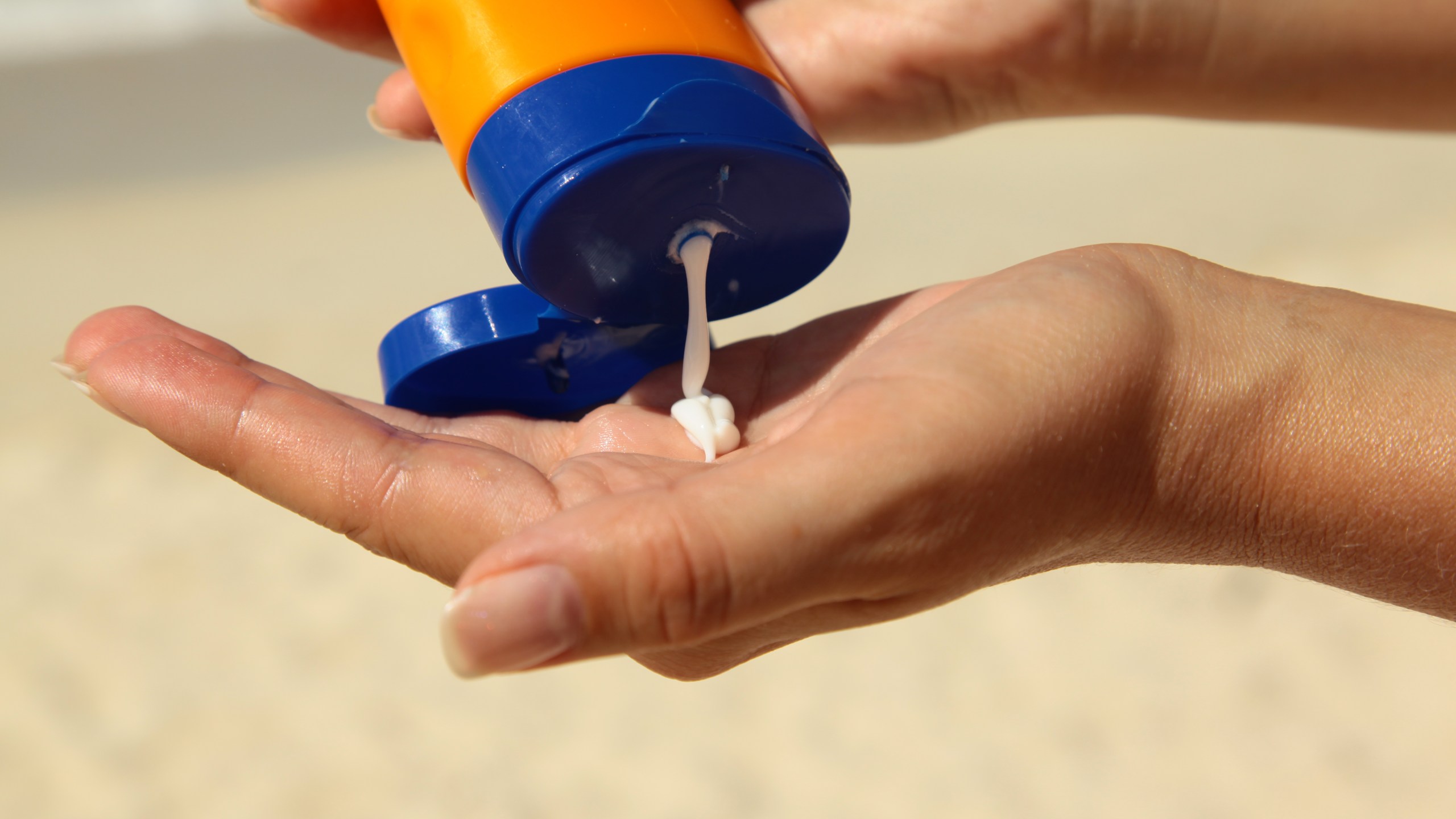
(NewsNation) — A recent study showed that only 22% of sunscreen brands protect against UV radiation, but that doesn’t mean you should ditch sunscreen altogether.
The anti-sunscreen movement, primarily housed on TikTok and social media, has labeled the summer staple as toxic for users. Last year, social media personalities spread misinformation that sunscreen causes cancer rather than prevents it.
However, experts maintain that sunscreen is a crucial part of preventing skin cancer, provided you apply the right type. Here’s what to know.
Is sunscreen dangerous? Ingredients to avoid
Sunscreen is not inherently dangerous, but certain ingredients and chemicals could have adverse effects.
For example, ingredients oxybenzone and octinoxate are commonly used in chemical sunscreens but lack GRASE — “generally recognized as safe and effective” — classification from the Food and Drug Administration.
The ingredients work to absorb and break down the sun’s rays rather than shield or reflect them. The FDA recommends avoiding sunscreen that contains more than 5% of the ingredients, though there is no official warning against either.
While some chemicals may be questionable, foregoing your SPF could result in skin cancer — the most common kind in the United States. The American Academy of Dermatology estimates around 20% of the population will be diagnosed with the disease in their lifetime.
But what about that claim that sunscreen causes cancer? According to dermatologist Anisha Patel, M.D., there’s no evidence for that correlation.
Instead, Patel said sunscreen protects your skin from harmful UV rays — if chosen carefully.
What to look for in sunscreen
What SPF you slather on is all up to preference, though chemical and mineral sunscreens can offer different kinds of protection.
Known for its thicker texture and potential white cast, mineral sunscreens help reflect the sun from your skin and act as a shield, according to the Cleveland Clinic.
Compared to chemical formulas — which absorb sunlight and could contain those aforementioned ingredients — mineral sunscreen is easier on sensitive skin and provides immediate protection.
But mineral sunscreen isn’t as effective at water-wicking as chemical compositions and may come off after some time in the pool or ocean.
Interested in mineral sunscreen? Keep an eye out for zinc oxide and titanium dioxide on the ingredients list. The pair is the only active sunscreen filter with GRASE status.
Whether you go chemical or mineral, dermatologists typically recommend finding a formula that provides both UVA and UVB radiation with an SPF of 30 or higher.
Other things to keep in mind:
- Choose lotions and sticks, not sprays
- High SPF labels don’t do much more than low ones
- Don’t use expired sunscreen
- Apply and reapply often
Dermatologist-approved sunscreen alternatives
You can also avoid sun exposure by wearing:
- Protective clothing that is dark and tightly woven
- Wide-brimmed hats
- Sunglasses with UVA and UVB protection