Shrooms may keep you young. They did for the lab mice in this study

  • Skin and lung cell aging slowed by more than 50% in mice
  • It’s unclear how chemical would translate to human aging
  • Psychedelic drugs may help those with alcoholism, PTSD

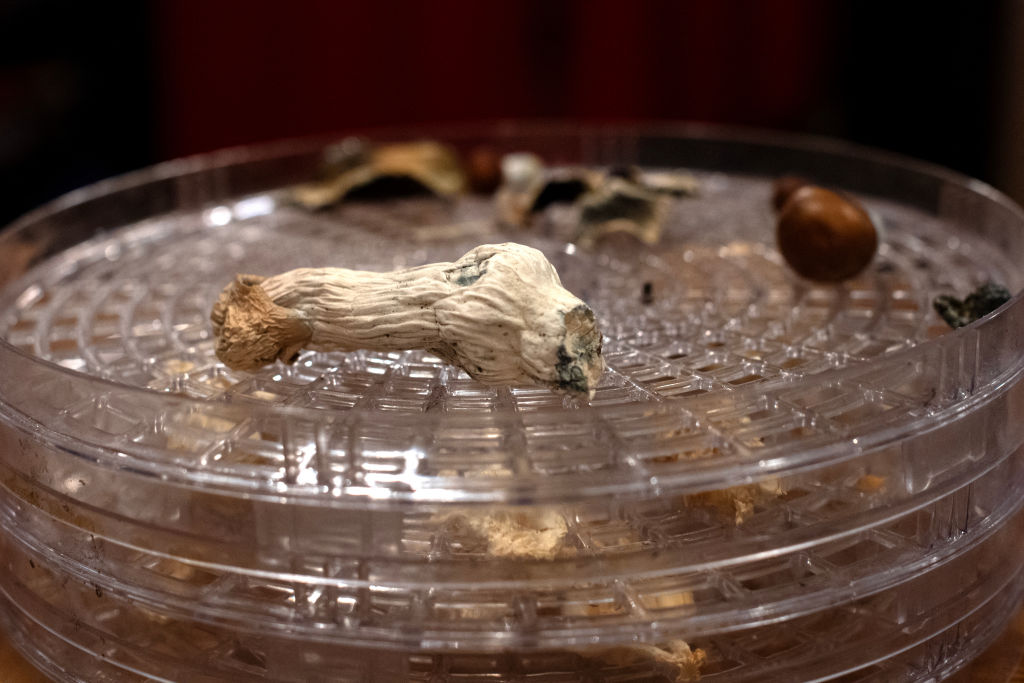
Dried “Gorilla Wizard” with other psilocybin mushrooms are arranged on a dehydrator tray by Benji “Teopixqui Dez” Dezaval, founder of The Community of PACK Life, which serves as Colorado’s first psychedelic church, on February 18, 2025, in Colorado Springs, Colorado. Dezaval, who started the church in 2024, hands out up to two grams of a psilocybin mushroom to each church congregant weekly. Colorado voters passed Proposition 122 in 2022, which decriminalized the use of psilocybin mushrooms, commonly referred to as “magic mushrooms.” Dezaval has seen the church grow to over 400 congregants in the past year. (Photo by Jason Connolly / AFP) (Photo by JASON CONNOLLY/AFP via Getty Images)

Want to see more of NewsNation? Get 24/7 fact-based news coverage with the NewsNation app or add NewsNation as a preferred source on Google!

(NewsNation) — Psilocybin, a chemical in hallucinogenic mushrooms, may help delay skin and lung cell aging by more than 50%, a new study suggests.

Researchers used a cellular aging model of human lung cells to see how the chemical would impact them. In a later model, the team discovered that mice at the equivalent of 60-65 human years who were given psilocybin lived longer than the ones that did not.

While more testing is needed to determine just how that would translate to humans, it’s another potential scientific benefit of psilocybin.

The findings were published July in the journal npj Aging.

This year, Colorado became the second state to legalize psychedelic therapy.

While research has shown promise for psychedelic drugs such as psilocybin and MDMA, also known as molly, in helping people with conditions such as alcoholism, depression and PTSD, the scientific field remains in its relatively early stages.

In 2023, the use of hallucinogens including LSD, mescaline, peyote, shrooms or psilocybin, continued a five-year trend of increasing, with 9% of respondents 19-30 saying they used hallucinogens, compared to 4% of respondents 35-50, according to a 2024 survey.

Health

Copyright 2026 Nexstar Broadcasting, Inc. All rights reserved. This material may not be published, broadcast, rewritten, or redistributed.

AUTO TEST CUSTOM HTML 20260112181412