(NewsNation) — The recent success of the first U.S. heart transplant done through fully robotic means suggests a medical future where surgeons use less invasive means to do complicated procedures.
In March, Houston cardiothoracic surgeon Dr. Kenneth Liao of Baylor College of Medicine oversaw the robotically performed heart transplant in which the medical team went through a 5-inch incision above the patient’s belly button.
The patient’s bad heart was pulled underneath his breastbone and through his abdomen, with the transplanted heart going up the same path before being connected, he explained.
“Our team has been doing robotic heart surgery for over five years,” he told “NewsNation Prime.” “We do a lot of heart surgeries as well. So, the expertise and the technologies converged together.”
Many people may be familiar with the more conventional route that heart surgeons use for transplants and other highly complicated procedures: Surgical teams break through the sternum and pull it apart to get access to the chest cavity.
The invasive nature of the open procedure can require significant recovery time for patients, whereas the robotic procedure reduces the risk of infection and potential need for blood transfusions, Baylor College of Medicine said in a news release.
The 45-year-old patient who underwent the robotic procedure had been in the ICU for three months with heart failure, Dr. Liao said. He needed an alternative that would “enhance his recovery quickly,” the physician said.
The patient did not experience any complications. He spent a month in the hospital recuperating and today is doing well and living a “full life,” Liao said.
“This robotic heart transplantation represents a remarkable, giant step forward in making even the most complex surgery safer and we are delighted to offer this great success to the world,” Dr. Todd Rosengart, chair of the Michael E. DeBakey Department of Surgery at Baylor, said in a prepared statement.
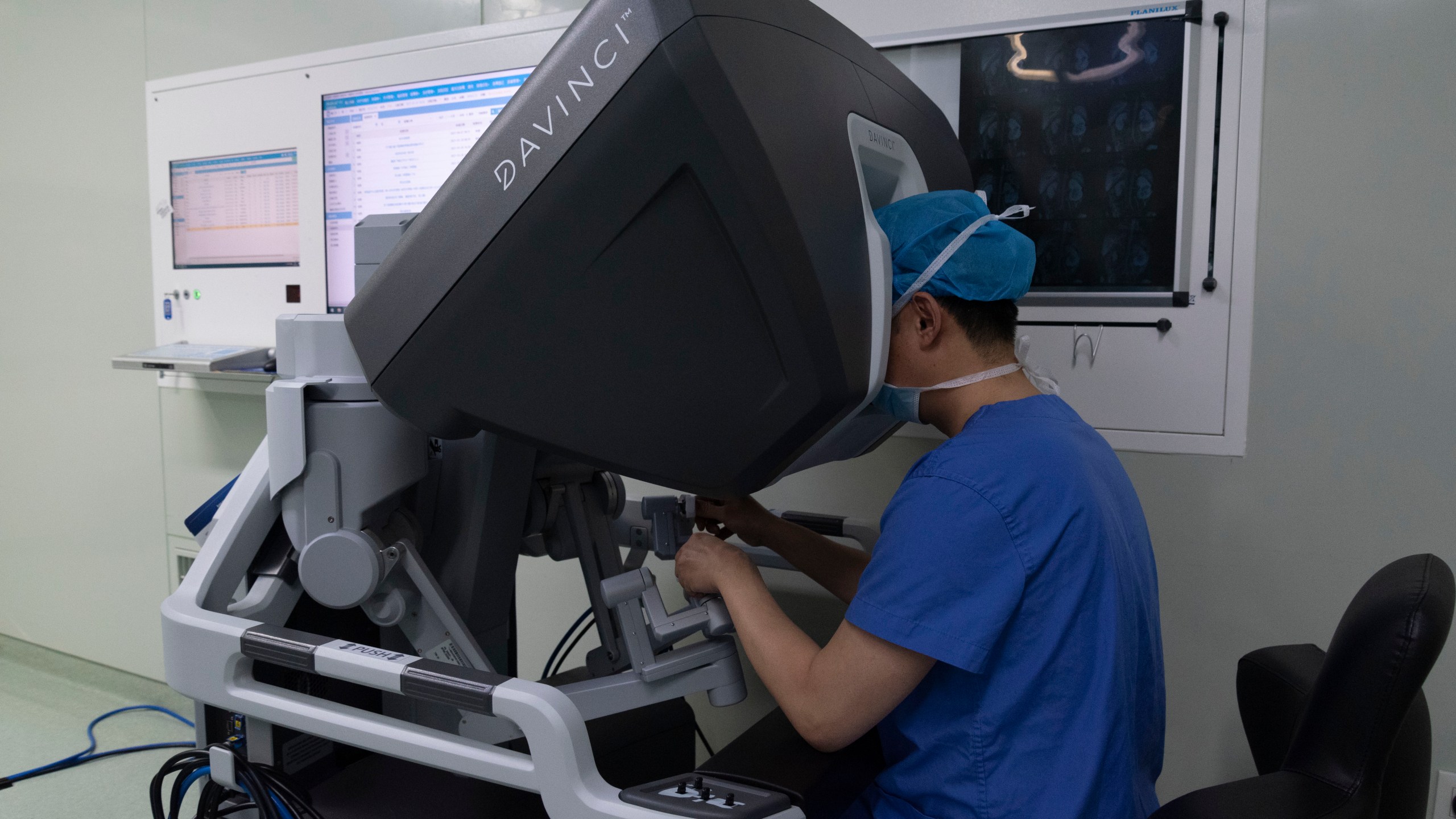
The robotic surgery was performed using an Intuitive da Vinci Xi system.