Editor’s note: This story has been updated to correct the pharmaceutical company’s name.
(NewsNation) — A new study is bringing renewed attention to one of the United States’ most fragile support systems: caregiving.
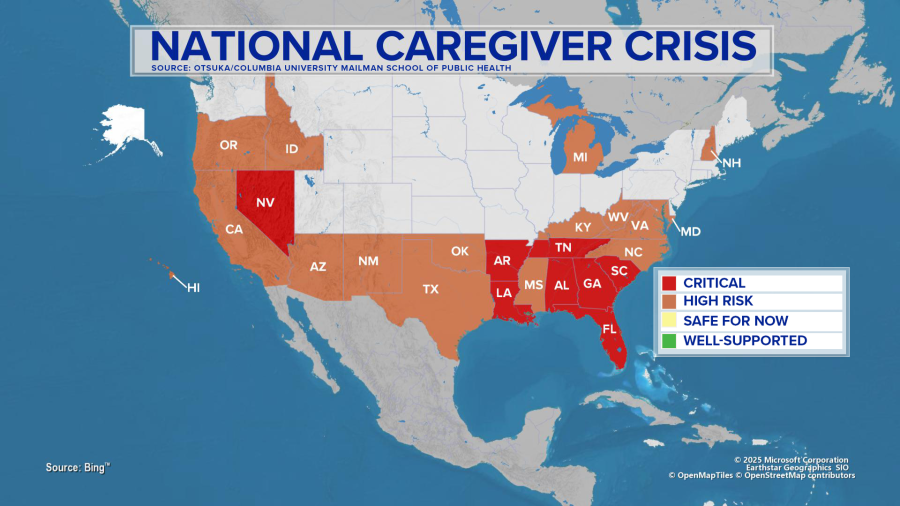
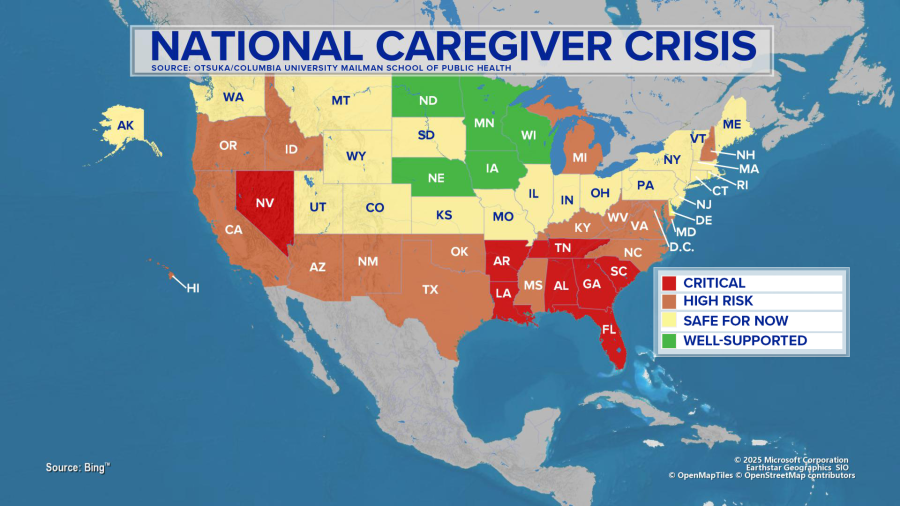
Researchers at Columbia University’s Mailman School of Public Health, in a study sponsored by Otsuka America Pharmaceutical, Inc., found that nearly half of all U.S. states are at risk of falling into a caregiving crisis.
The warning comes amid a national shortage of care professionals and growing pressure on families providing unpaid support.
US short nearly two million care workers
According to the report, the U.S. is currently short 1.8 million care workers, including both medical and non-medical roles, ranging from personal care assistants to registered nurses.
Healthcare occupations are projected to grow faster than the average through 2033, according to the US Bureau of Labor Statistics. On average, about 1.9 million openings are projected each year, driven by both new job growth and the need to replace workers who leave the field permanently.
At the same time, demand is surging due to longer life spans, rising illnesses and aging baby boomers.
More than 53 million Americans already provide unpaid care to a loved one. Of those, 60% also have jobs and nearly three in ten have quit a job due to the demands of caregiving.
“It’s often unpaid work. They have to take time off from their work, their lives. They have to give up hobbies, friendships,” said Dr. Rehan Aziz, an eldercare specialist.
Regional disparities in risk
The report found that support for family caregivers varies widely.
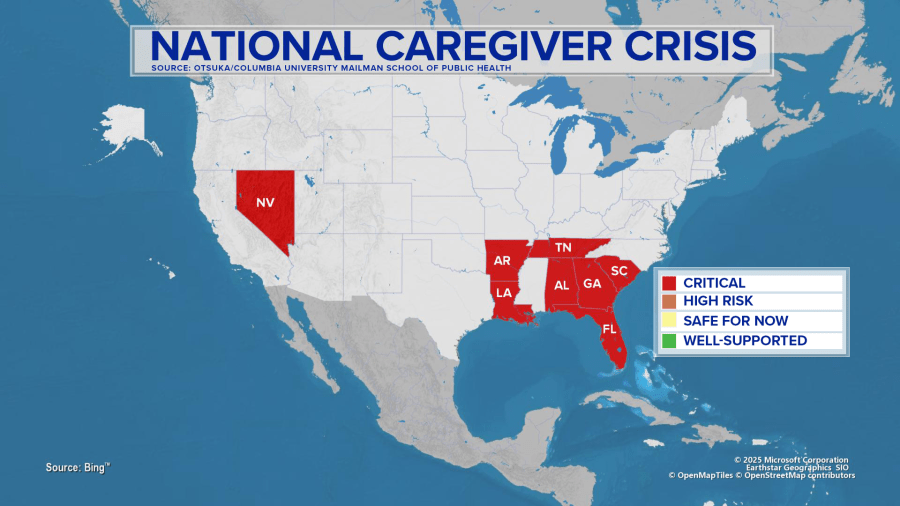
Based on caregiver supply, Medicare support, and demographics, the study found the most critical states are Alabama, Arkansas, Florida, Georgia, Louisiana, Nevada, South Carolina, and Tennessee.
The report also found 16 states to be “high risk” for caregiving collapse. Among them are three of the nation’s most populous: Texas, California and Pennsylvania.
As care costs rise faster than wages, even middle-class families are feeling the strain. The financial and emotional toll, the study found, is already compromising the health and stability of millions of households.
“There’s actually a very high rate of depression among caregivers. It’s almost 30 to 50%, and we believe that this high rate of depression is because the work is not supported,” Aziz said.
Call for federal and state action
The study urges state and federal officials to invest in stronger support systems, including paid leave, flexible workplace policies and stronger Medicaid coverage.