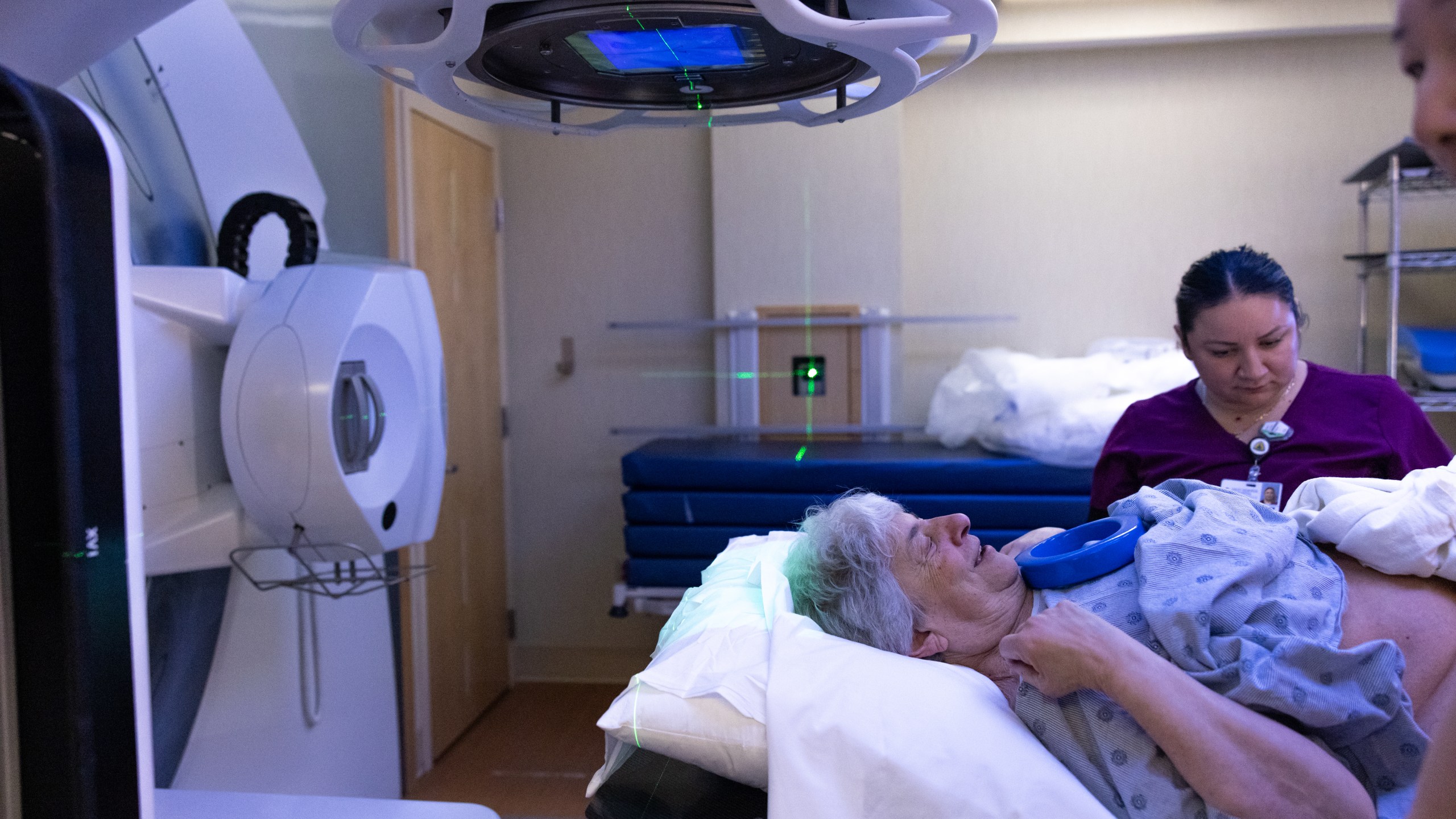
(NewsNation) — More Americans are surviving cancer, according to a new report by the American Cancer Society, which finds that 70% of patients live for at least five years after their initial diagnosis.
“Seven in 10 people now survive their cancer five years or more, up from only half in the mid-70s,” said Rebecca Siegel, the report’s lead author and senior scientific director of surveillance research at the American Cancer Society.
Siegel credited decades of research for improving treatments and turning many cancers from a death sentence into a chronic condition.
The ACS’s annual statistical report, published in its medical journal CA: A Cancer Journal for Clinicians, shows that overall survival for all cancers combined stands at 70%. When broken down by stage at diagnosis, survival is 69% for regional-stage disease, up from 54%, and 35% for metastatic disease, up from 17%.
The report attributes much of the decline in cancer deaths to reduced smoking rates, earlier detection, and improved treatments. Cancer mortality continued to fall through 2023, preventing an estimated 4.8 million deaths since 1991, according to the report.
Significant progress has also been made in high-mortality cancers. Survival rates for myeloma have risen from 32% to 62%, liver cancer from 7% to 22%, and lung cancer from 15% to 28%, the report said.
However, Shane Jacobson, CEO of the American Cancer Society and the American Cancer Society Cancer Action Network, warned that cuts to cancer research funding could jeopardize continued progress.
“For decades, the federal government has been the largest funder of cancer research, which has translated to longer lives for people with even the most fatal cancers,” he said. “Threats to cancer research funding and significant impact to access to health insurance could reverse this progress and stall future breakthroughs.”
The report comes in the wake of broader challenges in cancer research, including budget cuts and workforce reductions affecting public health agencies under the Trump administration. The ACS is urging continued investment to sustain progress and address disparities in care.
“Lack of access to high-quality cancer care and socioeconomics continues to play a significant role in persistent racial disparities,” said Dr. Ahmedin Jemal, senior author of the report. “Efforts need to be focused on these areas so successful targeted cancer control interventions can be more broadly and equitably applied to all populations.”
The American Cancer Society estimates more than 2.1 million new cancer diagnoses this year, with about 626,000 deaths projected. Lung cancer is expected to remain the deadliest, followed by colorectal and pancreatic cancers.
Cancer remains the second-leading cause of death in the United States overall and the leading cause among people younger than 85.