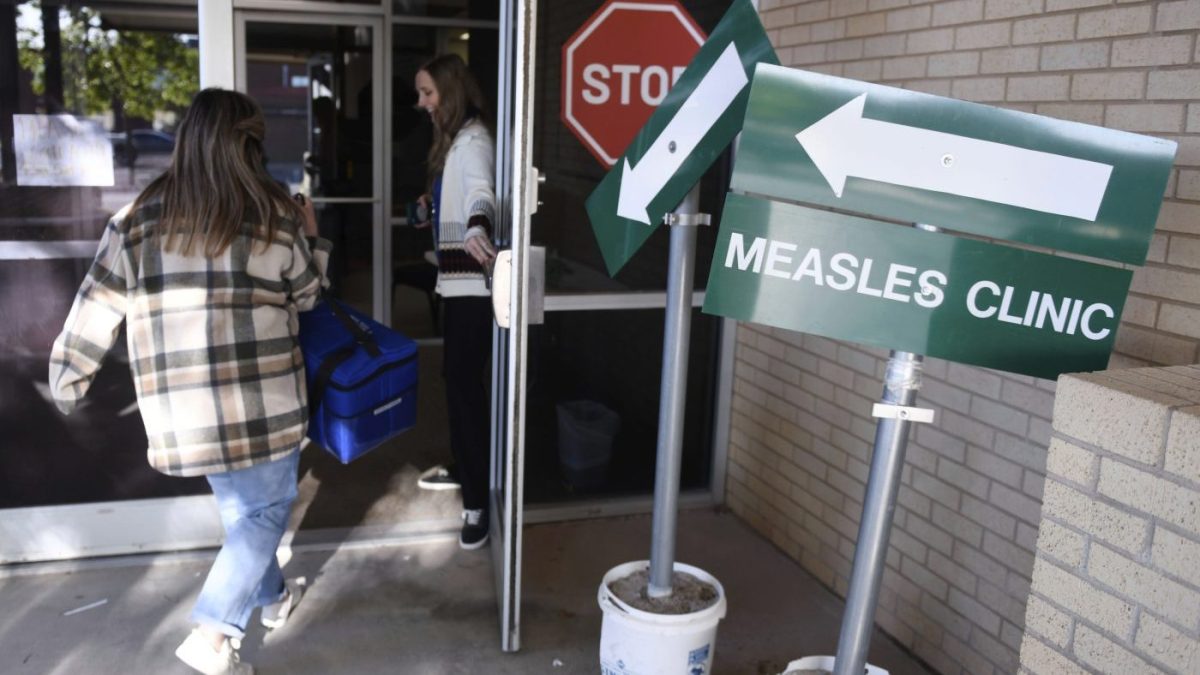
(NewsNation) — Measles made a big comeback in the United States so far this year, leaving questions about could become an even bigger problem in the future.
The country, as of July, had endured its largest single outbreak of the disease in three decades. Just a month later, the outbreak was considered officially over. HHS Secretary Robert F. Kennedy Jr. touted the federal overhaul of the CDC as what helped eliminate the outbreak swiftly.
“The outbreak ended quickly, proving the CDC can act swiftly with precision when guided by science and freed from ideology,” Kennedy Jr. said.
Even with RFK Jr’s victory lap, there is still some concern about whether measles will be able to evade the MMR vaccine. Dr. Miguel Ángel Muñoz-Alía says it’s a low probability.
“What we’ve seen is that we need to mutate five or more places at the same time on the virus to evade the vaccine, which is extremely unlikely,” acknowledged Muñoz-Alía, scientific director of paramyxovirus engineering at Vyriad.
“Those mutations would also make the virus worse at infecting unvaccinated people, so evolutionarily, it wouldn’t make sense for the virus.”
Dr. Teena Chopra, Wayne State University, adds that the MMR vaccine is “very safe,” but can cause mild effects, while serious side effects are rare.
“Measles cases today are far less severe than they were in the 1960s thanks to vaccination,” said Chopra.
The CDC says two doses of the MMR vaccine are 97% effective against measles. It’s also a lifetime vaccination.