(NewsNation) — The heads of public media organizations PBS and NPR were in the line of fire Wednesday by a new subcommittee, helmed by Republican Rep. Marjorie Taylor Greene, over accusations that the companies produce “systemically biased content.”
The Republican firebrand, who is the chairwoman of the House Oversight Subcommittee on Delivering on Government Efficiency, lashed out at the heads of the two outlets calling them “radical left-wing echo chambers” and accusing NPR of having a “communist agenda.”
“For too long, taxpayers have been asked to fund biased news. This needs to end, and it needs to end now,” Taylor Greene said in her opening remarks.
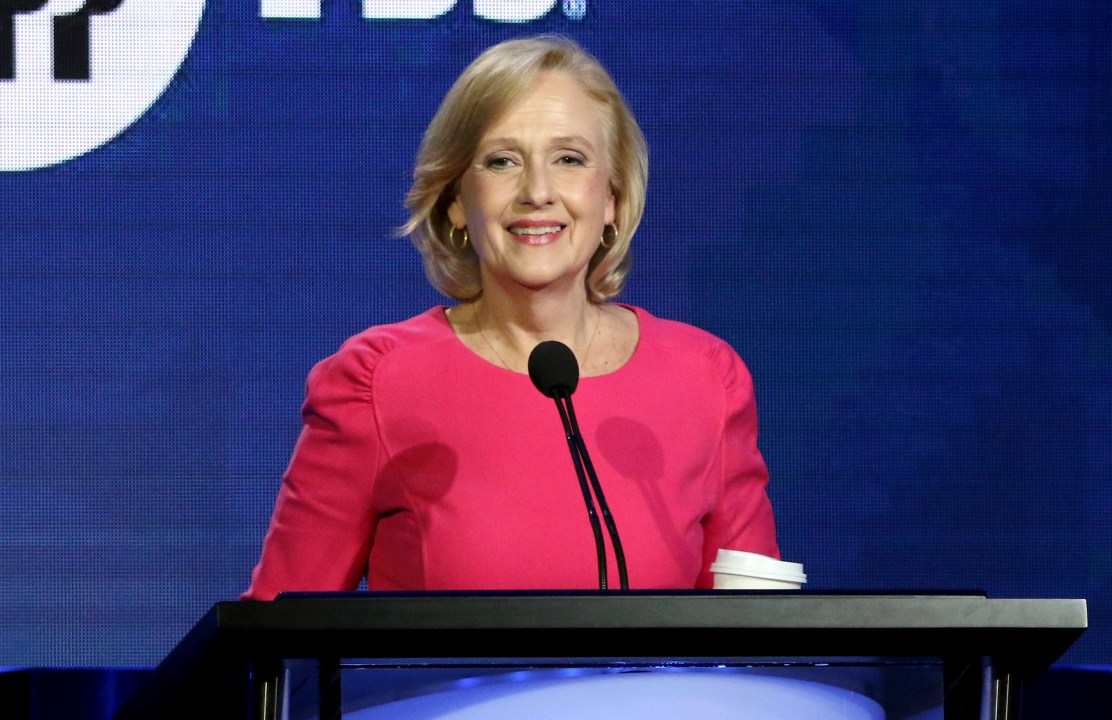
Paula Kerger, the chief executive of PBS, and Katherine Maher, the chief executive of NPR both appeared before the committee and defended their commitment to objective publicly accessible journalism.
“I believe that we have a public interest responsibility to serve the American public, across the full
political spectrum, in an impartial, nonpartisan fashion,” Maher said in opening statements.
Maher did acknowledge, however, that NPR made mistakes in its coverage of the Hunter Biden laptop story.
Taylor Greene had specifically pointed to the story when accusing the outlet of liberal bias.
The legacy public media companies have long caught the ire of Republican leaders who have accused them of a left-leaning slant, including President Donald Trump. Last month, Elon Musk, the head of the Department of Government Efficiency and Tesla, posted on X to “Defund NPR.”
“PBS continues to provide an essential service that is more distinct and vital than ever. In an era
of media consolidation in commercial television, public television stations continue to be locally
owned, governed, and operated by community-based nonprofit organizations, universities, and
state and local government,” Kerger said during opening statements.
While Republican members of the committee hammered the company leaders, Democratic members called it a distraction from the Department of Defense’s Signal messaging leak and the dismantling of government agencies.
“Leave Elmo alone, bring Elon in for questioning instead,” Democratic Rep. Greg Casar said.
At stake are potential cost cuts for the two companies, which are partially funded by the federal government.
Republicans also called for the dismantling of the Corporation for Public Broadcasting, a nonprofit authorized by Congress that receives about $500 million yearly from the government. The nonprofit provides about 15% of the Public Broadcast Service’s budget as well as 1% of National Public Radio’s budget.
Who appeared at the hearing?
Taylor Greene steered the meeting but was joined by other members of the subcommittee, including New Mexico Rep. Melanie Stansbury, the top Democrat on the committee.
The DOGE subcommittee, which shares an acronym with Elon Musk’s Department of Government Efficiency, was formed in conjunction with the nongovernment agency.
In addition to Maher and Kerger, Michael Gonzalez with conservative think tank The Heritage Foundation and Ed Ulman, the CEO of Alaska Public Media, also appeared.
Gonzalez also called for the CPB’s dismantling.
Why is the federal government funding PBS, NPR?
The Public Broadcasting Act of 1967 authorized the creation of the Corporation for Public Broadcasting, which provides funding for several public media initiatives, including PBS and NPR.
Funding goes to individual stations in local communities, which decide programming.
It was put into place because public media “creates and distributes content that is for, by and about Americans of a wide range of backgrounds; and provides services that foster dialogue among the stations and the communities they serve,” according to the CPB.
The aim is to provide “free high-quality, educational programming for children, arts, current affairs programming for public media stations” but also life-saving emergency alert services, the nonprofit states.
PBS is widely known for its children’s programming, including “Sesame Street,” as well as the “PBS NewsHour. “
NPR provides free radio programming, including popular shows “All Things Considered” and “Fresh Air.”
Why are NPR and PBS under fire?
In letters to the media companies, Taylor Greene specifically called out NPR’s lack of coverage of the Hunter Biden laptop story and PBS’ reporting on a hand gesture that Elon Musk made at an Inauguration Day event.
Taylor Greene’s letter asking NPR to appear at the hearing stated that the outlet’s decision not to report on the Hunter Biden laptop scandal in October 2020 was “ideologically” slanted.
She also called out the outlet after an April 2024 essay from former NPR editor Uri Berliner alleged systemic liberal bias across the company.
“Today, those who listen to NPR or read its coverage online find something different: the distilled worldview of a very small segment of the U.S. population,” he wrote in an essay for The Free Press.
Berliner was suspended and eventually left the company after the essay came out.
In an April 10, 2024, interview on NewsNation’s “CUOMO,” Berliner addressed the backlash from his NPR colleagues who publicly disagreed with his assertions.
“I’m not surprised by the response that came from management and the same managers that I’ve been making a lot of these points about,” Berliner said last year. “I will say, I’ve had a lot of support from colleagues … many of them unexpected, who say they agree with me. Some of them say this confidentially.”
In her letter to Kerger, Taylor Greene called out PBS’ reporting of Musk, saying the outlet “implied that Mr. Elon Musk made a fascist salute while addressing an inaugural celebration hours after President Donald Trump was sworn into office. The characterization was clearly false,” she wrote.
Separate FCC investigation into PBS, NPR
Both public media companies are also facing a separate inquiry by the Federal Communications Commission under Trump’s new chair, Brendan Carr.
Carr is probing whether PBS and NPR violated government rules preventing commercial advertisements by listing off government sponsors on air.
In a statement to The Hill, Maher said the outlet’s programming and underwriting messaging “complies with federal regulations, including the FCC guidelines on underwriting messages for noncommercial educational broadcasters, and Member stations are expected to be in compliance as well.”
A representative for PBS told The Hill that it “is proud of the noncommercial educational programming we provide to all Americans through our member stations.”
“We work diligently to comply with the FCC’s underwriting regulations and welcome the opportunity to demonstrate that to the Commission,” they said.