(NewsNation) — Sean “Diddy” Combs stood to lose his $400 million fortune under a forfeiture action by the Justice Department during his criminal trial.
Combs was charged with five counts of racketeering, sex trafficking and transportation to engage in prostitution.
A jury on Wednesday found him guilty of two counts of transportation to engage in prostitution. He was found not guilty on two counts of sex trafficking and on the racketeering charge, or RICO charge, the most serious one levied against him.
His indictment included a forfeiture action that would result in him losing almost all of his net worth if found guilty on that racketeering charge, as prosecutors alleged that he used his money to support a criminal enterprise.
A criminal forfeiture is an action brought as part of the criminal prosecution of a defendant, according to the FBI. It is against that person and requires the government to seize the property used in the commission of the crime, along with the defendant, according to the agency.
Combs was not found guilty on that RICO charge, so he is not likely to forfeit his entire fortune.
What is Diddy’s net worth?
In 2019, Diddy’s net worth was $740 million, Forbes reported. However, at the end of 2024, his net worth had plummeted to $400 million.

The home of Sean “Diddy” Combs is seen during a raid by federal law enforcement agents on March 25, 2024, in Los Angeles. (Photo by MEGA/GC Images) 
The home of Sean “Diddy” Combs is seen during a raid by federal law enforcement agents on March 25, 2024, in Los Angeles.(Photo by MEGA/GC Images) 
The home of Sean “Diddy” Combs is seen during a raid by federal law enforcement agents on March 25, 2024, in Los Angeles. (Photo by MEGA/GC Images) 
The home of Sean “Diddy” Combs is seen during a raid by federal law enforcement agents on March 25, 2024, in Los Angeles. (Photo by MEGA/GC Images) 
The home of Sean “Diddy” Combs is seen during a raid by federal law enforcement agents on March 25, 2024, in Los Angeles. (Photo by MEGA/GC Images) 
FILE – Sean ‘P.’ Diddy’ Combs arrives at the annual Independence Day ‘White Party’ at the PlayStation 2 Estate in Bridgehampton, New York, July 4, 2004. (AP Photo/Jennifer Szymaszek, File) 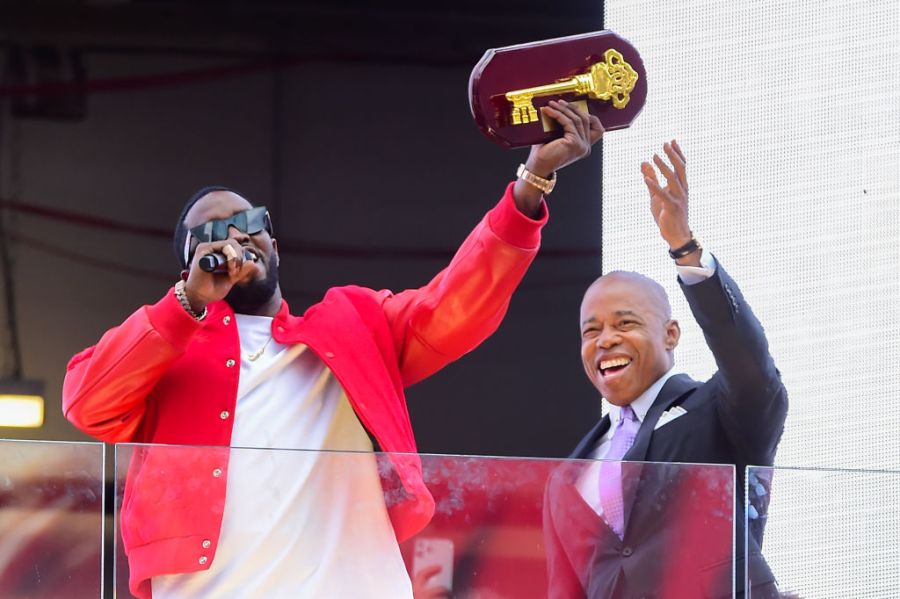
Sean “Diddy” Combs is seen receiving a key to the city from Mayor Eric Adams in Times Square on Sept.15, 2023, in New York City. (Photo by Raymond Hall/GC Images ) 
Diddy performs onstage at the 2023 MTV Video Music Awards held at Prudential Center on September 12, 2023 in Newark, New Jersey. (Photo by Christopher Polk/Variety via Getty Images)
Combs’ net worth is a combination of several of his assets, including real estate and collectibles, private investments and intellectual property, according to the outlet.
Does not guilty RICO charge mean Diddy keeps his fortune?
Combs’ assets will likely remain his, as he was found not guilty on the RICO charge.
However, the high-profile nature of the case and charges will make it impossible for Combs to have a successful career moving forward, Sara Azari, host of “Serving Justice,” told NewsNation.
Money forfeited by the government through asset forfeiture generally goes into a fund managed by the Department of Justice.
The Assets Forfeiture Fund can be used for various purposes, including funding investigative expenses, victim compensation and law enforcement activities, according to the U.S. Marshals Service.