(NewsNation) — Defense attorneys have suggested that Idaho college killings suspect Bryan Kohberger is too uncoordinated to commit the crime, but new data from running app Strava could suggest otherwise, according to a former FBI agent.
Kohberger is accused of killing college students Kaylee Goncalves, Madison Mogen, Xana Kernodle and Ethan Chapin in an off-campus house. The killings shocked the small town of Moscow, Idaho, and eventually, Kohberger, a criminology student at a different university, was charged with the crime.
Former FBI agent Jennifer Coffindaffer joined NewsNation to discuss data from Strava. Kohberger’s defense team appears to be considering an argument that he could not have committed the crimes because he has a developmental coordination disorder that would challenge his speed and agility.
Bryan Kohberger’s Strava data shows that he’s ‘very fast’: Fmr. FBI agent
“When I saw this on Strava, I got the picture of somebody that not only is very coordinated but also very fast,” Coffindaffer told Ashleigh Banfield.
She noted that FBI agents have timed runs as part of their training, and for male agents to get a top score, they had to run six-minute miles, something that Strava showed Kohberger was also capable of.
“For a recreational runner, it’s quite an accolade to be able to run that fast,” Coffindaffer said.
Coffindaffer said that in addition to speed, she noticed something about Kohberger’s routes, where he was weaving in and out of housing areas and developments.
“You just wonder, was he in training for what he anticipated doing, understanding he would need to be in this kind of shape?” Coffindaffer said.
App data in former court cases
App data has played a role in court cases before, such as the death of Mo Wilson, where the killer used apps to track and locate her. It’s not clear if any of the Idaho victims may have also been on the app and sharing their run routes publicly.
In addition to showing him running through cul-de-sacs and back streets, Kohberger’s runs also tended to be late at night, usually around midnight.
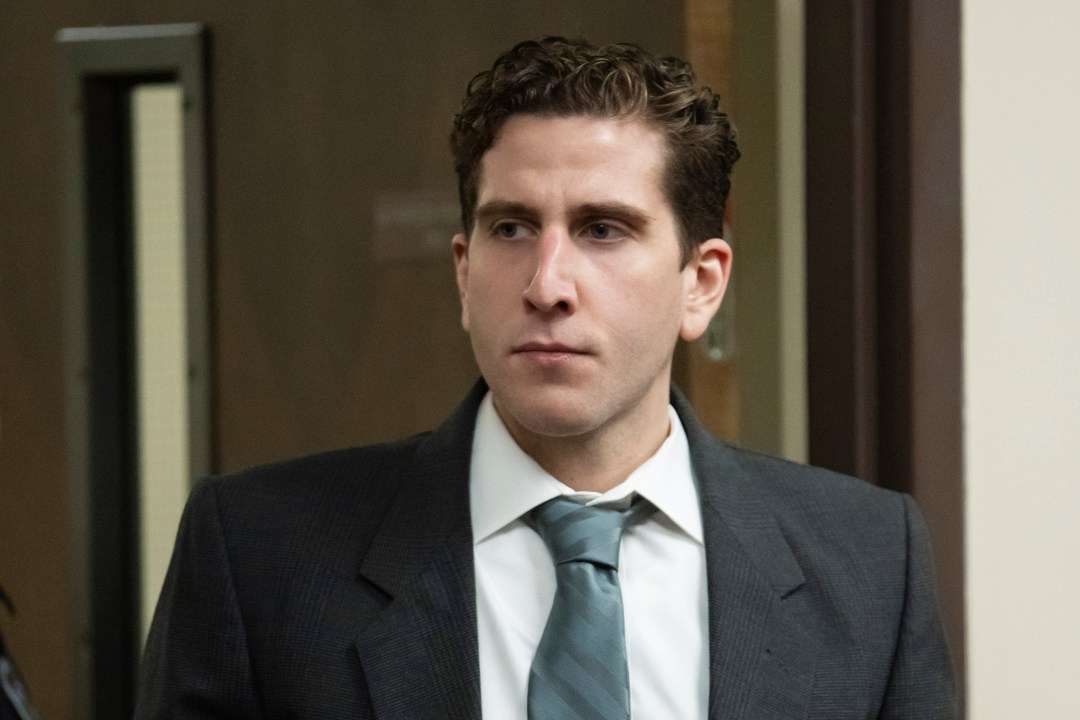
FILE – Bryan Kohberger, accused of fatally stabbing four University of Idaho students, is escorted into court for a hearing in Latah County District Court, Sept. 13, 2023, in Moscow, Idaho. (AP Photo/Ted S. Warren, File) 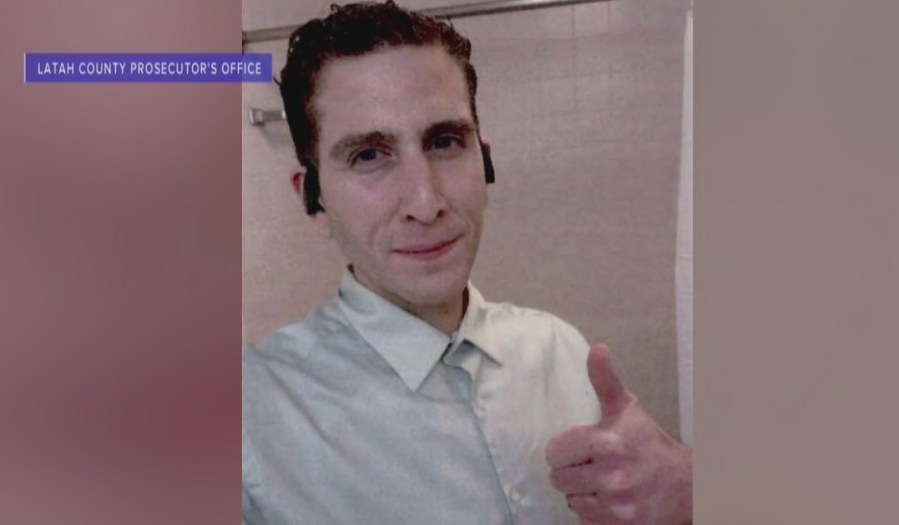
Newly released court documents include this smiling selfie of Bryan Kohberger, allegedly taken on the morning four University of Idaho students were killed. 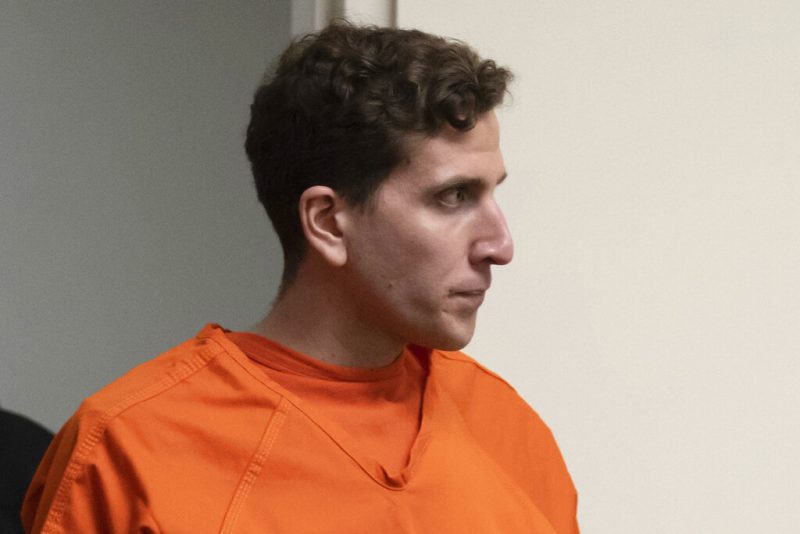
Bryan Kohberger, left, who is accused of killing four University of Idaho students in November 2022, appears at a hearing in Latah County District Court, Thursday, Jan. 5, 2023, in Moscow, Idaho. (AP Photo/Ted S. Warren, Pool) 
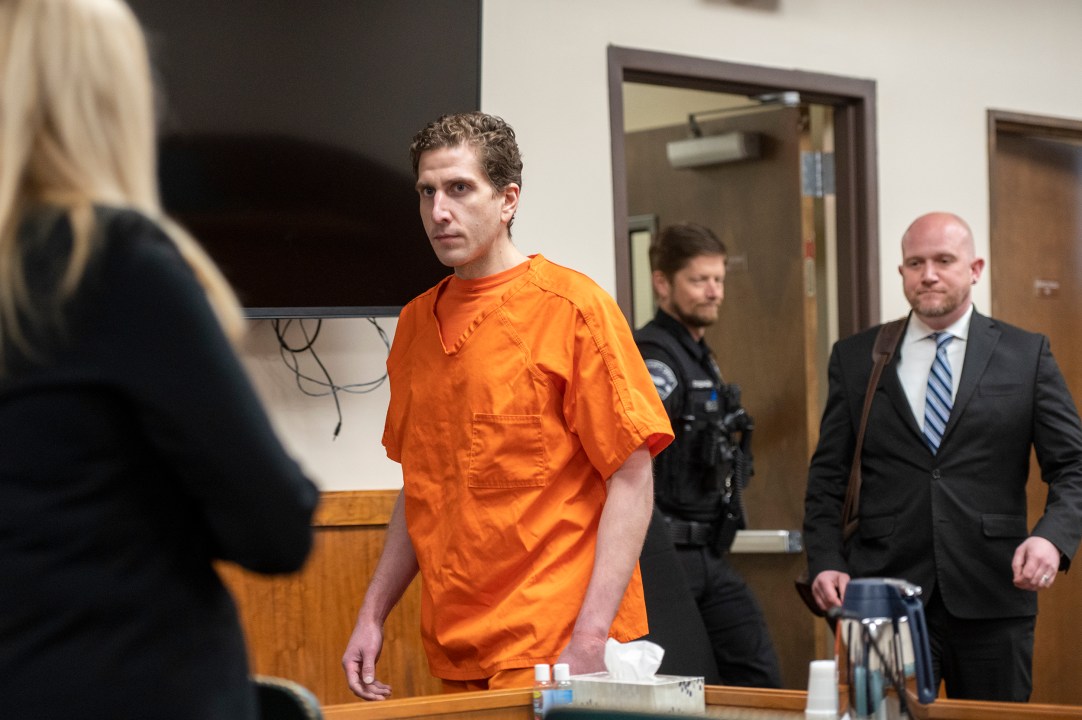
FILE – Bryan Kohberger enters the courtroom for his arraignment hearing in Latah County District Court, May 22, 2023, in Moscow, Idaho. On Wednesday, Aug. 2, attorneys for Kohberger, accused of stabbing four University of Idaho students to death last year, said he was on a long drive by himself around the time of the slayings. (Zach Wilkinson/The Moscow-Pullman Daily News via AP, Pool, File) 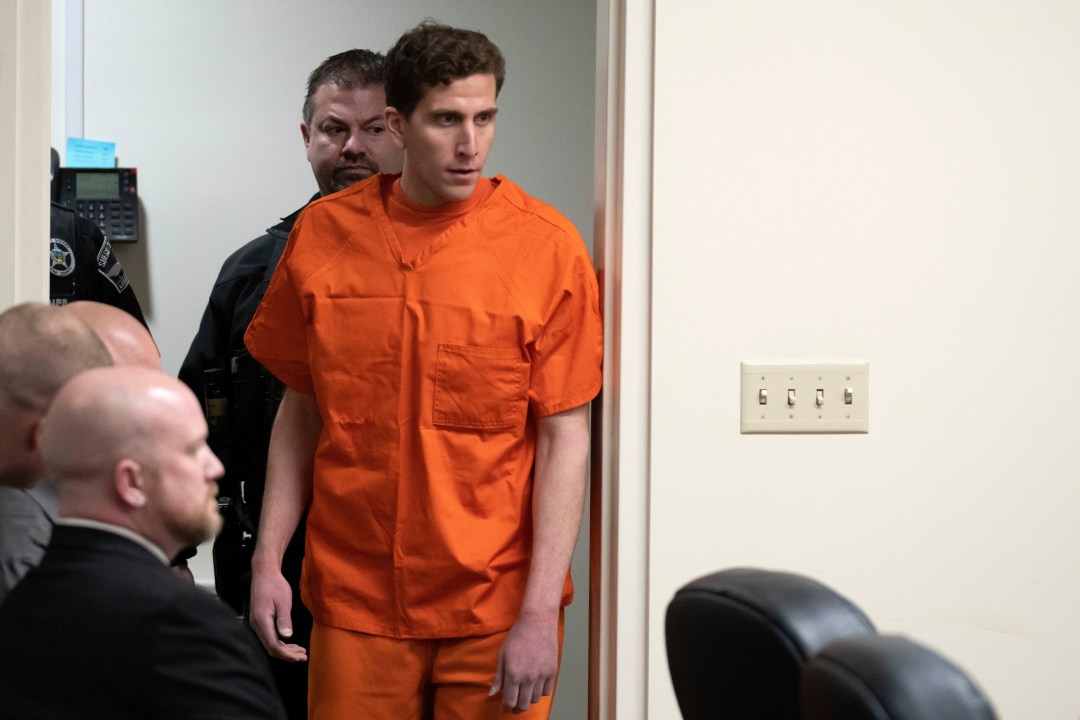
FILE – Bryan Kohberger, who is accused of killing four University of Idaho students in Nov. 2022, appears at a hearing in Latah County District Court, on Jan. 5, 2023, in Moscow, Idaho. An Idaho judge has denied a request from more than two dozen news organizations to lift a gag order in the criminal case of a man accused of stabbing four University of Idaho students to death. The judge did, however, significantly narrow the gag order in response to the news organizations’ concerns. (AP Photo/Ted S. Warren, Pool, File) 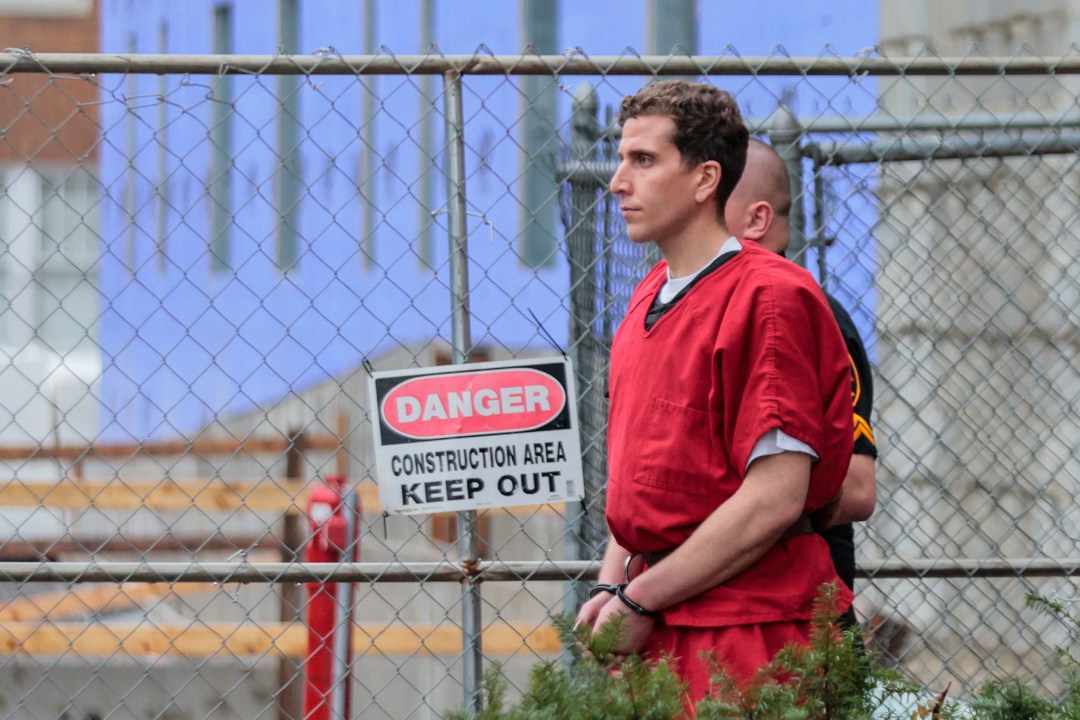
Bryan Kohberger, facing first-degree murder charges in the deaths of four University of Idaho students last fall, is seen at the Monroe County Courthouse in Pennsylvania on Tuesday, Jan. 3, 2023. 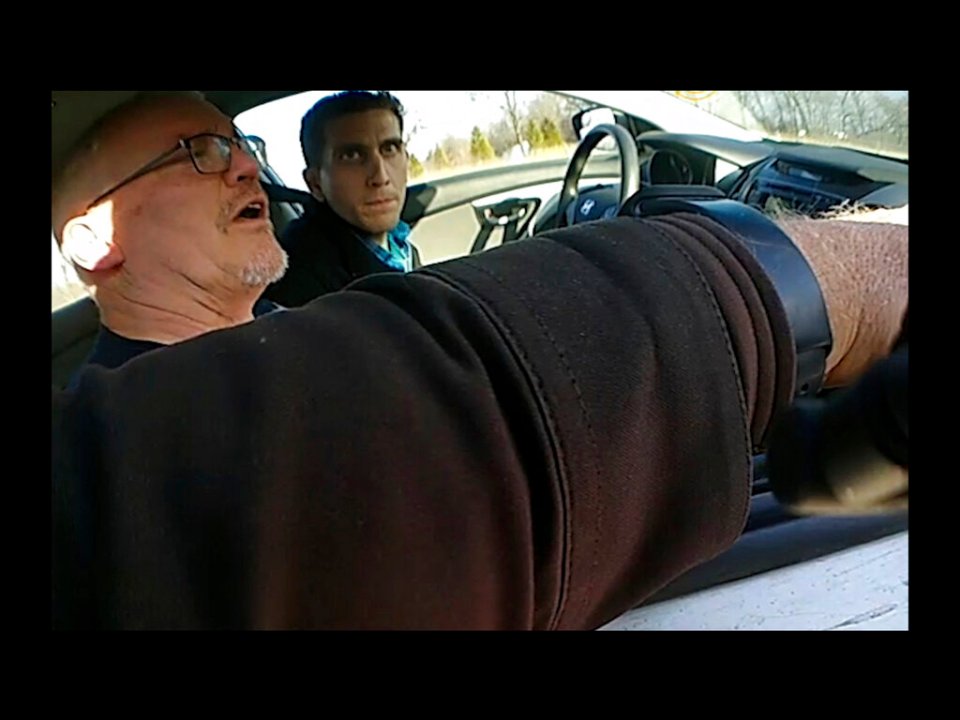
In this cropped screen grab from a bodycam video provided by the Hancock County Sheriff’s Office, Bryan Kohberger, left, and his father are seen talking to a sheriff’s deputy during a traffic stop on Thursday, Dec. 15, 2022, in Hancock County, Ind. Bryan Kohberger, accused in the November slayings of four University of Idaho students has left a Pennsylvania jail in the custody of state police, officials said Wednesday, Jan. 4, 2023, which means he could be headed to Idaho to face first-degree murder charges.(Hancock County Sheriff’s Office via AP) 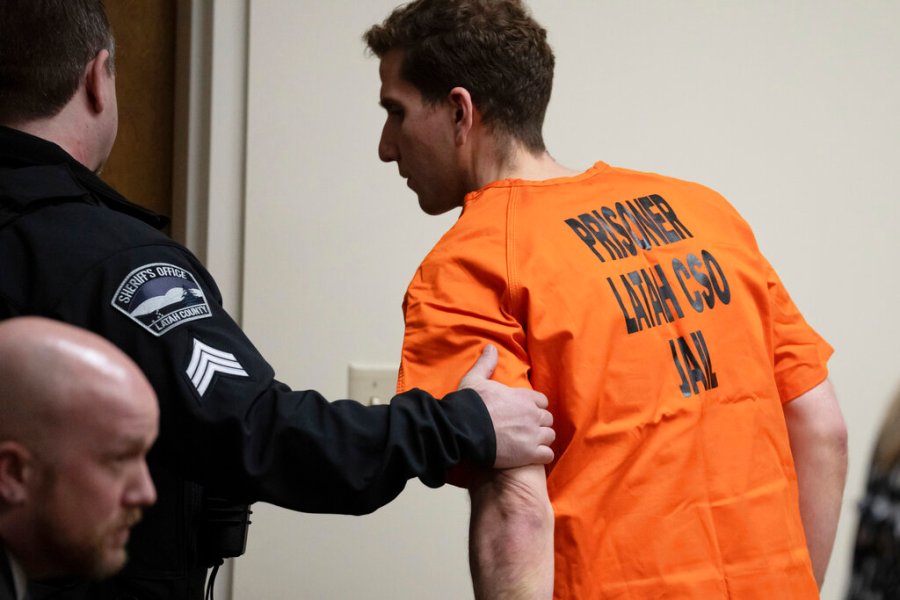
Bryan Kohberger, right, who is accused of killing four University of Idaho students in November 2022, is led away following a hearing in Latah County District Court, Thursday, Jan. 5, 2023, in Moscow, Idaho. (AP Photo/Ted S. Warren, Pool)
Coffindaffer said the routes Kohberger ran undermine the idea that coordination issues would keep him from committing the crime.
“You’re going to have curves, you’re going to have a change in elevation from a sidewalk, say, down to a road,” she said. “You’re going to have different roadside surfaces, asphalt and such. So these aren’t areas that are necessarily very easy to maneuver in when you’re running.”
Kohberger is set to go to trial in August 2025.