(NewsNation) — A special tactical unit of U.S. Customs and Border Protection is being credited with helping capture fugitive Grant Hardin, the so-called “Devil in the Ozarks” who escaped from an Arkansas prison May 25.
Multiple sources tell NewsNation correspondent Ali Bradley that three agents from the Border Patrol Tactical Unit, or BORTAC, were in on Hardin’s apprehension Friday. BORTAC, which is based out of El Paso, Texas, has members deployed throughout the country.
State officials said Arkansas law enforcement also was involved in Hardin’s capture near Moccasin Creek in Izard County, less than two miles west of the North Central Unit prison where Hardin escaped.
Federal officials said BORTAC agents out of the Rio Grande Valley Sector had been assigned to search for Hardin. CBP said BORTAC agents have “advanced search capabilities” and extensive training in navigating complex terrain such as the region into which Hardin disappeared. Chief Border Patrol Agent Gloria Chavez said the unit’s “unique capabilities and training are well-suited for the demands of this critical mission.”
The BORTAC team is often called in when all other options for search assistance have been exhausted, federal officials said
What other high-profile cases has BORTAC worked on?
BORTAC agents were also called into action when reports emerged of an active shooter at Robb Elementary School in Uvalde, Texas in 2022.
Texas Monthly reported at the time that BORTAC agents were investigating stash houses on the border just west of Uvalde when agents were dispatched to the school where the shooting took place. BORTAC agents were later credited with fatally shooting the suspect in the high-profile school shooting.
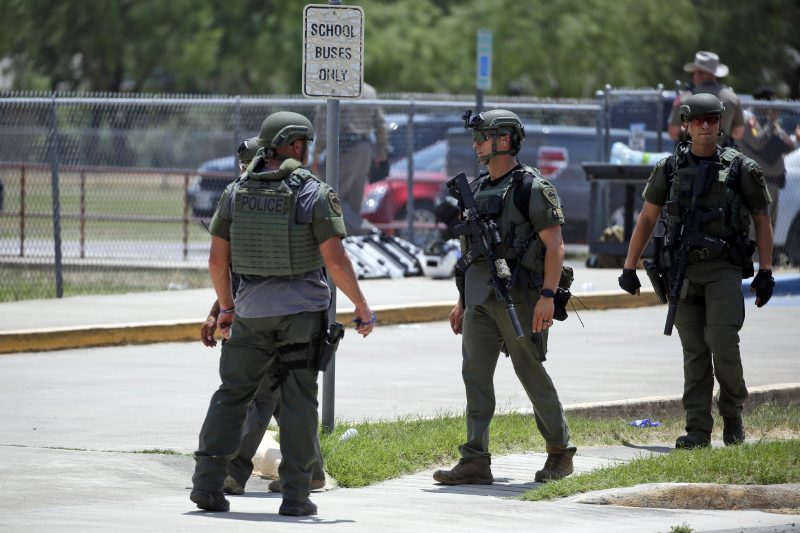
The presence of border agents caused some to question why federal immigration agents were involved, but agency officials told the outlet that agents are routinely present in Uvalde, which is located about 80 miles from northern Mexico.
BORTAC was also involved in the 2023 capture of Danelo Cavalcante, who escaped from a Pennsylvania prison and was captured after a two-week manhunt. Cavalcante, a convicted murderer, was located as part of a multi-unit search in which officers were able to surround him in a wooded area of the state without his knowledge.
The specialized Border Patrol team was also called in to assist with another jailbreak at a maximum-security prison in New York in 2015. Agents shot and killed one of the escaped inmates, Richard Matt. In that operation, BORTAC agents swooped into a wooded area by helicopter and fatally shot Matt after he reportedly pointed a shotgun at agents, NBC News reported.
Agents were also dispatched to the Los Angeles riots in 1992, in which they assisted local police officers in dealing with the civil unrest that followed the police-involved beating of Rodney King.
BORTAC agents are also sometimes assigned to provide security assistance at high-profile events like the Super Bowl, to assist with response to natural disasters and to assist with immigration operations in sanctuary cities, according to reports.
BORTAC was created in 1984 to serve as a civil disobedience function to respond to riots at legacy Immigration and Naturalization Service detention centers, CBP officials said. The tactical team was quickly shifted to assist with high-risk warrant service, intelligence and reconnaissance missions and well as foreign law enforcement.
How are BORTAC agents trained?
The training for BORTAC agents is designed to mirror aspects of the U.S. Special Operations Forces, CBP officials said. Agents are put through training that can often last more than a month, which involves physical testing and pistol qualification, as well as swimming, treading water and drown-proofing.
Agents who pass the physical portion of the training are then put through weeks of intensive training in small unit tactics, defensive tactics and airmobile operations, the agency said.
The tactical training involves putting trainees through sleep deprivation and stress conditions training, as well as learning advanced techniques in weapons and tactics.