EL PASO, Texas (NewsNation) — As a U.S. Border Patrol agent assigned to an elite tactical unit made his way up a rain-soaked wooded ridge near where a convicted rapist and murderer known as the “Devil in the Ozarks” had escaped an Arkansas state prison nearly two weeks earlier, his mind began to race.
NewsNation exclusively spoke with two agents in the Border Patrol Tactical Unit, or BORTAC, who captured Grant Hardin in June. NewsNation is not naming the agents to protect their identities.
Less than 24 hours into the manhunt for Hardin, a police chief-turned-escaped prisoner, the agent figured if he wasn’t in that patch of rural wilderness, he likely wasn’t far. Part of a 20-member BORTAC squad that was dispatched from their home base at Fort Bliss in El Paso, the agent approached the hill’s crest and spotted a muddied, shirtless man matching Hardin’s description.
The agent called out and identified himself as law enforcement, setting off a mental game of cat and mouse. Would Hardin run? Would he fight?
Spotting the federal agent, Hardin jumped to his feet and began to run. The agent gave chase for about 30 or 40 yards before Hardin lost his footing, setting the stage for a fugitive capture in a case that had drawn national attention.
“There’s an element of God’s grace or luck or whatever you want to call it,” the arresting agent told NewsNation. “It just goes back to perseverance. But truth be told, I was pretty friggin’ stoked to see him.”
The search for Grant Hardin, former police chief and escaped prisoner
Hardin had been on the run for 12 days before the director of the Arkansas Department of Corrections contacted the BORTAC unit. The call, like many requests for assistance that come into the unit from state and local agencies, began a furious chain of events at the unit’s headquarters.
By then, moving manpower quickly from one place to another had become standard practice.
Hours after they arrived in Arkansas, fresh off an immigration enforcement operation in northeast Texas, the two partnering BORTAC agents were positioned in a wooded area near where Hardin had last been spotted by Department of Corrections officers, approximately 200 yards from the North Central Unit state prison in Calico Rock.
The agents tried to put themselves in Hardin’s shoes, knowing a 30-year law enforcement veteran would know how investigators think. The BORTAC strategy involved a series of unknowns, including whether Hardin was armed and what he may have stolen or found in the woods that he could use for protection.
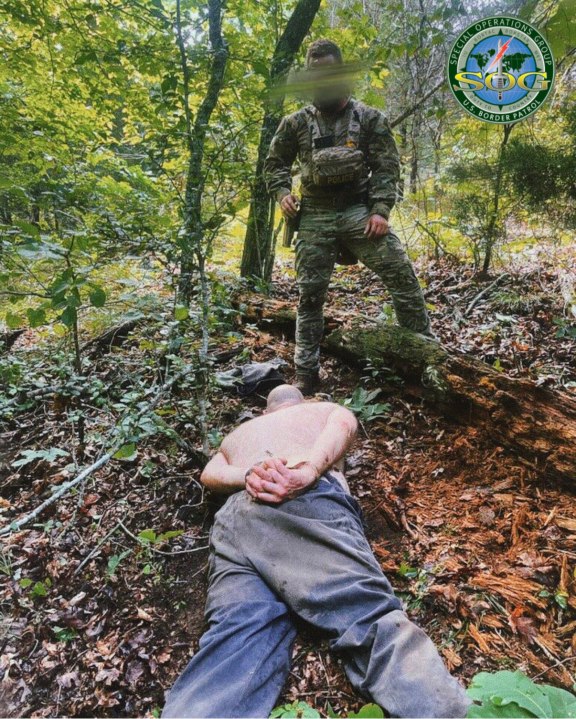
Given the days that had passed, most state and local authorities figured Hardin, a former police chief with a working knowledge of Arkansas’ rural setting, had covered plenty of ground despite the conditions. With the rest of the BORTAC team spread throughout the area where the expansive search was centered, the two partners worked the perimeter near where Hardin had escaped.
Using basic skills learned in the early days of their Border Patrol training, the agents worked to determine Hardin’s direction of travel. Although state and local authorities had used their own investigative methods to search for Hardin, BORTAC’s training, which focuses on “real-world” scenarios in dangerous environments, places agents on a different level, unit commander Christopher Voss told NewsNation.
Now, it appeared, BORTAC’s commitment was paying off. Searching a hilly portion of wilderness, the two agents decided to split up.
As the agent who first encountered Hardin moved up the hill, he silently began to pray: “God, help me to find this dude.”
‘This is what we train for’: BORTAC builds its search plan
Before they arrived in Arkansas, real-time information provided to BORTAC and its intelligence unit provided clues. The agents told NewsNation that recent rainfall — it had rained 10 of the 12 days Hardin was free — gave him a distinct advantage.
The rain had caused local rivers to rise and turned the rural woodlands into a swampy mess, making it difficult for investigators and K-9 units to track him.
With so many officers and agents already engaged in the search, the BORTAC team was split into teams. Some agents were assigned to investigate the most recent reports of Hardin sightings, while others were instructed to look into recent tips from concerned citizens.
But for these two particular agents, working that area — which was so close to the prison, yet so far from the area where most investigators believed Hardin to be — raised the stakes.
“This is what we train for, this is what we go through a selection process for, and this is the call we want,” one of the agents involved in Hardin’s capture told NewsNation. “We want to be put into positions where we can get some of the worst criminals off the streets and bring these communities some normalcy back.”
A prison escape and a call for assistance
On May 25, Hardin escaped prison by impersonating a corrections officer and walking out the front gate.
A prison guard opened a secured fence for Hardin, freeing him into the nearby wilderness. Initially, the manhunt was conducted by local and state authorities, who used their own methods to search for clues.
But 12 days in, BORTAC officials received word that an elite unit — credited with taking down a gunman who killed 19 students and two teachers at an elementary school in Uvalde, Texas, in 2022 and locating escaped Pennsylvania convict Danelo Cavalcante a year later — was being requested.
Officials told NewsNation a team of 20 BORTAC members, comprised of agents representing the unit’s tactical, search and rescue, air and marine, and investigative units, was called in to assist with the search for Hardin. Less than 24 hours later, an agent had apprehended the escaped prisoner on the wooded hillside.
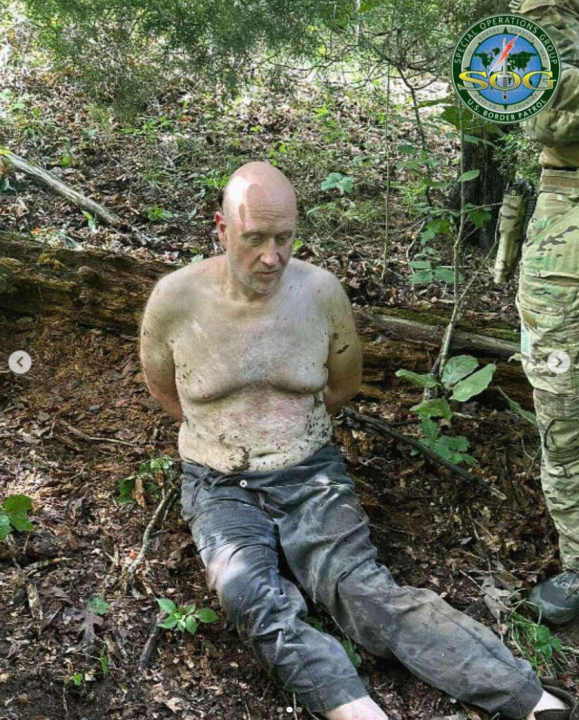
Once his partner arrived, the two agents contacted local law enforcement, informing them the 13-day search had drawn to a close.
In that moment, the two partners locked eyes in relief. “Dude, we got him,” one said.
Voss, the BORTAC commander, and the agents involved in locating Hardin praised the work of other investigators who had spent the previous days following leads and reports of possible sightings.
Arkansas Gov. Sarah Huckabee Sanders praised the work of local, state and federal authorities, whose work she said allowed residents across the state to “breathe a sigh of relief.”
When credited with making the capture, Voss pushed the spotlight away from his agents.
“At the end of the day, none of these operations get done by one unit or one group,” he said. “It’s 100% a team effort, and so we just fit into that team and provide value where we can provide value.”
Asked to describe what it meant to alert fellow law enforcement officers that Hardin had been captured, one BORTAC agent said he was happy the community could find some peace — and that he would gladly volunteer for another mission.
“We were as excited as we could be to let everyone else know it was over,” the agent told NewsNation. “That whole community could be at ease.”
“I don’t hope anyone escapes from prison,” he said. “But hopefully, if they do, we get the call again.”