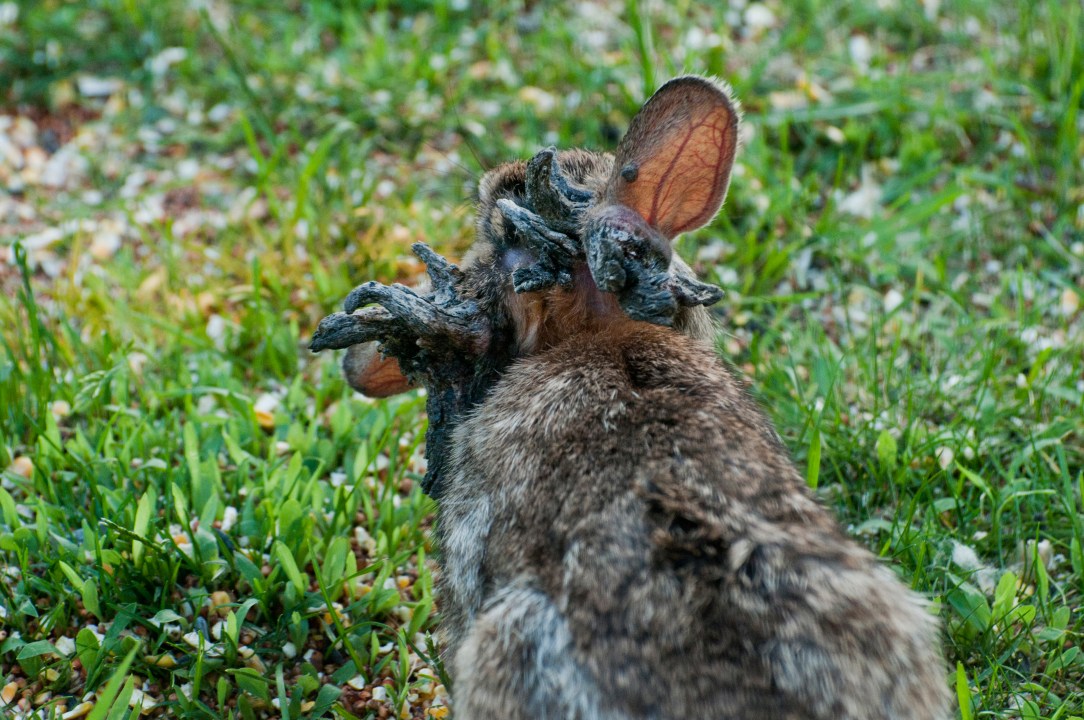
(NewsNation) — Wildlife officials in Colorado say unusual growths spotted on some wild rabbits are caused by a virus known as cottontail rabbit papillomavirus.
Colorado Parks and Wildlife stated that the condition typically causes “black nodules,” which are usually found on the head and sometimes elongate into a “hornlike appearance.”
Officials said while the virus can spread between rabbits, it is not harmful unless the growths affect sensitive areas, such as the eyes or mouth, KUSA-TV reported. There is no known cure.
Fort Collins resident Susan Mansfield told KUSA that she has seen the rabbit with the growths return year after year. “It looked like black quills or black toothpicks sticking out all around his mouth,” she said.
While the virus can spread between rabbits and is not dangerous to humans, pets, or other wildlife, officials advise against approaching or touching infected animals.