(NewsNation) — Does the cure for cancer already exist, and is it inside our bodies?
In the hour-long special “Killing Cancer: The Power Within,” NewsNation examines Dr. Patrick Soon-Shiong’s new immunotherapy cancer treatment, Anktiva, which he says could have the potential to revolutionize cancer treatments. Soon-Shiong has faced regulatory hurdles in expanding access to the treatment that is currently FDA-approved only to treat a form of bladder cancer.
Soon-Shiong, who made billions from developing the drug Abraxane, which improves chemotherapy outcomes, now aims to make traditional chemotherapy obsolete with Anktiva, a drug that activates the body’s natural killer cells to destroy tumors.
Dr. Patrick Soon-Shiong’s mission
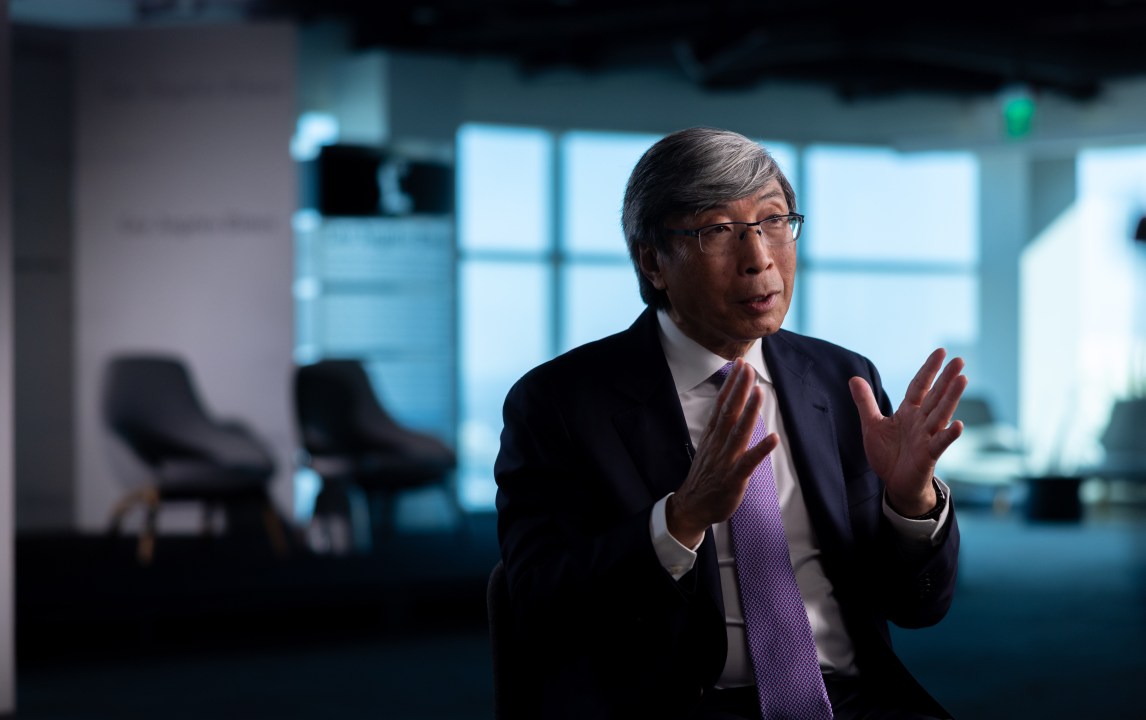
Born in South Africa to Chinese immigrant parents during apartheid, Soon-Shiong became the first Chinese intern at a hospital in the country. He says those experiences fighting discrimination shaped his determination to advocate for “the underdog” and “regular people” struggling with cancer.
After moving to Los Angeles and building a reputation performing pancreas transplants, Soon-Shiong developed Abraxane, which the FDA approved in 2005. He sold the company five years later, pocketing billions. But rather than retire, he pivoted to an even bigger challenge: finding a cure for cancer itself.
“My goal in life is to find the cure,” Soon-Shiong said. He believes the key lies in natural killer cells — immune system soldiers that can destroy cancer, tuberculosis, HIV and COVID if properly activated. The problem, he argues, is that chemotherapy and radiation kill these protective cells along with tumors.
Soon-Shiong owns part of the Los Angeles Lakers and purchased the Los Angeles Times newspaper, ventures he says help keep him “sane” while pursuing his cancer moonshot.
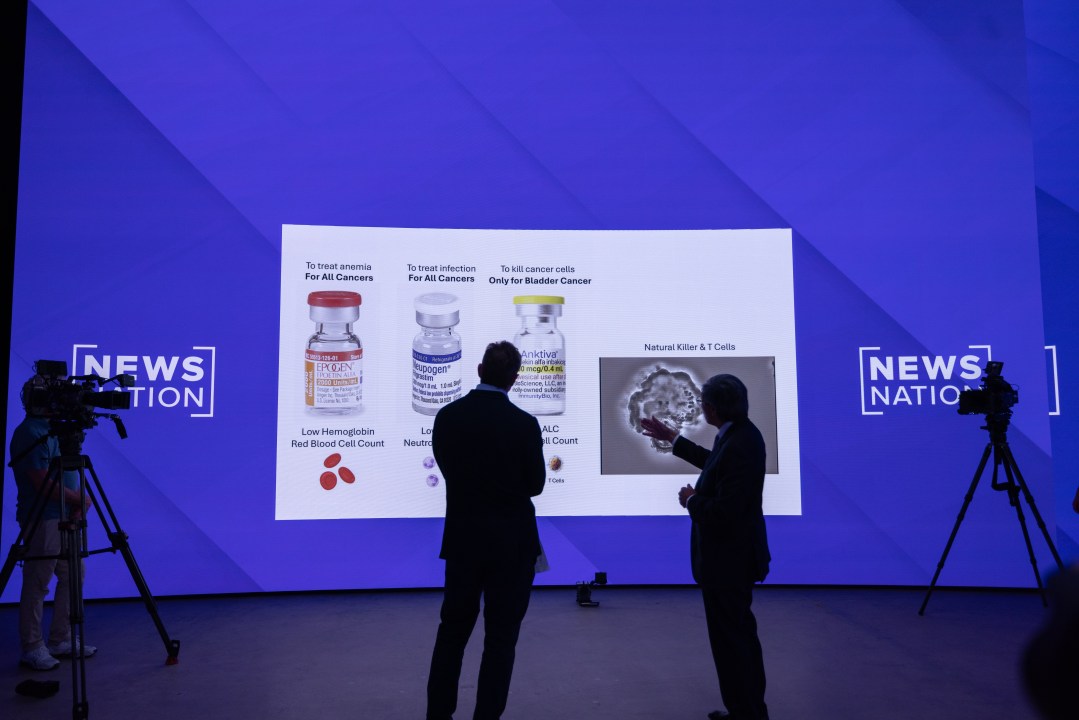
The Food and Drug Administration approved Anktiva in April 2024 but only for a small subset of bladder cancer patients. Soon-Shiong says the restriction leaves thousands of cancer patients without access to potentially life-saving treatment while he fights for expanded approval.
How does Anktiva work, and what is its efficacy?
The drug works by supercharging natural killer cells, immune system components that Soon-Shiong says are destroyed by traditional chemotherapy and radiation. His protocol aims to protect and activate these cells to fight cancer more effectively with fewer side effects.
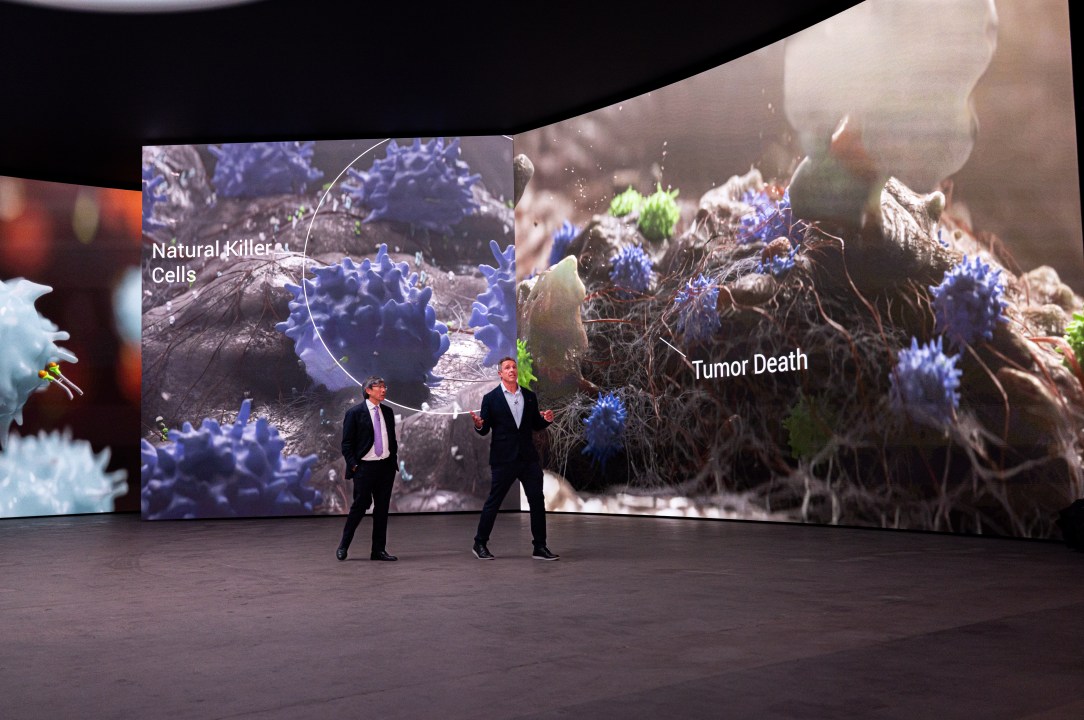
Natural killer cells are the immune system’s “first responders” — soldiers that can identify and destroy cancer cells, infected cells and abnormal cells throughout the body. A healthy adult has around two billion of these cells in their blood, measurable through a test called the absolute lymphocyte count.
Anktiva delivers a protein called IL-15 (interleukin 15) that binds to natural killer cells and activates them, making them stronger, more durable and able to multiply faster. Soon-Shiong likens the transformation to turning a normal soldier into “the Incredible Hulk,” powerful enough to hunt down and destroy cancer cells.
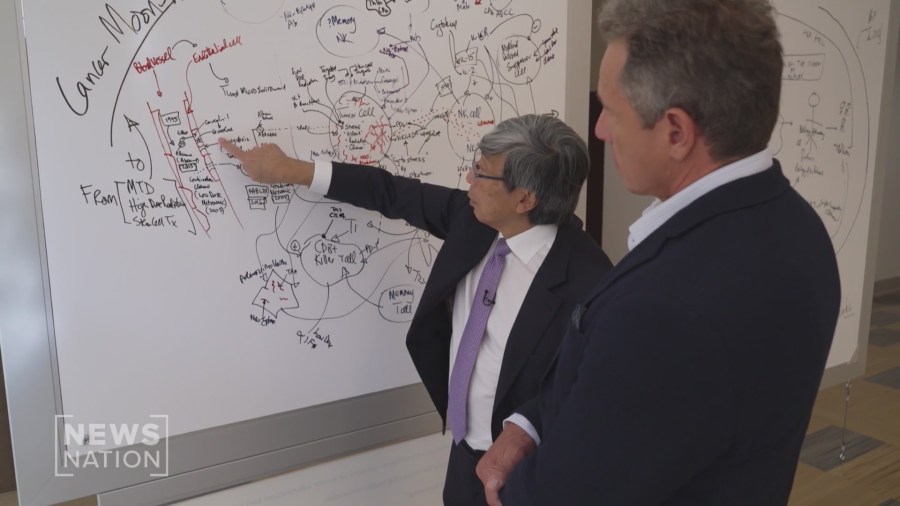
The protocol involves harvesting a patient’s natural killer cells, treating them with Anktiva to supercharge them, freezing them in units and then thawing and infusing them back into patients in 30-minute outpatient treatments.
Soon-Shiong said nearly 1,000 patients have been treated successfully with Anktiva, many after standard treatments failed. He reports patients with bladder cancer alive 10 years later, metastatic pancreatic cancer patients surviving six years and complete remissions across multiple cancer types. However, FDA regulations require additional clinical trials before the drug can be approved for widespread use across different cancer types.
“I’ve got patients (alive after) 10 years, and you want me to do a randomized trial that’ll take another five years?” Soon-Shiong said of the FDA’s decision. “I almost fell off my chair.”
Patients treated with Anktiva praise the results
James Johnson of New York and Billy Falcon of Nashville were both diagnosed with HPV-related throat cancer. After standard treatments failed or were rejected, both men entered Soon-Shiong’s clinical trials.
Before getting Anktiva, Johnson underwent brutal radiation and chemotherapy in 2015, which left him with a feeding tube for 120 days.
“You know you’re bad when your own mother can’t look at you,” Johnson said.
The tumor disappeared, but cancer returned in 2022, metastasizing to his liver in a way doctors had never seen with HPV-related cancer.
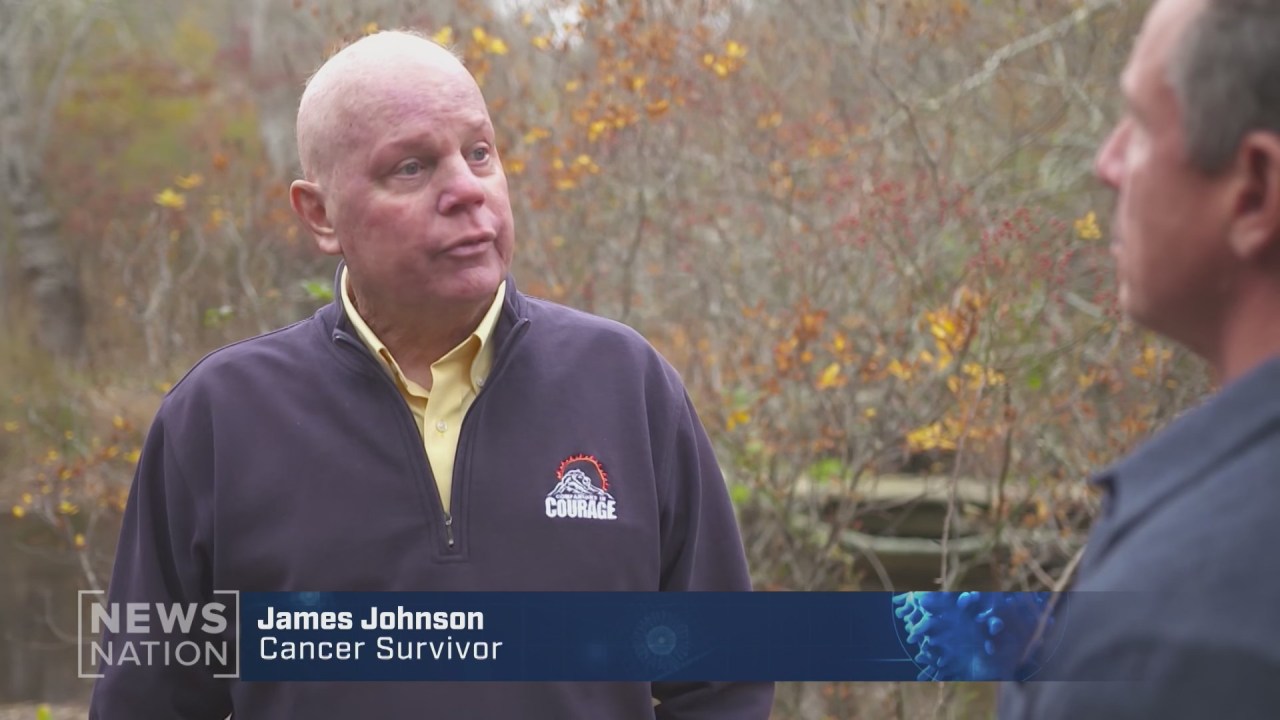
After being rejected from multiple clinical trials because pharmaceutical companies feared his unusual case would “skew their numbers,” Johnson finally gained admission to Soon-Shiong’s program.
After 18 months of treatment, he reports his liver enzymes are down, lymphocytes are up, and he has no new tumors.
Falcon, a singer-songwriter, refused standard treatment after learning it could permanently damage his voice.
Instead, he put his faith in prayer and waited for an alternative. His neck tumor disappeared within three weeks of starting Soon-Shiong’s protocol. Recent tests show no cancer in his blood.
“I saw this thing on my neck going away,” Falcon said.
“The man saved my life,” Johnson added.
Anktiva’s regulatory hurdles
Soon-Shiong traces his regulatory troubles back to 2016, when he said he helped former President Joe Biden develop the “Cancer Moonshot” initiative after Biden’s son Beau died of brain cancer.
The doctor said he was initially asked to lead the effort but was suddenly excluded when former President Barack Obama announced the program at the State of the Union address with funding going to traditional pharmaceutical companies instead.
“I think they got $5 billion of funding, and I’m not sure if anything came from it,” Soon-Shiong said.
Since then, Soon-Shiong has met with President Donald Trump, Saudi Arabian Crown Prince Mohammed bin Salman and Health and Human Services Secretary Robert F. Kennedy Jr. about his cancer mission.
But Soon-Shiong is facing roadblocks with federal regulators. He said that the FDA’s insistence on lengthy randomized trials for each cancer type is condemning patients to death while bureaucracy grinds forward.
Meanwhile, he says his clinic gets thousands of calls from desperate patients and family members. The doctor says his clinic receives 10,000 desperate requests for help daily from cancer patients and their families.
“It’s very hard for us, literally, to play God,” Soon-Shiong said.
Soon-Shiang believes that only presidential intervention can break the regulatory logjam.
Soon-Shiong’s past work on diabetes criticized
Soon-Shiong faces criticism from some in the medical establishment who question whether his marketing outpaces his scientific proof.
In the late 1990s, Soon-Shiong’s diabetes research program collapsed after discovering a potential virus contamination risk. Angry investors sued him, and he was forced to abandon all diabetes work for five years as part of a settlement, though he maintains he did nothing wrong and was simply being cautious about patient safety.
Medical journalists have accused Soon-Shiong of building a reputation as a “hype man” that has damaged his credibility as a scientist. Some point to his use of impressive brain scan images and patient testimonials rather than robust clinical trial data as evidence he prioritizes salesmanship over science.
When asked about these critiques, Soon-Shiong told Cuomo he wants “10 living patients to walk into the Oval Office” as proof, rather than “a fancy paper” in medical journals. However, he also noted his work has been published in the New England Journal of Medicine and Nature, two of the most respected and prestigious medical journals in the world.