(NewsNation) — The Border Patrol is quietly monitoring millions of American drivers and detaining people through a surveillance program that flags “suspicious” travel patterns.
The predictive intelligence program, revealed through an Associated Press investigation, has led to drivers being stopped, searched and sometimes arrested. It records license plates from a network of cameras and an algorithm analyzes where vehicles came from, where they’re headed, and which routes they take. When the system flags a license plate, federal agents may alert local law enforcement.
The Border Patrol has built an interior surveillance system that tracks ordinary Americans for anomalies — not just known suspects. Launched roughly a decade ago to combat border-related crime, the program has expanded significantly over the past five years.
This work reflects a broader, quieter shift inside Customs and Border Protection, which is evolving something more akin to a domestic intelligence operation. Under the Trump administration’s immigration enforcement push, CBP stands to receive more than $2.7 billion to build out border surveillance systems like the license plate reader network, incorporating artificial intelligence and other emerging technologies.
The Associated Press’ investigation, which is the first to detail how the system operates on U.S. roads, draws on interviews with eight former officials familiar with the program, as well as dozens of federal, state and local officials, attorneys and privacy experts. The outlet also reviewed thousands of pages of court filings, government documents, state grant records and arrest reports.
License plate readers hidden in safety equipment
Former officials said the Border Patrol has long tried to keep the program out of public view, avoiding mentions of the system in court documents and police filings, and dropping cases to prevent disclosure. Cameras are often concealed in roadside objects such as construction barrels or safety equipment.
The Border Patrol sets its own criteria for what counts as “suspicious or tied to drug or human trafficking,” flagging behaviors such as driving rental cars, using backroads or taking short trips to border regions. Its network stretches across the southern border states, along parts of the northern border and deep into major metro areas.
The Associated Press identified at least four devices in the greater Phoenix area, more than 120 miles from the border, as well as several in Detroit and near the Michigan-Indiana line to track traffic toward Chicago and Gary, Indiana, or other nearby destinations.
CBP: License plate readers are governed by ‘federal law’
Critics argue that Border Patrol is violating constitutional rights by using these cameras to monitor drivers and pulling them over based on arbitrary judgments
“It’s happening, and it is as massive and invasive as it seems,” immigration attorney Robert Armstrong said. “I think the actions that the CBP has been taking to hide this program speak for itself, right? They’ve worked really hard to keep the program, the way it’s deployed, where it’s deployed, etc., very hush-hush.”
CBP told the Associated Press the technology helps identify threats and disrupt criminal networks and is “governed by a stringent, multi-layered policy framework, as well as federal law and constitutional protections, to ensure the technology is applied responsibly and for clearly defined security purposes.”
“For national security reasons, we do not detail the specific operational applications,” the agency said.
While the Border Patrol primarily operates within 100 miles of the border, the agency added, it is legally allowed “to operate anywhere in the United States.”
NewsNation reached out to CBP for comment.
The Associated Press noted that predictive surveillance is now embedded into American roadways — part of a global trend as both authoritarian governments such as China and democracies in the United Kingdom and Europe adopt broad monitoring tools in the name of national security and public safety.

Cochise County Sheriff’s Deputy AJ Shaw drives during a patrol June 17, 2025, in Naco, Ariz. (AP Photo/Ross D. Franklin) 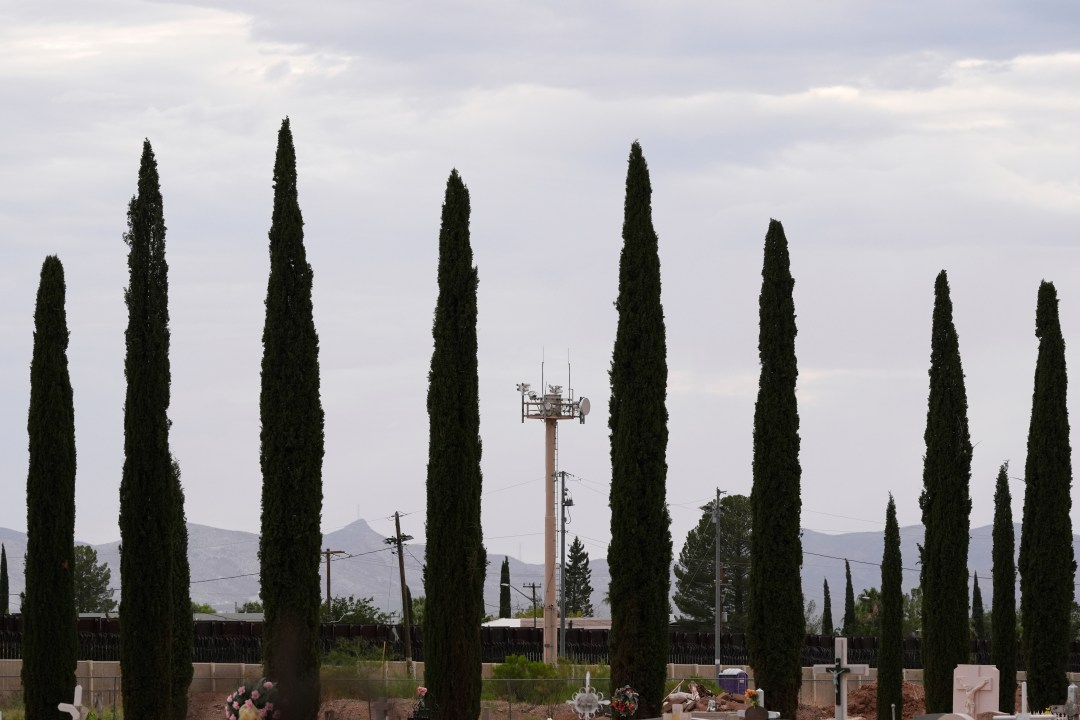
Surveillance technology used by various law enforcement jurisdictions sit on a tower at the border wall July 28, 2025, in Douglas, Ariz. (AP Photo/Ross D. Franklin) 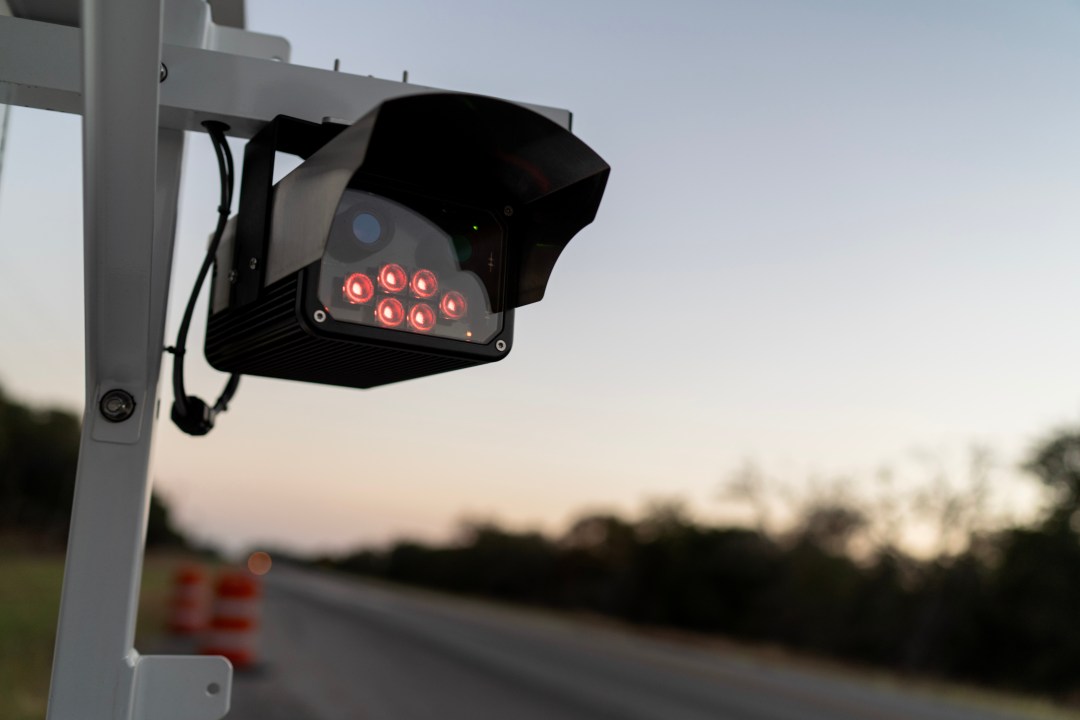
A license plate reader stands along the side of a road Oct. 15, 2025, in Stockdale, Texas. (AP Photo/David Goldman) 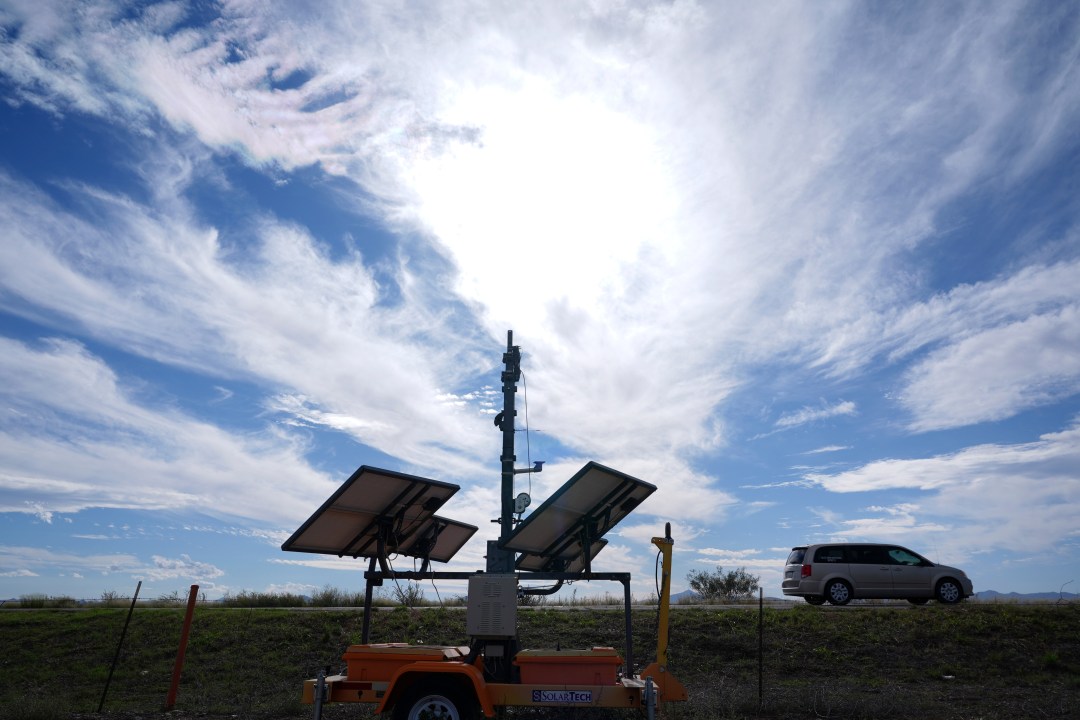
A license plate reader used by U.S. Border Patrol sits along US Highway 191, Oct. 23, 2025, in Douglas, Ariz. (AP Photo/Ross D. Franklin) 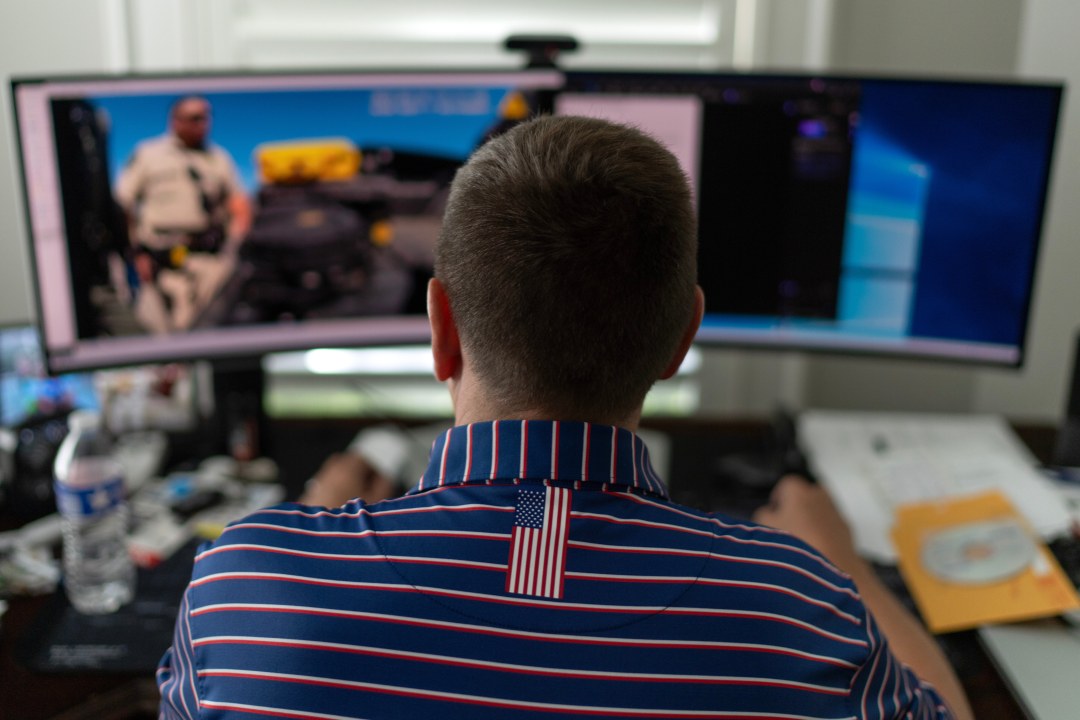
Alek Schott watches police body camera video of his vehicle search Oct. 16, 2025, while sitting at his home in Houston. (AP Photo/David Goldman) 
A license plate reader used by U.S. Border Patrol is hidden in a traffic cone while capturing passing vehicles on AZ Highway 85, Oct. 21, 2025, in Gila Bend, Ariz. (AP Photo/Ross D. Franklin)
The Associated Press contributed to this report.