Popular THC-infused drinks and edibles may disappear from store shelves in the next year as Congress is on the verge of passing a ban on nearly all hemp-derived THC, or tetrahydrocannabinol, products.
Tucked into the Senate-passed government funding bill is a provision that would recriminalize many of the intoxicating hemp-derived products that were legalized by the 2018 farm bill.
The provision “prevents the unregulated sale of intoxicating hemp-based or hemp-derived products, including Delta-8, from being sold online, in gas stations, and corner stores, while preserving non-intoxicating CBD and industrial hemp products,” according to a Senate Appropriations Committee summary.
The hemp industry is scrambling to stave off what representatives are saying could be an extinction-level event.
The House is scheduled to take up the bill as early as Wednesday. If it passes, company executives and industry trade groups said the legal hemp market, which is estimated to be worth nearly $30 billion by 2030, could disappear.
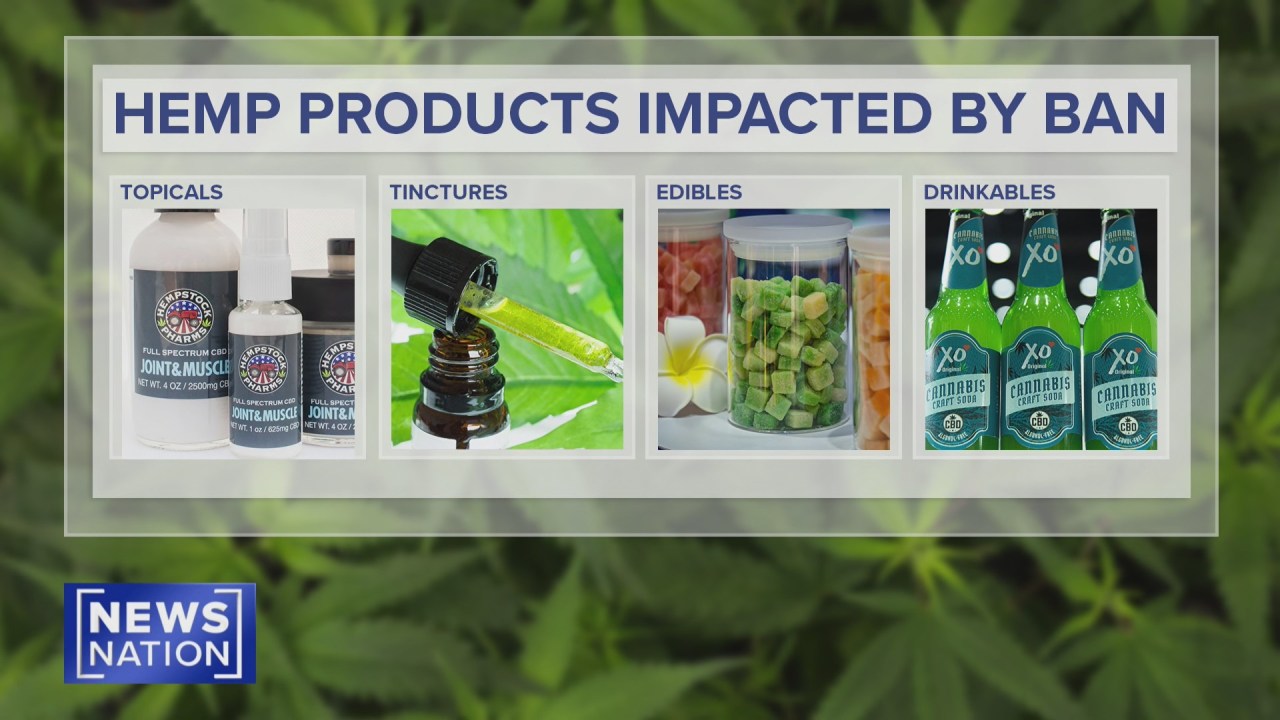
“Ninety-five plus percent of sales in the hemp market have what are now disqualifying levels of THC in them,” said Joe Gerrity, CEO of the THC beverage company Crescent Canna. “The entire hemp beverage industry is gone. The THC market, the edible market, inhalables. All gone. … I mean, there’s no saving grace here.”
The 2018 farm bill legalized the sale of hemp-derived THC products if they contained less than 0.3 percent delta-9 THC by dry weight. A product containing THC in quantities beyond that threshold would be considered marijuana. The new language would ban “any intermediate hemp-derived cannabinoid products.”
Those products, including gummies and drinks, have exploded in popularity and are now sold outside of dispensaries in gas stations, convenience stores, and even major retailers like Target.
Companies are selling the potential lifestyle and wellness benefits of low-dose THC over alcohol, which they say has angered the adult beverage industry. Critics say the farm bill allowed the proliferation of an industry with little to no regulation.
They allege companies are exploiting a loophole to chemically alter the THC in hemp or use it in large quantities that make it as intoxicating as higher-potency marijuana. The products are sold without consistent age restrictions or labeling regulations and oftentimes resemble candy.
In the absence of federal rules, dozens of states have stepped in to ban or restrict hemp on their own, though officials have urged Congress to act.
Late last month, a bipartisan coalition of 39 state and territory attorneys general sent a letter to congressional leaders urging them to take action to prevent the sale of intoxicating hemp substances to minors.
The language included in the government funding bill follows years of pressure from the food and beverage lobby, anti-marijuana groups, and even some in the marijuana industry.
The proposal was first included in the House’s funding bill for the Department of Agriculture, pushed by Rep. Andy Harris (R-Md.).
But it was removed from the Senate version over the summer following a disagreement between Kentucky GOP Sens. Rand Paul and Mitch McConnell.
McConnell championed the initial effort to legalize hemp in 2018. But he’s since soured in the aftermath of that legalization effort, saying he never intended to allow the nascent, booming hemp-derived THC industry. McConnell has been leading the charge in the Senate to change the language.
“I think the greatest irony for all of us in the category is, this is the man that gave us the hemp seeds. He was the man who taught us how to grow it and sow it, and now he’s the guy who wants to burn the crops and then salt the field,” said Thomas Winstanley, executive vice president and general manager at Edibles.com
Edibles.com is an online platform for low-dose gummies and beverages backed by Edible Brands, the parent company of Edible Arrangements. It has been among the larger companies lobbying for a regulated market since its launch in March.
In remarks on the Senate floor Monday, McConnell said the bill will “keep these dangerous products out of the hands of children while preserving the hemp industry for farmers.”
Jonathan Miller, general counsel for the U.S. Hemp Roundtable, said the Kentucky Republican’s words are hollow.
“McConnell is saying that Kentucky farmers will be fine. They’ll grow [hemp] for fiber, or they’ll grow it for non-intoxicating CBD. But that’s just not true. Non-intoxicating CBD is banned by this,” Miller said.
Paul waged a last-minute fight to try to keep the provision out, threatening to drag out the process of debating the underlying bill until he got a vote on an amendment to strip the language.
He got the vote on Monday; Paul and Sen. Ted Cruz (R-Texas) were the only Republicans who voted in favor.
“The bill, as it now stands, overrides the regulatory frameworks of several states, cancels the collective decisions of hemp consumers and destroys the livelihoods of hemp farmers,” Paul said on the floor ahead of the vote. “And it couldn’t come at a worse time for America’s farmers. Times are tough for our farmers.”
THC companies have been lobbying Congress to better regulate the industry for years. The farm bill deferred regulation to the Food and Drug Administration, which has consistently punted the issue.
Kevin Sabet, president of the nonprofit marijuana prohibition group Smart Approaches to Marijuana, said they were tired of waiting.
“We never saw any serious attempt at proper enforcement. Regular regulation means enforcement, and we were seeing these stores pop up all over the country with no oversight,” Sabet said.
Many of the THC products being sold are synthetic and aren’t derived from hemp at all, despite their marketing, he added.
“This was just a lot of junk. And I think it’s time to take it all off the table,” Sabet said.
The language in the funding bill gives a one-year period before the ban takes effect, and industry groups and companies said they will use that time to try to push for similar regulation to legal marijuana: stronger age verification to limit sales to people 21 years and older, third-party laboratory testing, independent licensing, and excise taxes on hemp/THC products.
“We’re going to have a year to fix this. And we’re hopeful when people recognize that this is taking away CBD from veterans and seniors, and it’s not just simply cracking down on synthetic stuff, that there will be backlash and that we can finally get this regulation that we wanted from the beginning,” Miller said.