Scientists may be able to identify dinosaurs’ sex via mating injuries

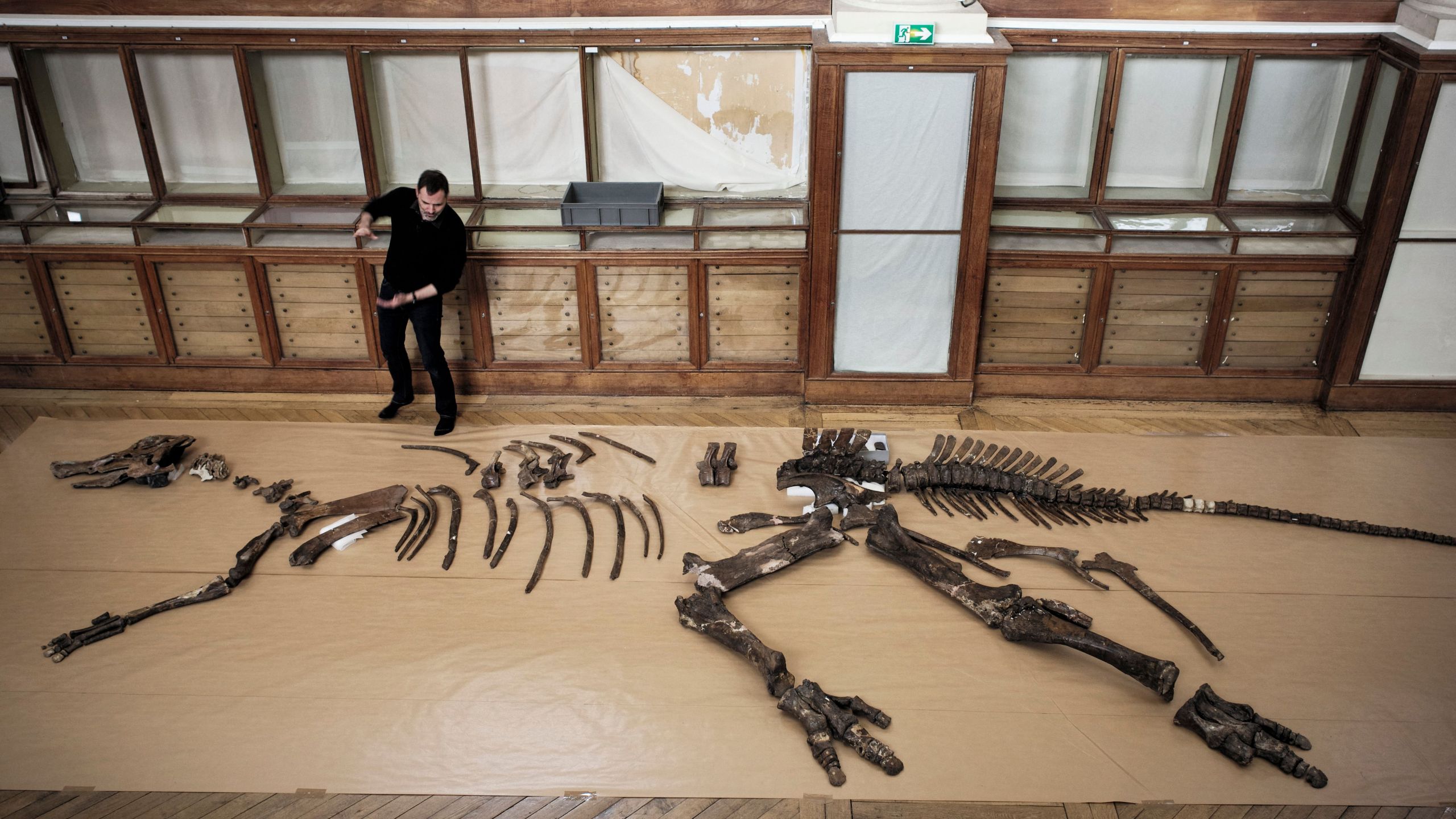
French paleontologist Ronan Allain stands by the skeleton of an edmontosaurus regalis -a species of comb-crested hadrosaurid (duck-billed) dinosaur- being assembled to be displayed as part of the "A T-REX in Paris" exhibition at the paleontology gallery of the French museum of Natural History in Paris on March 12, 2018.

TOPSHOT – French paleontologist Ronan Allain stands by the skeleton of an edmontosaurus regalis -a species of comb-crested hadrosaurid (duck-billed) dinosaur- being assembled to be displayed as part of the “A T-REX in Paris” exhibition at the paleontology gallery of the French museum of Natural History in Paris on March 12, 2018. (Photo by PHILIPPE LOPEZ / AFP) (Photo by PHILIPPE LOPEZ/AFP via Getty Images)

Want to see more of NewsNation? Get 24/7 fact-based news coverage with the NewsNation app or add NewsNation as a preferred source on Google!

(NewsNation) — Scientists may finally have a way to determine the sex of dinosaurs, or at least one group of them, according to a recent study.

Paleontologists have long struggled to identify the sex of dinosaurs from fossilized remains, but a new study, published in the journal iScience this week, may offer new clues.

Researchers focused on hadrosaurs, a group of duck-billed dinosaurs, whose fossils frequently show healed fractures on vertebrae near the base of the tail.

After evaluating several hypotheses, researchers believe these traumatic bone injuries may have occurred during mating, suggesting the affected hadrosaurs were likely female.

“The mating hypothesis is the one that, at the moment, best explains our observations and data,” lead study author Dr. Filippo Bertozzo of the Royal Belgian Institute of Natural Sciences told CNN.

Bertozzo explained that while the team’s research was comprehensive, they wanted to study fossils from China and South America to form a larger dataset.

Science News

Copyright 2026 Nexstar Broadcasting, Inc. All rights reserved. This material may not be published, broadcast, rewritten, or redistributed.