(NewsNation) — Military personnel and staff members stationed at U.S. installations routinely engage in active shooter preparedness exercises to ready themselves for incidents such as the one that injured five soldiers at Fort Stewart on Wednesday.
While those drills share some common aspects across the map, the specifics of how particular bases remain ready for emergencies are not made public as a means of protecting those military members stationed across the country.
Generally speaking, however, what a base’s active shooter strategy involves is largely dependent on the base itself and the level of threats that have been made against that installation, NewsNation national security contributor Tracy Walder said Wednesday.
The fact that military bases such as Fort Stewart “100% have plans in place” and that those plans were acted on in a timely manner was likely a key factor in limiting how many soldiers were injured Wednesday, Walder added.
How do soldiers at Fort Stewart prepare for an active shooter?
Emergency training exercises at Fort Stewart take place multiple times a year to assess readiness levels on the use of prescribed practices across the installation in response to an emergency situation such as an active shooter, according to the U.S. Army’s website.
Each of the exercises leads to a full-scale exercise that is designed to showcase the plan of action that would be used if needed in the wake of an active shooter’s presence. Preparing troops for the moment someone opens fire is key, Fort Stewart officials have said.
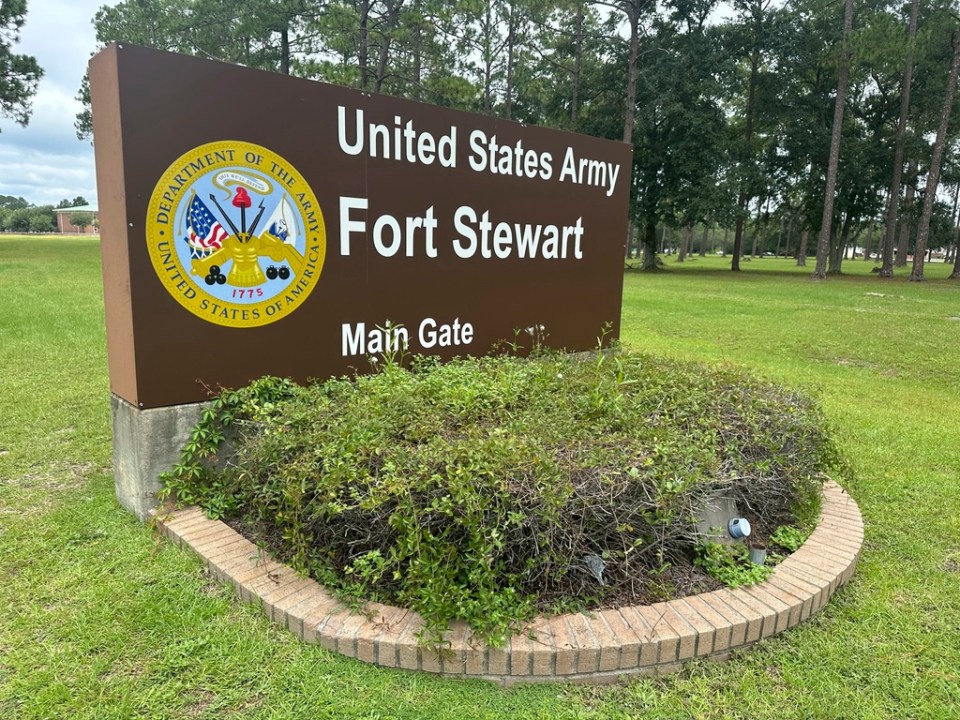
“If the first time you have to do something … is during an emergency, it’s going to fail,” Jeff Bergeron, the emergency contingency planning officer with the Fort Stewart Directorate of Plans, Training, Mobilization and Security, said in an interview on the website. “You have to practice. It has to be muscle memory. If it’s not muscle memory, something’s going to happen, and it’s going to happen bad.”
‘Black Start’ training exercises mandated by Congress
At Fort Stewart, the series of training exercises comes in advance of an annual “Black Start” exercise, which is a congressionally mandated resiliency exercise that all Department of Defense installations must complete each year.
The exercise tests a military base’s ability to respond to an emergency situation like an active shooter, the Army’s website said. The “Black Start” test also focuses on the resiliency of a base’s security measures and response.
In preparation for the “Black Start” exercise, smaller-scale integrated protection exercises take place over two days, giving those on the base repetitions in dealing with emergency scenarios such as the presence of an active shooter. These exercises are conducted twice a year with very specific purposes in mind.
“We have the ability to identify gaps,” Department of the Army Civilian Police Maj. Rick Barrick, directorate of Emergency Services operations, told the Army website. “We get to make sure we have proper direction in where we need to go, have good communication between entities that are involved, and ensure the security and safety of the installation.”
However, while the scenarios that a base is tested on — whether it be an active shooter, response to an unidentified explosive device, or handling unknown strangers attempting to access the base from the outside — are made known, what those drills look like remains under wraps, Walder told NewsNation.
“The problem is that (installation officials) need to maintain a degree of not having that security out there of how they operate,” Walder said. “The problem is if they do, then a nefarious actor knows how to circumvent that.”
But in each case, addressing an active shooter situation begins with the same initial step, which involves immediately eliminating the threat, Walder added. In Wednesday’s Fort Stewart incident, the shooter — identified Wednesday as active reservist Sgt. Quornelius Radford — was apprehended and taken into custody.
Retired United States Air Force Lt. Gen. Richard Newton told NewsNation on Wednesday that reviews of how military bases respond to emergencies often dictate what future training will look like. Newton said a Pentagon review of incidents such as Wednesday’s will answer who, what, when, where and why questions, which will determine what changes need to be made to preparedness levels in the future.

Such plans are directed not only to officials at a military base where an incident took place, but typically across the entire U.S. military, Newton said.
“You’ll go back and look at: Were we adequately trained? Were we adequately resourced in terms of communications equipment, in terms of weapons? And are we absolutely exercised?” the NewsNation national security contributor said. “What you want to have kick in is that you want your training and experiences you have adapted from your training exercises to kick in automatically.”
Threats made against US military installations
Wednesday’s shooting at Fort Stewart is the latest of several active shooter situations that have ranged in severity over the past 16 years around the country. But Walder said it also speaks to the threats that are made against military bases across the U.S. on a regular basis.
Deadly shootings took place in 2019 Naval Air Station Pensacola in Florida, when three people were shot and killed and an additional 12 were injured.
Three people were also shot and killed in 2014 at Fort Hood, which came two years after a defense contractor and former Navy Reservist killed 12 people at Washington Navy Yard. In 2009, 13 people were killed and 30 were injured when an Army psychiatrist opened fire at Fort Hood, the Associated Press reported.
Walder said that most military installations face threats almost daily, with those threats coming from both within the confines of the base and from the outside, making a state of readiness at these bases a critical part of that installation’s operations. But Newton said regular training exercises can only go so far.
“You’re never 100% prepared” for an active shooter, Newton, who was among the Pentagon officials reviewing the 2009 Fort Hood shooting, told NewsNation. “You exercise for it, you maintain strong ties with outside installations, especially law enforcement, FBI and medical support … but you’re never really prepared for something like this to happen.”
The Associated Press contributed to this report